
Do You Think That I Have Come to Establish Peace on the Earth? Lk. 12:51
We must be willing to entrust ourselves to this burning fire of love.

“Do you think that I have come to establish peace on earth? No, I tell you, but rather division.” This seems to be such a strange and troubling thought. These words seem to be the very opposite of our common understanding of Jesus, and of everything else that he said. We are more inclined to think of him in the way that the prophet, Isaiah, speaks of the Messiah, as the Prince of Peace. Yet, we also believe that every word that comes from the mouth of Jesus is the truth. How do we reconcile this seeming contradiction, then? We have to understand the concept of paradox. Paradoxical statements or situations may appear to contradict themselves, or to run contrary to expectations, but upon a closer examination, they can be true, or they can reveal a deeper truth.
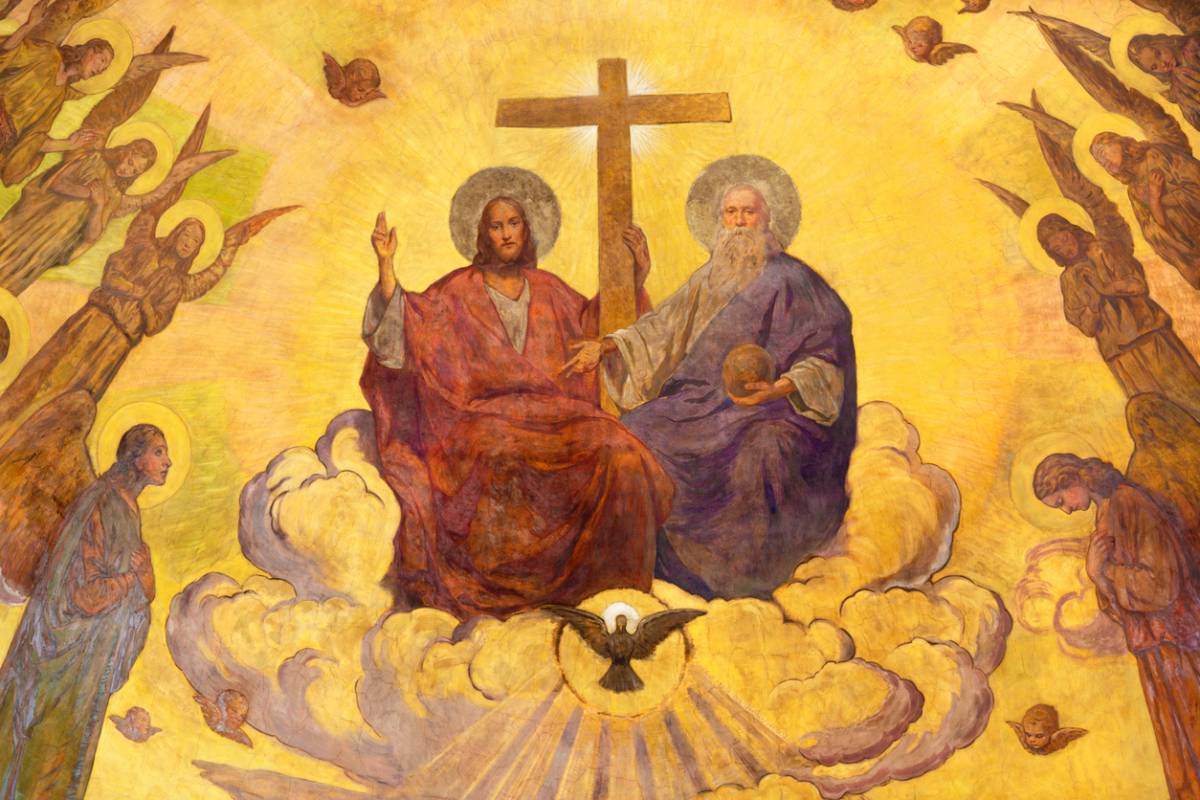
Our Christian faith and experience are solidly rooted in a paradox of divine proportions. We believe that the infinite God of Creation, through whom all things, visible and invisible, were made, willingly chose to take on human flesh, to enter into our humanity in Jesus Christ, to suffer and to die for us. This is the paradox of our faith. This seeming contradiction, the idea that God died, is the truth from which our faith takes all of its meaning and purpose.
This concept of paradox is at the core of this passage from Luke’s Gospel as well. The passage relates to the comment made by Simeon to Jesus’ mother, Mary, when she and Joseph brought Jesus to the Temple in the second chapter of Luke: “Behold, this child is destined for the fall and the rise of many in Israel, and to be a sign that will be contradicted” (Lk.2: 34). Men and women, most importantly, those who claim to believe in Jesus, have contradicted his truth taking sides for and against him and the Gospel from the beginning.
Why else would there be so many divisions and contradictions in the Christian faith today? This is the deeper truth that Jesus is revealing to us in this passage from Luke’s Gospel. When we choose to follow Jesus in this world, we must also willingly choose the cross, for in choosing to follow Jesus, we too will be signs of contradiction to a world gone mad with rebellion, and it will want to be rid of us, just as it wanted to rid itself of Jesus back then.

Two lines before the words we hear at the beginning of this article, we hear Jesus say, “I have come to set the earth on fire, and how I wish it were already blazing” (Luke 12:49). What is this about? What is this fire that he wishes were already ablaze in the world? We tend to think of fire as a destructive force. But in this passage from Luke, it is the fire of Jesus’ love, that fire of love that he showed to us on the cross.
This power can give light to the blind, it can strengthen the weak, and it can even purify what has been wantonly polluted by sin with forgiveness. Paradox. He has brought this fire to life in the world through his life, death, and resurrection, and he wants us to live in and through that fire of love now, in this life, in the very places that we find ourselves presently. He wants us to desire to live in and through the fire of his love to burn away all that cannot live in the presence of such love, both within ourselves and in those around us. Whoever comes close to this fire must be prepared to be burned, for it is a fire that makes things truly bright, pure, free, and grand and, therefore, contradicts the darkness of the world.
This, then, is the paradoxical choice before each one of us as Christians. We must be willing to entrust ourselves to this burning fire of love. Jesus desires that we choose to keep this holy fire of love blazing in this world that is so damaged, so divided by hate, ignorance, revenge, and fear, as well as by our failures to accept its duties and its consequences. He calls us to live the truth of this burning fire of love openly, even when we must suffer for it.

Here is the paradox of this passage: It is true that Christ came to divide us, not from each other, but from whatever keeps us from him. He came to rid us of every sinful burden that we are bent under so that we might choose to do the same for one another. That we so often choose otherwise is ever so sadly evident. That we can willingly and sacrificially choose to live his truth is also true. Our earthly divisions are a matter of foolishness and pride. The happiness we so naturally desire can be found in our willing submission to enter into the fire of love that is found in Jesus Christ alone.
More to Explore
SKM: below-content placeholderWhizzco for FHB