

In this passage from Luke’s Gospel, we encounter two of Jesus’ disciples walking away from Jerusalem, on the very morning of his resurrection. They are headed to the village of Emmaus, about seven miles away. This little detail is very curious here. The momentum in Luke’s entire Gospel is toward Jerusalem. Yet these two ‘disciples’ are headed away from the Holy City. They are going in the wrong direction.
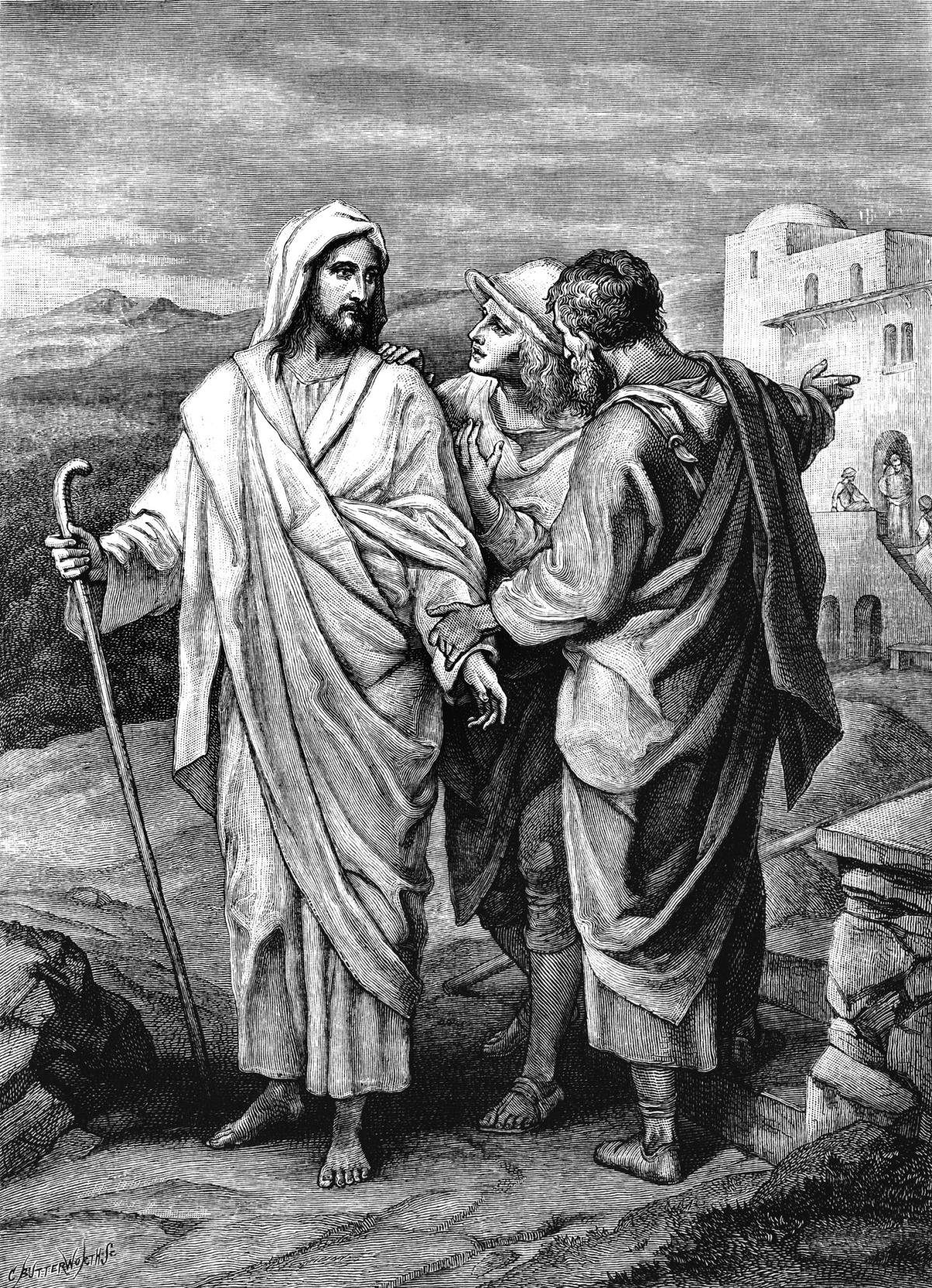
We encounter them walking along the road, probably around midday. They are despondent and downcast, ‘conversing and debating’ about all the things that had occurred over the last three days in Jerusalem, when a man draws near and asks them, “What are you discussing as you walk along” (Lk. 24: 17)? The one called, Cleopas, responded, “Are you the only ‘stranger’ (an interesting detail) who does not know of the things that have taken place there in these days” (v. 18)?
Cleopas, the one who speaks up here, is full of facts about Jesus and the ‘things’ that happened over the last few days, but it is clear that he has not yet fully understood either who Jesus is, or why all these ‘things’ had to happen. He says, “But we had hoped that he was the one to redeem Israel…and it is now the third day since these ‘things’ took place” (v. 21). As Cleopas talks, we can see that there are hints everywhere that go, as yet, unseen, unrecognized. He even reports to Jesus that, “some women of our group had gone out to the tomb early that morning and came back with astounding news, that the body was not there and that they had seen a vision of angels telling them that he was alive” (vs. 22-23). And yet, in the face of such ‘astounding’ news, he and his friend are walking away from Jerusalem.
Jesus says to them, “How foolish you are, and how slow of heart to believe all that the prophets have declared” (v. 25). In his best teaching mode, Jesus then opens up the scriptures to them beginning with Moses and all the prophets” and how everything in the whole of scripture pointed to and explained everything that was needed to know about him. We can imagine that they are deeply moved and inspired by this. This stranger’s words are bringing them closer to the insight they so desire. His words were making them see the deeper meanings of scriptures, more so than they had ever understood before. But they still do not recognize Jesus who is really present to them, speaking about himself.
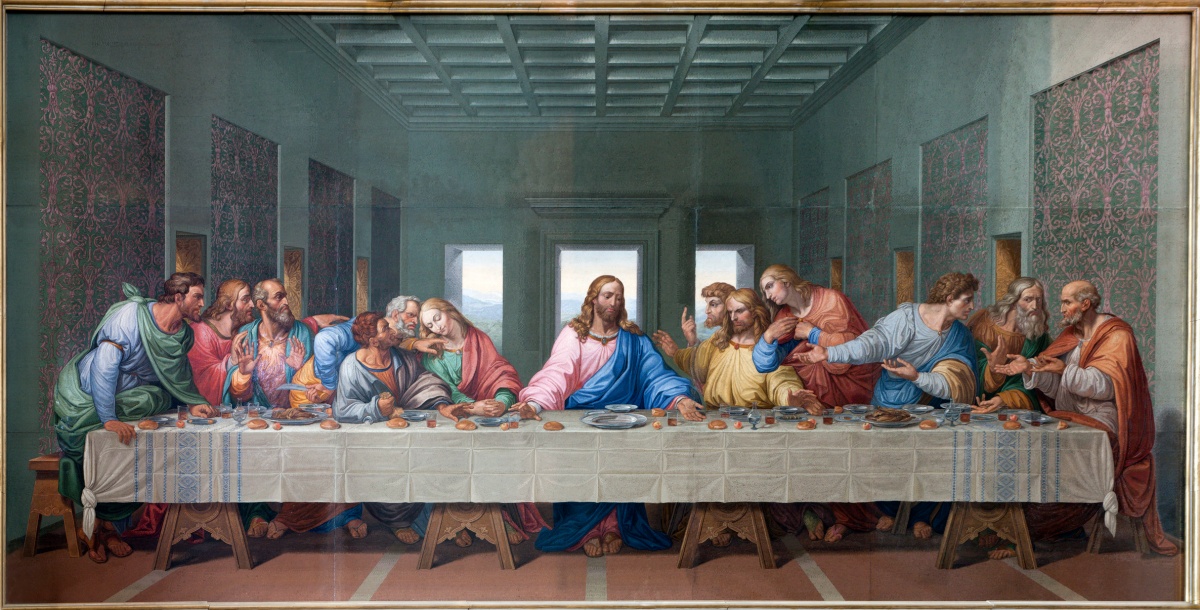
Cleopas and his fellow disciple are taken by this ‘stranger’s’ wisdom. His words are causing their hearts to ‘burn within them.’ They urged him to stay with them as it was starting to get dark. Then, our own ears perk up when we see them sitting at a table together, about to share a meal. Our minds go back to the account of the Last Supper that had occurred only three days earlier. And we hear some of the same words: “he took bread and broke it, and gave it to them”. It is in the breaking of the bread that their eyes were opened, and they recognized him. Then he vanished from their sight, and they, full of uncontainable excitement, turned back to Jerusalem, in the right direction.
The road to Emmaus passage ends with the two disciples back in Jerusalem with the others “telling [them] what had happened on the road, and how Jesus had been made known to them in the breaking of the bread” (v. 35). Only one more thing must occur before the Apostles and disciples can turn their knowledge of Jesus into action, taking on the full, public, courageous mission of spreading the Good News: the descent of the Holy Spirit upon them in the upper room at Pentecost. We who have been baptized have been given that same spirit. We are called to be those disciples today.
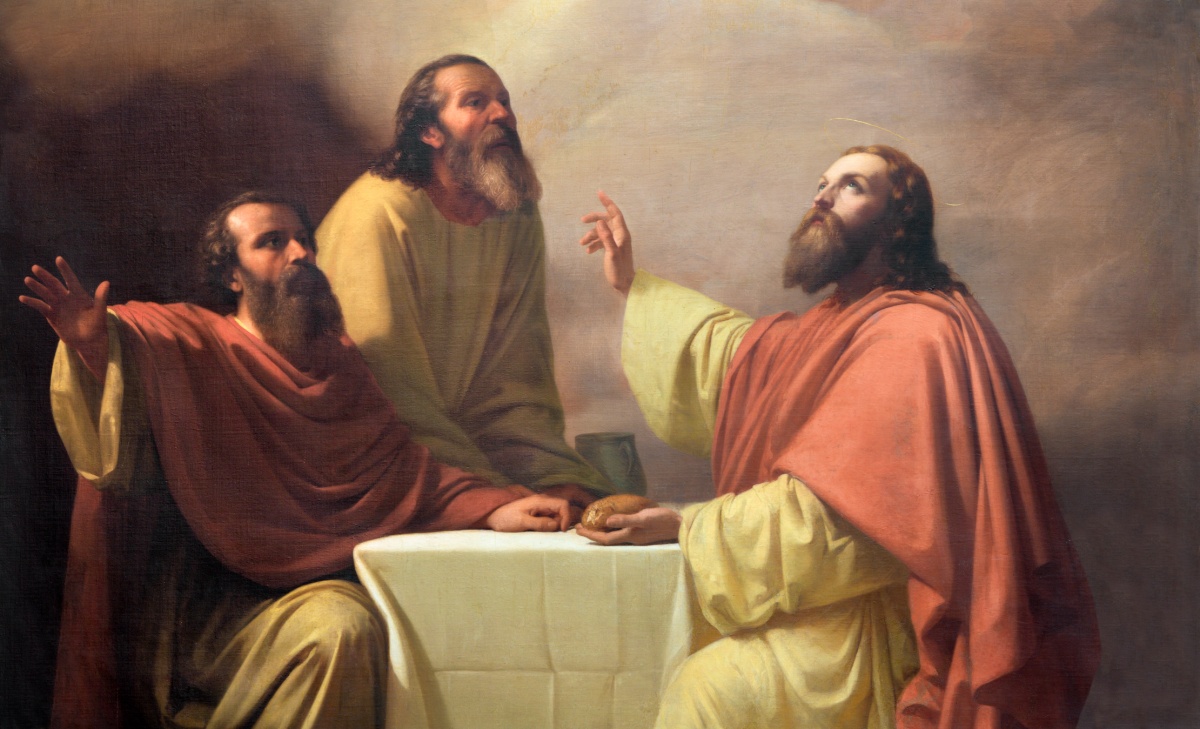
This is the Good News. Jesus remains present to us today. The whole reason, meaning, and purpose of Christ’s Incarnation, Passion, Death, and Resurrection is contained in this. In the breaking and the sharing of this bread in faith, our eyes, like those of the two disciples on the road to Emmaus, can be opened to fully recognize Jesus’ desire to enter our unique lives and to walk with us personally; to be really and fully present to us on the road; to nourish us and to give us the strength to live the way, the truth, and the life that he calls us to every day: to love God and our neighbors as he loved us. “Do this in memory of me” (Lk 22: 19, 1 Cor. 11: 24-25).
More to Explore
SKM: below-content placeholderWhizzco for FHB