

The raising of Lazarus is as stunning to us today as it was for those who witnessed it. In this passage, we encounter Jesus both as the Son of God and the Son of Man, fully divine and fully human. Who but God could do such a thing as raise a dead man back to life by speaking three words with absolute authority, “Lazarus, come out!”? But we are also shown the depths of Jesus’ full humanity when we see him deeply moved, perturbed to the depths of his being, by the death of his friend, Lazarus, and in the profound compassion he has for the pain of loss he sees in Martha and Mary. This is revealed most heartrendingly in three other words, “And Jesus wept” (verse 35).
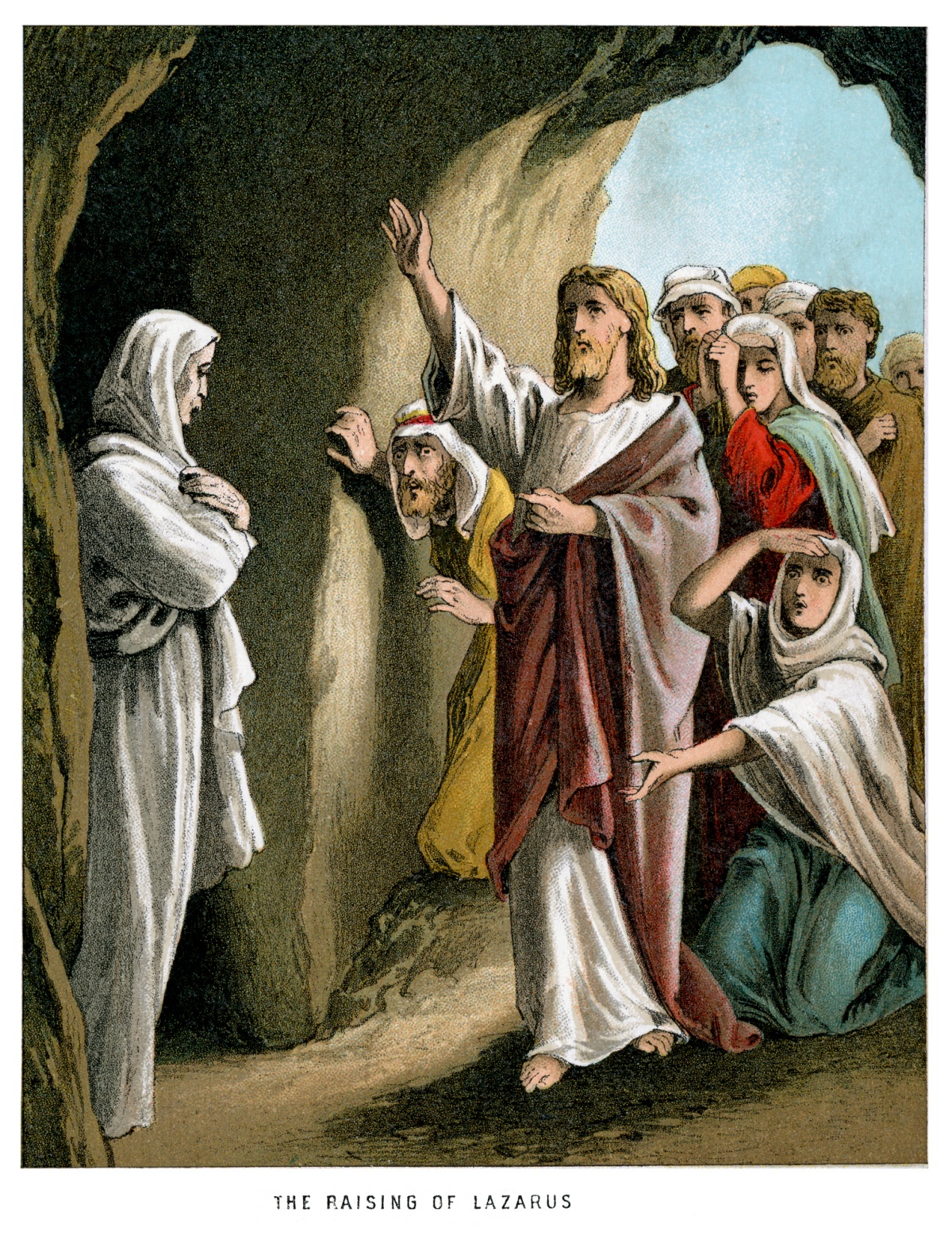
Many of our struggles with faith arise in us when we are faced with the reality of death. Have we not felt what Martha and Mary did? Out of the depths of our own suffering and loss, in the midst of the seemingly unbearable sadness and frustration of those moments, has not our own faith been tested? Have we not experienced the raw, back-and-forth struggle in our minds and hearts between doubt and tenuous faith? Have we not uttered plaintive words like Martha’s, “Lord, if you had been here, my brother would not have died” (v. 21), followed by an almost desperate act of faith, saying, “But even now I know that whatever you ask of God, God will give you” (vs. 21-22).
Jesus tells Martha, “Your brother will rise” (v. 23). We are getting to the meat of this passage when Martha says, “I know he will rise, in the resurrection on the last day” (v. 24). It is then that Jesus, in the fullness of his divinity, declares, using the ancient, most sacred name of God, I AM, saying, “I AM the resurrection and the life; whoever believes in me, even if he dies, will live, and everyone who lives and believes in me will never die.” Then he asks Martha (and us), “Do you believe this?” (vs 25-26)
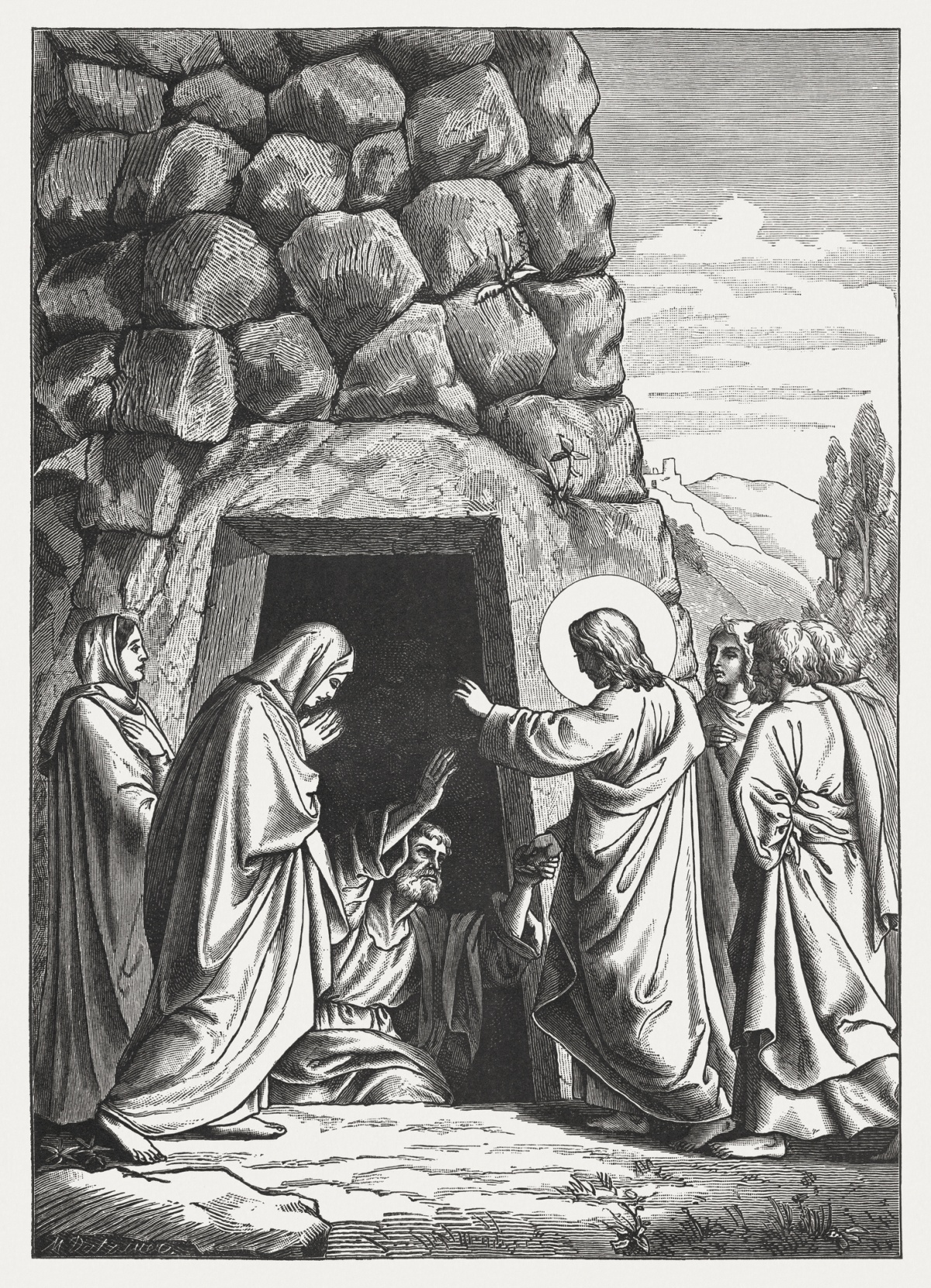
This scene is raw with a variety of human emotions. We almost hear the mournful keening of the women and the low murmur of conversation among the friends and neighbors gathered for the funeral. Jesus, in his humanity, is profoundly perturbed with his own mourning for his friend, Lazarus, as he moves to the tomb with the crowd of mourners. He tells them to “Take away the stone” (v. 39). Martha argues that there will be a stench, but Jesus responds, testing Martha’s earlier statement of belief in him, saying, “Did I not tell you that if you believe, you will see the glory of God” (v. 40)?
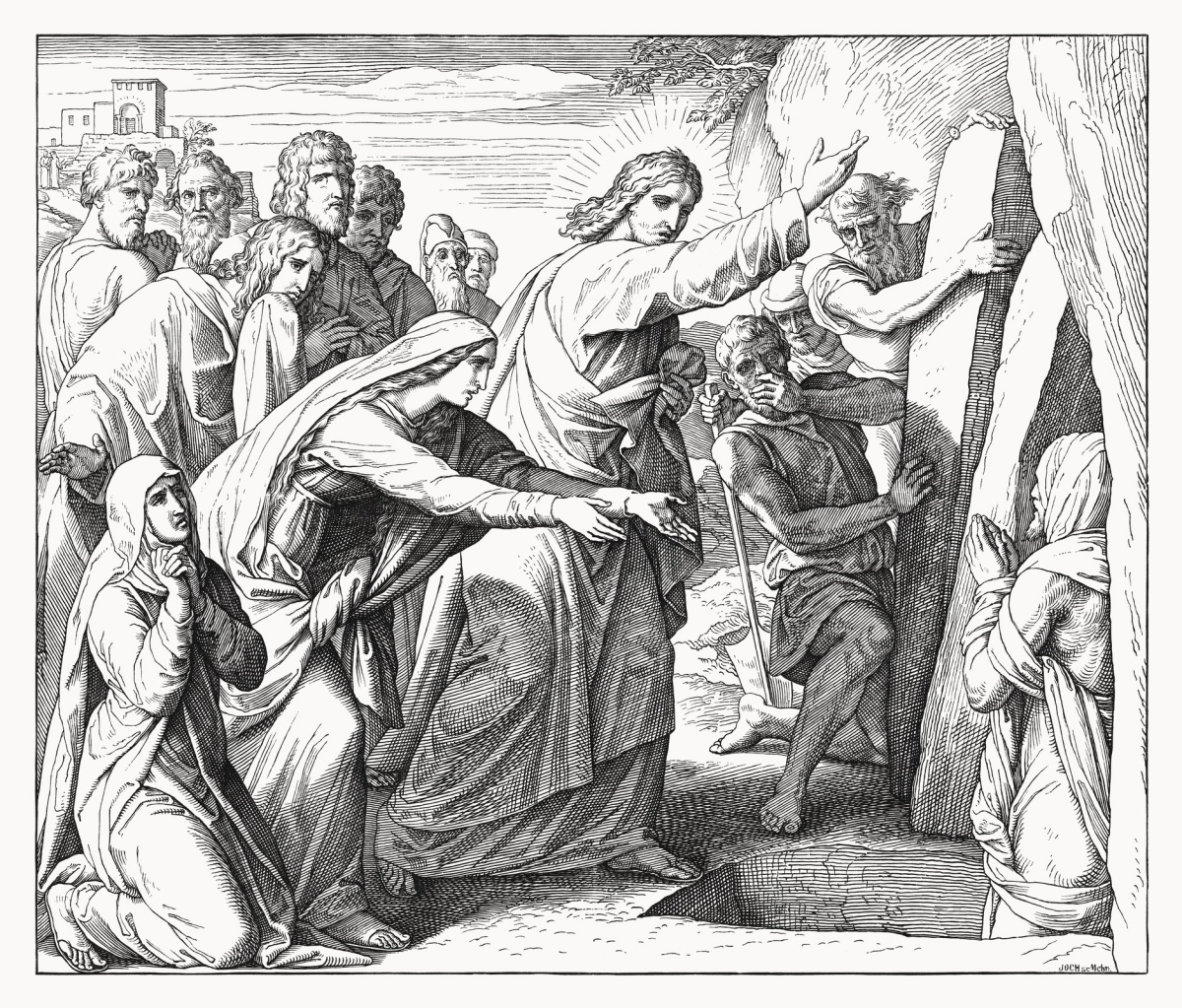
When Jesus tells the people to “Take away the stone,” he is speaking to us as well. When I sin against God or others, it is like placing a stone before the grave of my soul. We might do a little self-reflection here. What habits of mine are like the stone before Lazarus’ grave, that block me from being fully alive, that prevent me from seeing and believing that Jesus truly is the resurrection and the life and all that that means, both in my life today and on the last day? Here is an even more powerful question: Do we have the depth of compassion to see, to forgive, and to help remove the stones from ‘graves’ of those who have caused us harm in any way?

As in this passage, sometimes it feels like it takes Jesus a long time to get there, to come to our aid. But we can believe that Jesus has always been with us, even though we may not see him. He will always come to us as he did to Lazarus. He is never too late. If we keep ourselves open to him, he reminds us over and over again that no matter what our sins, faults, or failings, he can pull life out of all of them. He can pull life out of the unjust suffering we experience from others, too. If we can believe this, it will make all the difference. Hope can remain with us in all situations. Even in the face of death or violence, we can believe him when he says that “[He IS] the resurrection and the life, and that he can pull life out of any circumstance.
More to Explore
SKM: below-content placeholderWhizzco for FHB