

Jesus gives us this admonition in his Sermon on the Mount in Matthew’s Gospel. More specifically, it comes at the end of his comments concerning loving our enemies. “You have heard it said, ‘You shall love your neighbor and hate your enemy.’ But I say to you, Love your enemies and pray for those who persecute you, so that you may be children of your Father in heaven, for he makes his sun rise on the evil and on the good, and sends rain on the righteous and on the unrighteous. For if you love those who love you, what reward do you have? Do not even the tax collectors do the same? And if you greet only your brothers and sisters, what more are you doing than others? Do not even the Gentiles do the same? Be perfect as your heavenly Father is perfect” (Mt. 5: 43-48).
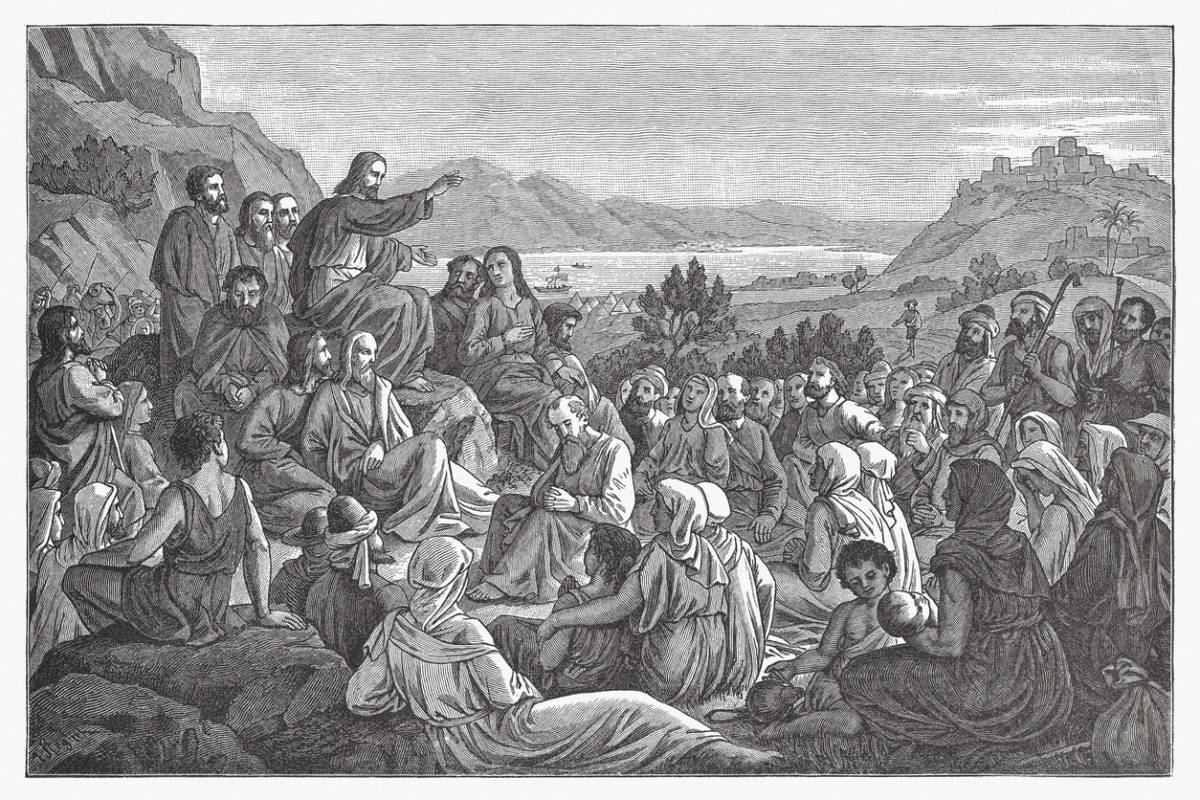
At the center of these words is the constant presence of our Father in heaven. What is being revealed in these challenging words is the very nature of the Father. It is in Jesus, after all, that we see the face of God and come to know the nature of the Father intimately, personally. Jesus is the very model and example of this kind of love. And that love is, of course, perfect. We know that Jesus is speaking to us here, for we have all too often made ourselves enemies of God in our sinfulness. Yet, he came into the world, into enemy territory, so to speak, to conquer sin and death, to forgive and to redeem us out of his perfect, unconquerable love for us. Jesus puts all of this in seemingly simple terms for us. We can even see the logic in these words, but…It is not easy.
What on earth does he mean? Why does he tell us to be perfect as the heavenly Father is perfect? Might we not say to ourselves, “Doesn’t he know better”? We are not capable of perfection. We are, after all, sinners, weak and broken in many ways. No one knows that better than Jesus. He knows our fallenness. He even knows that some have made themselves willful enemies of God. Yet, it is precisely for this reason that, in and through an act of unconditional love, he willingly chose to take on human flesh, to come into the world, to bear our sins upon himself on the cross. Jesus is the example of his own words here. And does he not say to us, “Come, follow me”?
Though we are broken and battered by our sinfulness and that of others, Jesus also knows our inmost being, for we were made in and of holiness, made ‘in the image and likeness’ of God. He knows that somewhere in our deepest selves, there is a yearning to return to that original innocence. It is that often unconscious yearning for innocence that he is appealing to here. It is an appeal to our conscience, to our better angels. It is an appeal to the Natural Law imprinted on our conscience. That law does not tell us what to do; rather, it tells us what not to do. Psalm 15 asks a simple question: “Lord, who shall be admitted to our tent, and dwell on your holy mountain (v. 1)?
And the response is: “He who walks without fault; who acts with justice and speaks the truth from his heart; who does not slander with his tongue; who does no wrong to his brother, who casts no slur on his neighbor, who disdains the wicked, but honors those who fear the Lord: who keeps his pledge, come what may; who takes no interest on a loan, who accepts no bribes against the innocent. Such a man will stand firm forever” (vs. 2-5). This Psalm and the words of Jesus from the Sermon on the Mount challenge us to self-reflection, to examine our conscience. We must pay heed to our consciences in all these things. It is in practicing these things that we enter into the long, hard, but rewarding journey toward the perfection of the Father. We do this humbly knowing that we cannot undertake such a heroic quest without the grace of God to help us on the way. But we are encouraged by the fact that in our humble act of choosing to follow Jesus, he promises to be with us in his Holy Spirit until the end of our days. The Lord knows and responds to the desire of our hearts with perfect love. What we love, we will grow to resemble.
“Brothers and sisters, let us love one another for love is of God. Everyone who loves is begotten of God and knows God. Whoever is without love does not know God, for God is Love” (1Jn. 4: 7-8). It is in this love, then, that we practice the perfection of the Father.
More to Explore
SKM: below-content placeholderWhizzco for FHB