

The practice of the forty days of Lent is rooted in the earliest traditions of the Church. As we know, the events of the Gospels were passed on by oral tradition in the earliest days and years of the Church. The story most often told was that of Jesus’ passion, death, and resurrection. This is why all four of the Gospel accounts of Jesus’ passion are so similar. And it is this part of the Gospel that is the focus of our Lenten practices.

All stories have an end…except this one. Everyone knew that the end of the story was not the crucifixion and death, but the Resurrection. God’s story was like no other. What seemed the end, what seemed a tragedy of infinite proportions, God transformed into a new and eternal life. And he can do the same for us. This is what we are called to reflect upon over the 40 days of Lent. We are all to see ourselves as part of this continually unfolding story. We are to be active participants in it. What story, then, are we participating in? The incomprehensible, unconditional, and infinite story of love that God has for each one of us, then and now. It truly is the greatest story ever told, and it will continue to be told until the end of time.
The story of the Passion and Resurrection of Jesus is the catalyst behind our annual observation of the 40 days of Lent. As followers of Jesus, we are called to be active participants in Jesus’ salvation story. We each have important, meaningful roles to play in it. Jesus gives us three particular practices, or means, to enable us to participate in this ongoing story most effectively. These means help us understand and practice the way, the truth, and the life of Jesus, both personally and communally. These three disciplines are: the practice of alms-giving, the practice of making extra time and space for prayer and reflection on the scriptures, and the practice of fasting. These three practices have been traditional disciplines of the Church from the beginning. In this passage from Matthew’s Gospel, Jesus instructs us on how to do each of these disciplines during Lent…and beyond.
Jesus tells us, “When you give alms, do not blow a trumpet before you, as the hypocrites do in the synagogues and in the streets to win the praise of others…when you give alms, do not let your left hand know what your right hand is doing” (vs. 2-3). Why this instruction? It teaches us self-discipline. It helps us to learn humility and to experience the graces that come with it. When we give alms, it is to meet the real needs of the suffering other; it is not to draw attention to ourselves. It is the practice of giving without expecting anything in return. This is the way of love. Alms-giving is not about us, but about the one who is suffering. This is Jesus’ way, the way of total self-giving, done out of love and for the good of the other. This generosity of love, done in ‘secret,’ is seen and rewarded by God, who sees all that is done in secret. What more could we want or need?

The second practice that Jesus proposes is prayer, and again with the same admonition. “When you pray, do not be like the hypocrites, who love to stand and pray in the synagogues and on street corners so that others may see them…go to your inner room, close the door, and pray to your Father in secret…” (v. 5). During Lent we are allowed to deepen our prayer life. We are told to “go to your inner room.” I like this translation; it implies that place deep within our heart where we encounter Jesus most personally, most intimately. We are to practice going there and closing the door to all of the distractions that try to tempt us away from that intimate, one-on-one relationship with Jesus. This is the proper attitude for prayer. To give oneself to him wholly, completely, in private, without distractions, as we would give ourselves to our deepest, most intimate Friend.
Jesus gives us the Lord’s Prayer in this passage as well (vs. 9-13). With it, he teaches us the proper order of prayer. To put God’s holy name first, before all else, then to strive to do his will. Then, pray to receive and to be strengthened by his spiritual food so that we will not fall. Then, our prayer should lead us to ask forgiveness, and to remember that we will be forgiven in the measure that we have forgiven others. Finally, we pray to be protected and delivered from all that is evil. The practice of this kind of intimate communication with the Father belongs most naturally to that quiet place that is the ‘inner room’ of our heart, where we can talk in ‘secret’. “The Father who [listens and] sees in secret will repay you.”
Finally, Jesus speaks to the holy discipline of fasting. “When you fast, do not look gloomy like the hypocrites who neglect their appearance, so that they may ‘appear’ to be fasting…anoint your head and wash your face, so that you may not appear to be fasting, except to your Father who is hidden. He sees what is hidden and will repay you” (vs. 16-18). Jesus knows how difficult it is to fast. He also knows how tempting it is to desire to be seen as ‘good’ or ‘heroic’ or ‘saintly’ by others. But when we give alms, or pray, or fast ‘to be seen’ by others, our intentions are no longer noble or effective. They lose most of their steam. They are no longer about the other, or about God, but about ourselves. Jesus wants us to remember that what we do for the other and for God in ‘secret’ is known intimately, lovingly, and generously by God here and now. And his rewards far surpass the fleeting adulation of human praise.
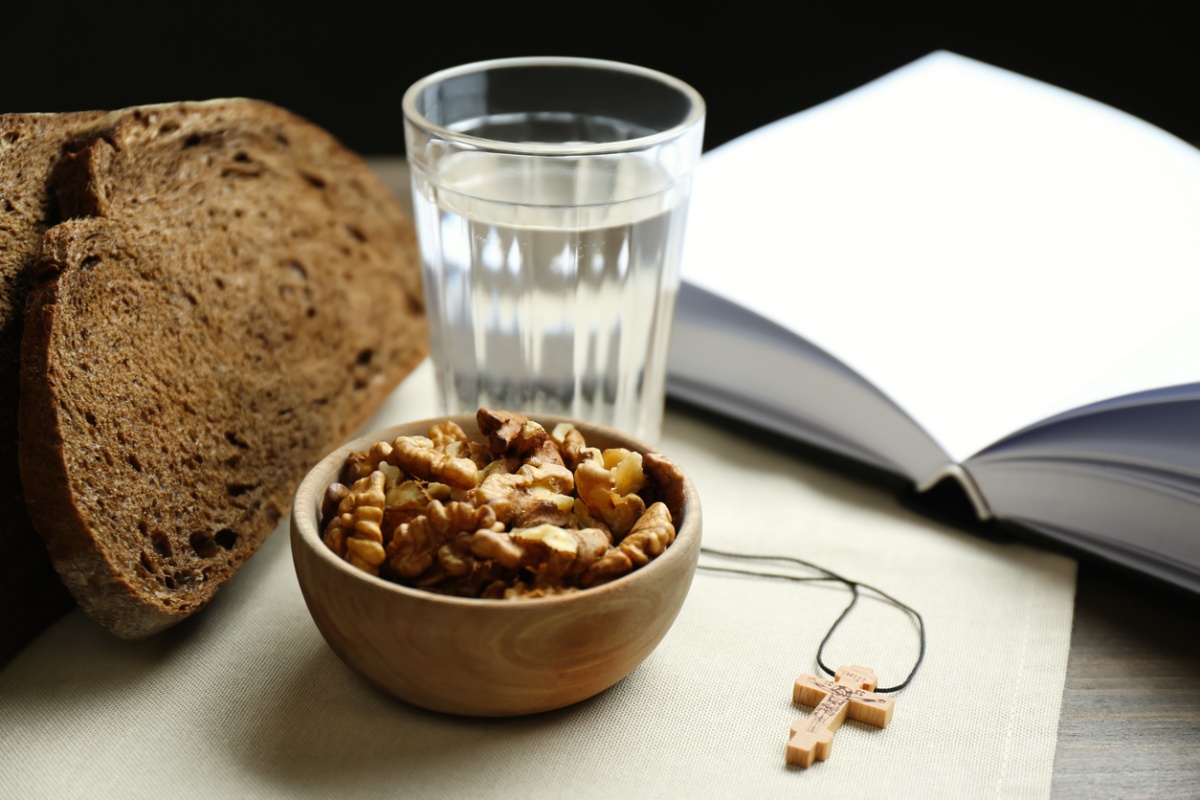
Let us pray in the silence and solitude of the inner rooms of our hearts for the graces we need to give generously and secretly to the poor and needy during Lent (and beyond). May you, Father, deepen the peace and joy of our prayer and strengthen us for all that we may encounter through our day. Help us in our fasting to grow stronger in the virtues of faith, hope, and charity. We pray these things in your most holy name, Jesus. Amen.
More to Explore
SKM: below-content placeholderWhizzco for FHB