

When all of England, including the Churchmen, bent to the will of Henry VIII, one man, a man who was once considered a close friend and advisor to the king, stood alone against the king’s will. That man was Thomas More. He was a man of towering intellect and was recognized as one of the most brilliant writers and thinkers of his age. He was a man of profound faith, a faith that made it possible for him to stand in the breach, even to die, at peace with himself and with no rancor toward those who put him to death. Such is the character of a man or woman in possession of a virtuous mind.
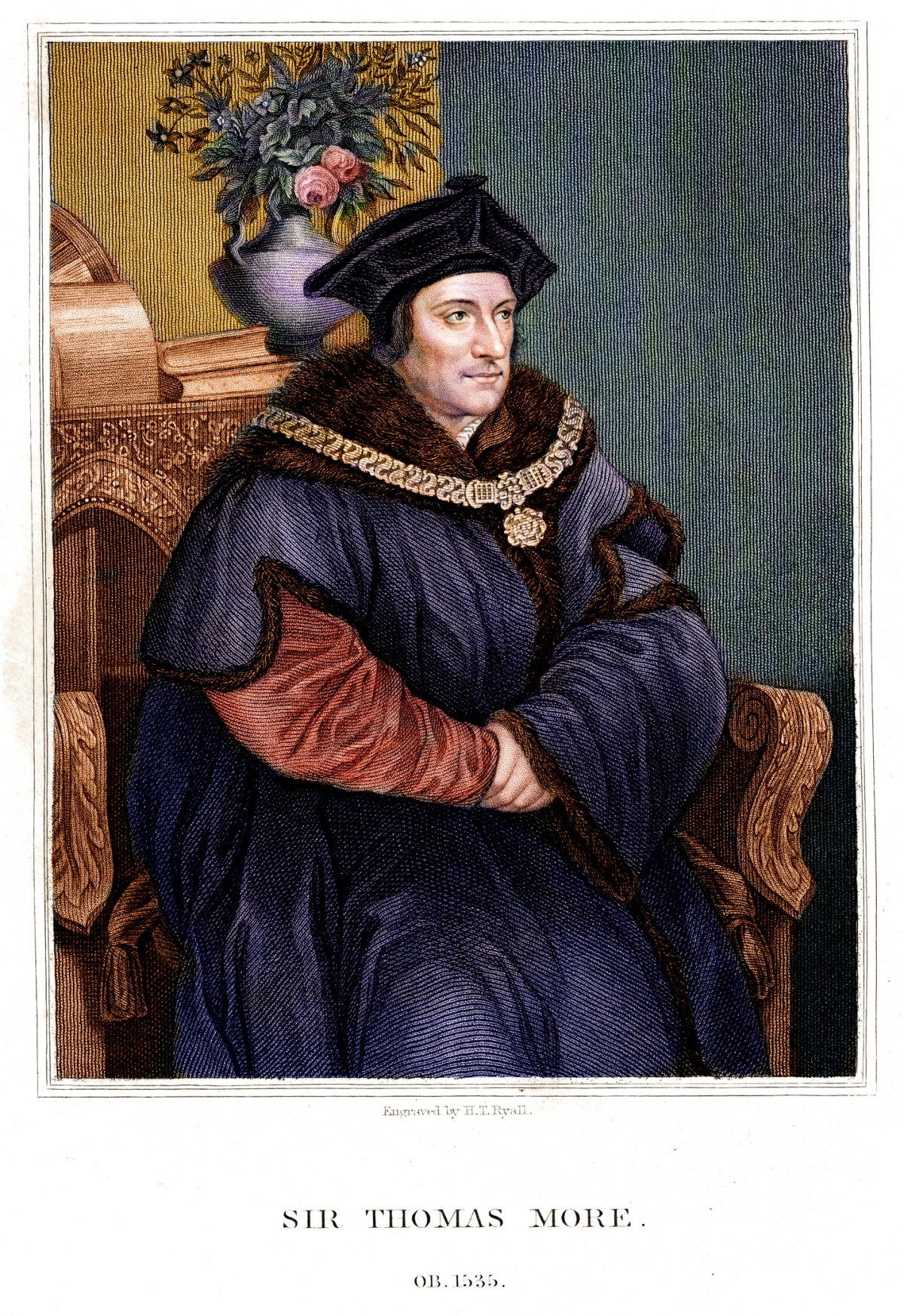
Among other talents, More was also a poet. In one of his early poems, he writes this couplet:
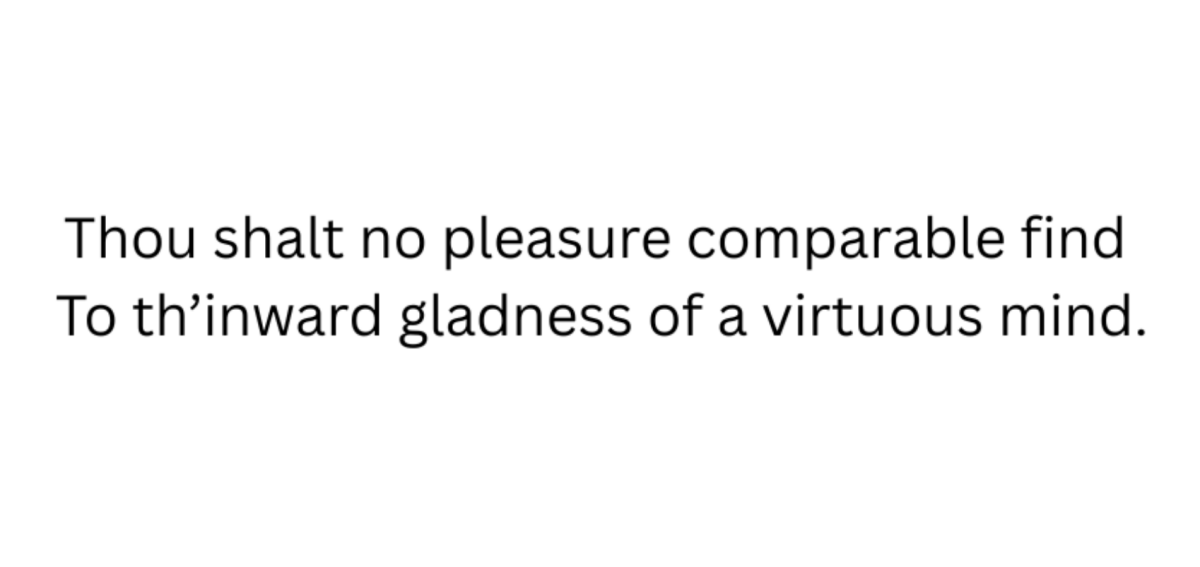
‘Gladness’; that is the natural pleasure arising from living a virtuous life. Virtue is the habitual and firm disposition to always do the good. More specifically, it is the habit of consistently doing what is truly good for others, knowingly, willingly, and fearlessly. The keyword here is, of course, “habit”. The goal of forming the habits of a virtuous mind and to live a virtuous life is to become the person that God made us to be, that is, a saint, a person alive with the love of God.
The Greek philosopher, Aristotle, thinking about what it meant to live a good life, recognized the need for good habits of character. He defined such habits of behavior and thought with the Greek word ‘Arete’, meaning ‘excellence.’ ‘Arete’ translates into Latin as ‘virtus’ (virtue), and into English as ‘habit’. Habits come in two forms: good and bad habits. Here we will look at the former kind of habits, that is, the habits of virtuous character. We are all familiar with the bad habits of mind and character.
Aristotle defined a good habit, or virtue, as an active, deeply ingrained disposition to think, feel, and act in accordance with reason. Christian theology puts it this way: A virtuous habit is not merely a thoughtless routine but a deep-seated disposition or quality of the soul that inclines a person to act in a specific way, that is, a way that is in accord with the will of God. The development of these habits, of course, cannot be separated from the development of a well-formed conscience.
Paul tells us how to build the virtuous habits that would be consistent with the will of God in his Letter to the Philippians by telling us what we should focus on: “Finally, brothers and sisters, whatever is true, whatever is honorable, whatever is just, whatever is pure, whatever is lovely, whatever is commendable, if there is any excellence, if there is anything worthy of praise, think about these things” (Phil. 4:8). We know by experience that this is easier said than done. We are also very aware that we are forced to the task of developing virtuous character in an environment that surrounds us and assaults us with noise and endless temptations toward immediate gratification.
Thomas More understood this, too. He wrote in a letter to a friend that entering into this hard work of developing virtuous character is: “An invitation to enter the finest contest of all, the spiritual battle with ourselves and our unruly nature, all for the sake of the love of God and others.” And we have to do this in the midst of the storms of moral conflict, within and without. More writes further with poignant honesty: “Do not abandon the ship of moral goodness, for we cannot control the winds of immorality. You cannot abandon the ship of moral good to the waves of injustice like a cowardly ship’s captain. You must choose, rather, to be a hero, at all cost.” That’s what a saint is.
To choose to live the Christian life is not just a one-time decision; rather, it is a daily choice, undertaken in the midst of the internal storms of fear and doubt, as well as against the external storms and forces of worldly temptations. Each one of us knows this battle intimately. But we are assured that we do not fight this battle alone. If we believe in God’s love, and trust in his mercy, and if we desire with all of our heart to know him more clearly, to love him more dearly, and to serve him and our neighbor more willingly, even if we sometimes fail, he will be with us in his Holy Spirit through it all. He will provide the grace we need to enter into and to endure the difficult effort to develop the habits of virtuous character rooted in the will of God, that is, the habits of a Christian life well lived. As More’s little couplet reveals to us, there is no greater pleasure than the “inward gladness of a virtuous mind.” And that ‘gladness’, that joy, can survive the meanest of storms that the world can toss at us.
More to Explore
SKM: below-content placeholderWhizzco for FHB