

Wisdom, in one sense, is the ability to make good judgments by applying deep understandings gained from a life of experiences, to choose the best paths and to make better decisions in matters of both practical and moral significance. This is a virtue of the mind that rises above what is generally recognized as raw knowledge, that knowledge that arises from the gathering of facts, but wisdom is knowing how and, more importantly, when to use those facts. But most importantly, wisdom is rooted in virtues like humility and empathy, a willingness to see others as having the same value and worth as oneself.

The Greek philosopher Socrates defined wisdom as knowing what you do not know and having the humility to remain open to learning more. It is the humble awareness that you can never know everything there is to know about most things in life. Does that sound like the world we are living in, where all the loudest voices proudly proclaim that they know everything and all we have to do is take them at their word, and follow them unquestioningly?
Holy Scripture gives us a very clear perspective on wisdom and its truest source. In the Old Testament we are told that: “The fear of the Lord is the beginning of knowledge, but fools despise wisdom and instruction” (Prov. 1:7). We also see this: “The fear of the Lord is the beginning of wisdom, and knowledge of the Holy One is understanding” (Prov. 9:10). And from Psalm 111: “The fear of the Lord is the beginning of wisdom; all who follow his precepts have good understanding. To him belongs eternal praise” (Ps. 111:10). There is no mincing of words here, no ambiguous nuances. Wisdom’s source and goal is the Lord, the God of Creation. This ‘wisdom’ is discovered in the humble awe of the Lord of Lords, the One who is the source and goal of all that is good, true, and beautiful, all that is worthy of creatures made in the image and likeness of the Creator himself.
In the New Testament, Paul tells us, “We speak a wisdom to those who are mature, but not a wisdom of this age, nor of the rulers of this age who are passing away. Rather, we speak God’s wisdom, mysterious, hidden, which God predetermined before the ages for our glory, and which none of the rulers of this age knew, for if they had known it, they would not have crucified the Lord of glory” (1 Cor. 2:6-8). This passage gives wisdom an eternal, transcendent significance, especially for those who have humbly opened themselves to receive the gift of grace that allows them to surrender their pride in the recognition that God is God and we are not. It is a knowledge that arises from a childlike sense of awe and wonder in the presence of God.
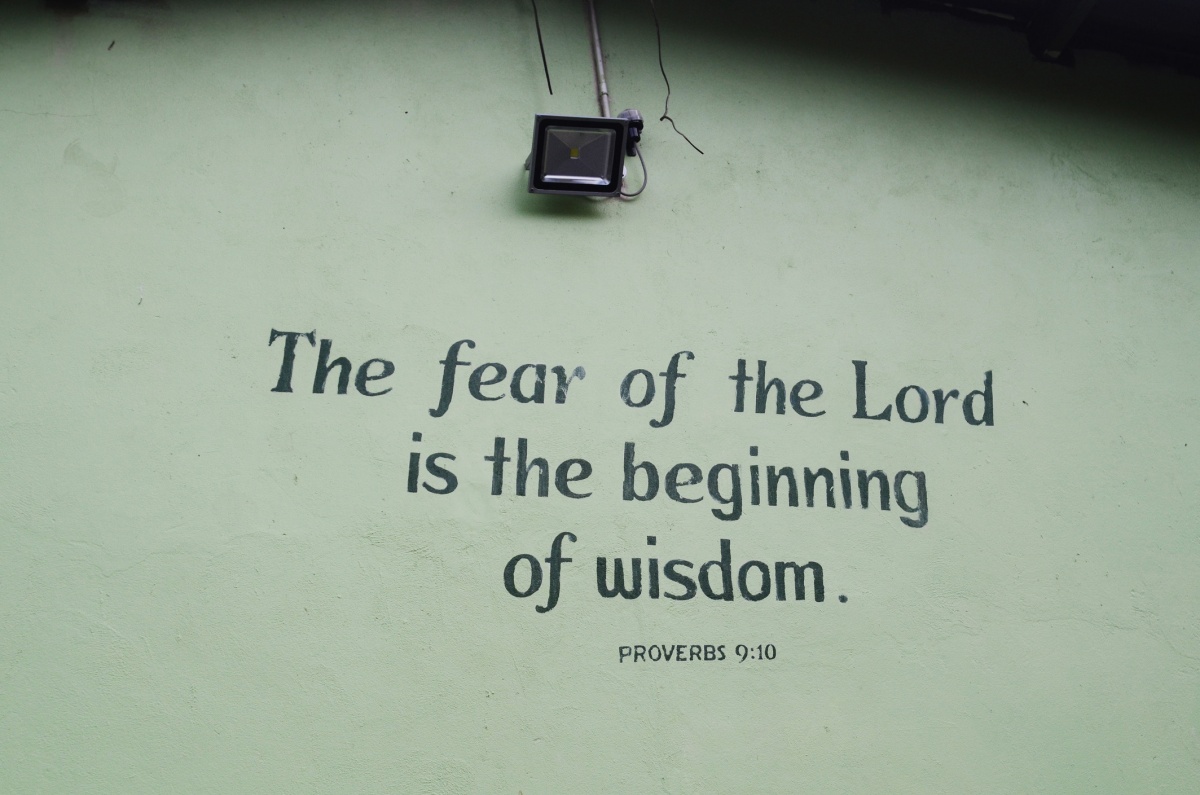
What Paul is speaking of here is the Gospel, that is, the words and the life of Jesus Christ, who is the very real presence of the Wisdom of God in the flesh. Jesus makes the awesome wonder of the Father present among us, and the great wonder for us is that he, with perfect love, challenges us to be the persons we were made by the Father to be, saying to us: “Love one another as I have loved you” (Jn 13:34). Everything that Jesus says and does reveals the wisdom of God to us. If we have ears to hear, and eyes to see, if we are sufficiently awed by God in the Person of His Son, Jesus Christ, we have everything we need to know to be more able to follow the narrow path of his Wisdom to the kingdom of God. The irony here is that those who have the childlike humility to fear the Lord and to follow his wisdom are actually the “mature” that Paul references in this passage from First Corinthians.
Lord, we pray for the grace of true and loving obedience to your wisdom, for the grace of genuine self-denial and humble surrender to your infinite and eternal wisdom, and for the perseverance to humbly and wisely walk the narrow path toward your heavenly kingdom all the days of our lives. In Jesus’ name we pray. Amen.
More to Explore
SKM: below-content placeholderWhizzco for FHB