

To understand and practice the idea expressed in the phrase “Let go and let God” requires the virtue of humility. It is only out of a deep sense of true humility that we can see and to practice the profound wisdom of that simple, yet very difficult statement. Humility, though, is given a bad name in a social environment that lionizes individualism and makes god-like claims of the authority of the individual, self-centered ego.

C.S. Lewis saw the wisdom of that phrase in his book, Mere Christianity, when he wrote the following: “The more we let God take us over, the more truly ourselves we become, because He made us. He invented us. He invented all the different people that you and I were intended to be…It is when I turn to Christ, when I give up myself to His personality, that I first begin to have a real personality of my own.” It is clear that for Lewis, this idea was of central significance in his faith and the way he ultimately chose to live his life.
The letting go part is our great problem. It always has been so. From the beginning, humanity has all too often gotten caught up in the delusion that all authority concerning our lives belongs to us alone. Thomas More argued in his book, A Treatise Upon The Passion, which is a prayerful reflection on Jesus’ agony in the Garden of Gethsemane before his arrest, that the original calling of the human being in Eden was to serve, to be a true servant, to be of real service to others, that such a life well lived was an act of love. More saw Jesus modelling this active ‘letting go and letting God’, when in the midst of his agony in the Garden of Gethsemane, he surrendered his will to the Father’s, to freely serve the Father and all of us, when he prayed: “My Father, if it is not possible for this cup to be taken away unless I drink it, may your will be done” (Mt. 26:42).
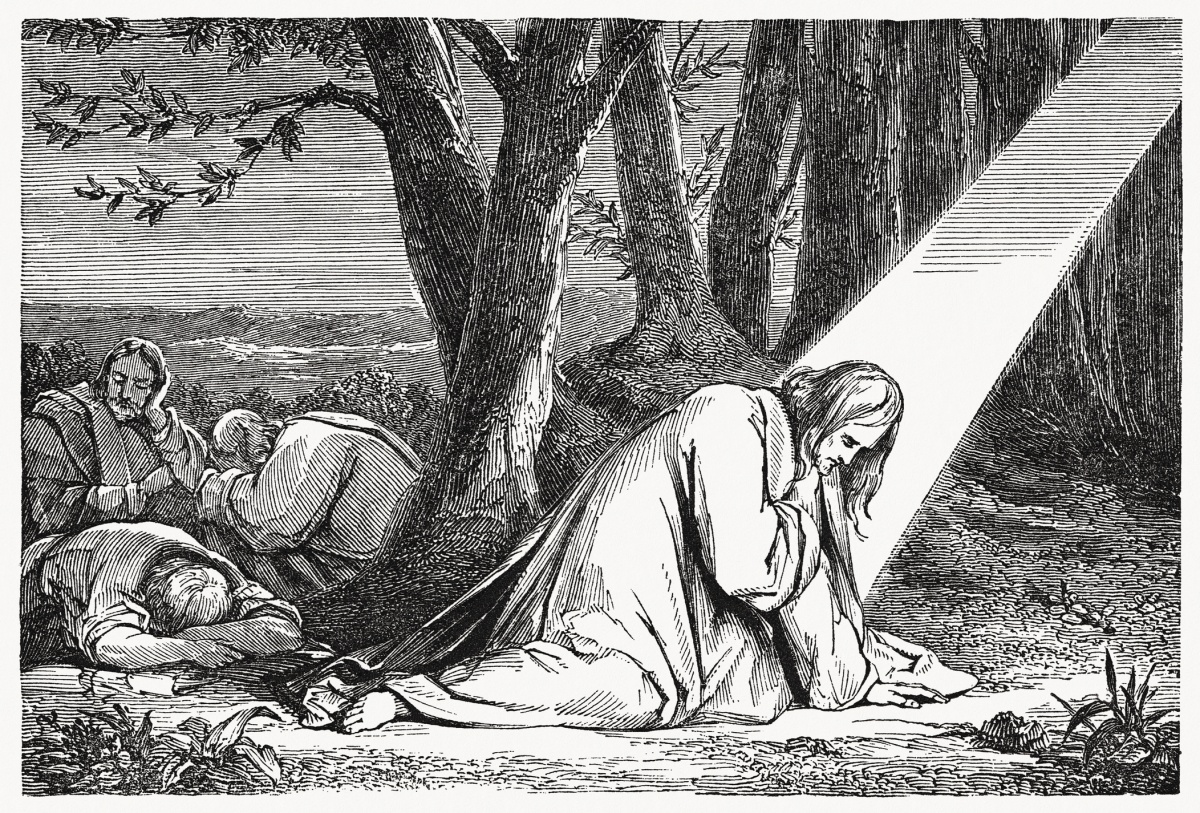
That gets at the heart of what it means for us to “Let go and let God”. To choose to do so is a conscious, humble recognition that I am not in total control over my life’s outcomes. It is a humble, even child-like, acceptance that I do not (and cannot) know everything that is best for me in all things, maybe most especially in the midst of my life’s most difficult challenges. I am surrendering myself to the wisdom of trusting in God to guide my life. Clearly, this is an active practice of faith rather than a passive resignation.

Jesus speaks of the wisdom of this ‘letting go’, of surrendering pride and ego when he says to us: “I tell you with certainty, unless you change and become like little children, you will never get into the kingdom of heaven” (Mt. 18:3). To change is to let go of one thing for something better. When we choose to cling stubbornly to the idea of giving precedence to our egos, we get lost, we lose sight of the narrow path that leads to heaven, and find only frustration and despair. It is in the adult recognition of our limits that we can begin to “change” and become more like the ‘little children’ that Jesus speaks of in this passage, that is, those who can see and accept the greater wisdom of God in all things, with genuinely humble awe and wonder.
More to Explore
SKM: below-content placeholderWhizzco for FHB