

The forty days of Lent are upon us. For Christians, this is a time to reflect on where we are on our long journey toward the kingdom of God. It allows us to focus, to purposefully spend time apart, and to prepare for the most holy, the most sacred time of the year: the Easter events. It is a time for us to take ourselves apart, to go into the desert”, as Jesus did, to commit ourselves to purposeful time in silence and solitude to be more attentive to the presence of God in our lives. We are to let the Spirit lead us, like Jesus, into the desert of solitude and silence to spend time with the Father.
At the end of his forty days of fasting and prayer, Matthew’s Gospel tells us that Jesus was “famished”. This is not hard for us to understand. In his humanity, he was feeling the effects of his long fast. When he was at his weakest, Satan came to tempt him. Satan foolishly perceived that Jesus, in his weakness, might be susceptible to his promptings, and he employed several temptations that are very familiar to us today. As we know, and have experienced, these are the same temptations that Satan uses on us in his attempts to draw us away from God.
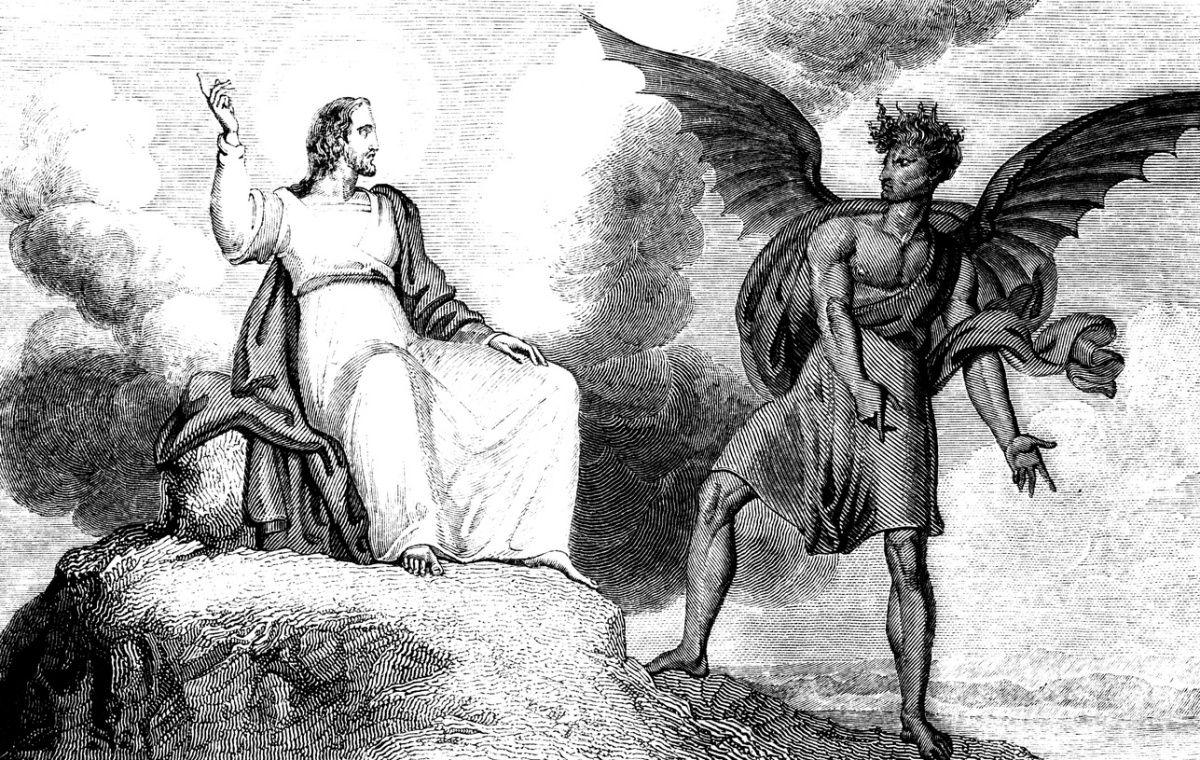
“If you are the Son of God, command these stones to become loaves of bread” (v. 3). In this, Satan is attempting to appeal to Jesus’ physical discomfort due to his long fast. This appeal is familiar to us. We do not like discomfort or pain. The pangs or pains of hunger come in many forms. There is, of course, the physical discomfort of hunger that comes from the lack of food, but there are other forms of hunger, too, that Satan can appeal to in his attempts to take us away from the law of God. There is, for example, the hunger for friendship. How often are we tempted to ‘go along to get along’ with others, even when we know that it is the wrong path, just to belong, to have ‘friends’. What was Jesus’ response to Satan? “One does not live by bread alone, but by every word that comes from the mouth of God” (v. 4).
When we hear this, we are hearing the wisdom of God. Each year, Lent challenges us not to “live on bread alone,” but to make a more purposeful effort during those forty days to find a few more moments of solitude and silence each day, to pray, to read more Scripture, and to listen to the Word of God whispering in our own hearts. It calls us to pay a little more attention to God, rather than to the things that appeal to us, that tempt our senses and worldly concerns. We are to take the opportunity to give thanks for all of God’s graces. More importantly, we are challenged to reflect on those habits we are given to that “miss the mark” or fall short of honoring God’s will in all that we do. In the “deserts” of our solitude and silence, we are to ask for God’s willing and generous forgiveness and mercy, and for the graces we need to increase our efforts to surrender our will to God’s will more and more often.

Then we are told that Satan takes Jesus to the pinnacle of the temple and challenges him to test God’s love for him. “If you are the Son of God, throw yourself down; for it is written, ‘He will command his angels concerning you,’ and ‘On their hands they will bear you up, so that you will not dash your foot against a stone’” (vs. 5-6). And Jesus responds: “Again it is written, ‘Do not put the Lord your God to the test’” (v. 7). Here we are challenged to look at when, where, and how we sometimes put God to the test. Have we ever heard ourselves saying: “God is love. No matter what I do, he will forgive me,” and thereby permit ourselves to do whatever we want? This is a sin of presumption. A sin against the Holy Spirit. Yes, God is love, and he will forgive, but only if one sees the error of his or her ways, is repentant, remorseful, and willingly turns back to him in humble recognition of his or her sinfulness.
Finally, Satan takes Jesus up a high mountain and shows him all the world’s kingdoms and splendor and says, “All these I will give to you, if you fall down and worship me.” To which Jesus answers: “Worship the Lord your God, and serve him only” (vs. 8-10). Is this not a recognizable temptation to us today? How many give their whole selves over to the siren calls of wealth, fame, or power? How many willingly follow the temptation to serve the rulers of this world, rather than the ruler of the universe and all that is in it? How many in history have fallen, or are presently falling prey to the lure of those who consciously misuse (manipulate) language, even the word of God, appealing to earthly ideals, only to discover that these have no lasting power, offer no real happiness, nor any real promise of peace?

On the other hand, Jesus reveals the foolishness of the Tempter in this passage as well. Satan has no power over us at all, except that which we give him when we willfully and foolishly give in to his temptations. For all of his arrogant presumption of power, Satan can’t ‘make us’ do anything. He is a deceiver, an abuser. God is a lover. Jesus is the proof of that. “You see, at just the right time, when we were still powerless, Christ died for the ungodly. Very rarely will anyone die for a righteous person, though for a good person, someone might dare to die. But God demonstrates his own love for us in this: While we were still sinners, Christ died for us” (Rm. 5:6-8).
The Lenten season challenges us to draw closer to God, to recommit ourselves to him and his way, his truth, and his life. It challenges us to come out of the noise, to leave behind the tempting distractions that surround us every day. Lent calls us to go into the desert with Jesus, to pray, to fast, and to recenter our minds, hearts, and souls on the One who is Father, Son, and Holy Spirit. It is in him alone that we find our true happiness. Only through him can we find our way back home, to where we belong.

Lord, we ask you to guide us through this Lenten season with your wisdom. Show us the path that we should take toward you. Help us to know and to desire only your truth. As we spend time in the desert with you, let your wisdom settle in our hearts so that we can discern what is good and true according to your perfect will, instead of our fallen wills. We pray this in your name, Jesus. Amen.
More to Explore
SKM: below-content placeholderWhizzco for FHB