

In this short passage from John’s First Letter, we encounter the core truth of the Christian life: God is love. This passage is like a small catechism for learning who God is and who we are in relation to God, and how we can reveal in thought, word, and deed that we are truly Christian. It is this knowledge that is the source, the center, the goal, and the driver of our faith.
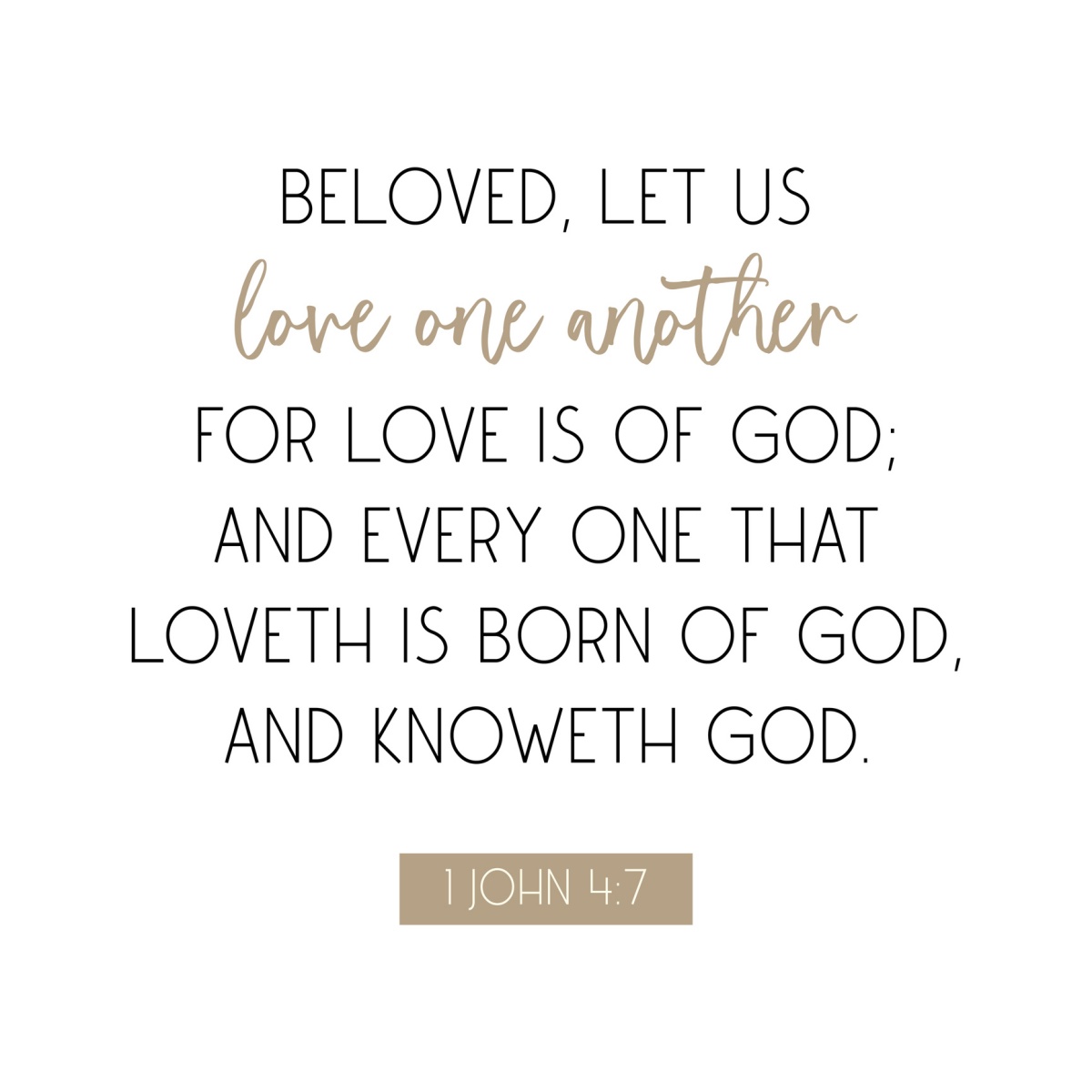
“Beloved, let us love one another, because love is of God; everyone who loves is begotten by God and knows God. Whoever is without love does not know God, for God is love” (1Jn. 4:7-8). We might ask here: What is love? What does it mean to say that ‘God IS love’? Thomas Aquinas identified four distinct dimensions of love: Storge, Philia, Eros, and Agape. The love spoken of in this passage is the highest form of love revealed by Jesus, who unifies all of the other forms in himself. Aquinas calls this highest form of love, “Agape”.
Briefly, then, the other dimensions of love that Aquinas identifies are as follows: “Storge,” which he identifies as natural familial or affectionate love. This is the first form of love we may experience within the context of family. It is that bond between parents and children, or even the natural affections one might have toward one’s pets. ‘Eros’, he describes as passionate or romantic love. This is understood as a good gift from God, but it needs to be elevated and guided by a higher form of love, so it doesn’t become purely self-serving or solely physical. “Philia” is that distinct form of love that we experience in deep friendships. It is a chosen bond based on mutual respect, shared values, and companionship.
What, then, is this love that John is talking about in this passage? According to Thomas Aquinas, this final and highest form of love is described as an act of the will, not an emotional response. It is a profound desire to will the good of the other, no matter the cost to oneself. This is what Aquinas called ‘Agape’, meaning selfless, unconditional love. It is a generous, self-giving choice to give oneself to others, to one’s beloved, without expecting anything in return. It is the kind of sacrificial love that Jesus Christ modeled to us. He did not “regard equality with God as something to be grasped. Rather he emptied himself, taking the form of a slave, coming in human likeness, he humbled himself, becoming obedient to death, even death on a cross” (Phil. 2: 6-8). In doing this, Jesus revealed God’s very nature to us: that God is pure, perfect, magnanimous, unconquerable, and unconditional, completely self-giving love. And, remarkably, this is the kind of love that Jesus commands of us toward one another: “This is my commandment: that you love one another as I have loved you. There is no greater love than this— that a man should lay down his life for his friends” (Jn. 15:13).
The world is starving for this kind of love. This is the love that Jesus wants us to live in and through in our daily lives, so that he can be made present to others, especially to those who are suffering in this deeply wounded world. He wants us to live in this way so that he can be made known, in and through the compassionate, merciful, self-giving love that we share openly, willingly, even sacrificially for the good of others. When we are moved to will the good for others, no matter the cost to us, God is with us. Is this not the deepest desire of our hearts? I quote Augustine here: “Lord, you have made us for yourself and our hearts are restless until they rest in you.”
The Apostle John goes on to tell us: “Beloved, if God so loved us, we also must love one another. No one has ever seen God. Yet, if we love one another, God remains in us, and his love is brought to perfection in us” (1Jn. 4: 12). Isn’t this love exactly what the world so desperately needs here and now? Isn’t God calling us to be his love in the midst of the chaos, no matter the cost to ourselves? When we love in this way, the way that Jesus modeled for us, we are giving others a vision of, indeed, we are giving them the experience of God who is love. Jesus does not command of us what is beyond our skills or talents in this matter of love.

Let us all pray to Jesus for his help to live in this way of love. We can use the prayer of the father who comes to Jesus for help for his son. Jesus tells him: “Everything is possible to one who has faith. And the father cries out: ‘Lord, I do believe, help my unbelief’” (Mk 9:23-24). God, who is love, will not deny us this grace if we have faith.
More to Explore
SKM: below-content placeholderWhizzco for FHB