
Why is it that we can comprehend, even readily agree with the teachings, the infinite wisdom of our Lord, Jesus Christ, but find it so hard, actually, to live by that wisdom in our daily lives? What is missing between our understanding and our living out the infinite wisdom of God? What gets in the way? Many “answers” could be given here, but it seems that the most common cause of this disconnect is some form of fear. We recognize at some level that if we act according to what we believe openly, it could very well put us in danger of ridicule, even revilement in this overtly secularized world.
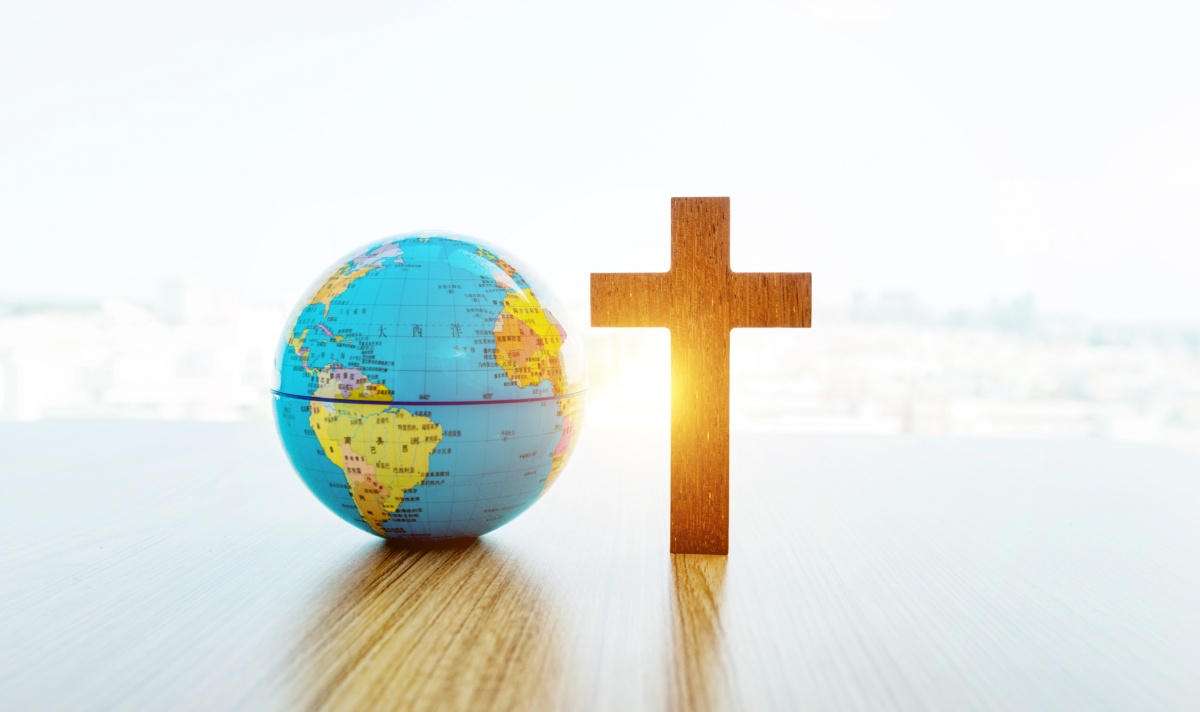
The Word of God has always been at odds with the wisdom of the world. The natural conflict between the world and the Word of God is not just a matter of ‘competition’; it is a serious battle for the salvation of our individual souls. It is a battle pitting all of the weapons of all the worldly lords of pride, envy, self-righteous anger, sloth, greed, gluttony, and lust; against their virtuous remedies: humility; love of one’s neighbor and charity; patience and gentleness; fortitude (strength of character and devotion to good works); mercy, pity, and charitable giving; abstinence and moderation; chastity and fidelity in marriage. We can readily see that the world promotes a wide and raucous road promising all manner of immediately pleasurable ‘rewards’. At the same time, the Gospel gives us a much different, much harder, and narrower path to follow.
In Matthew’s seventh chapter, a continuation of Jesus’ Sermon on the Mount, we see this challenge: “Do to others whatever you would have them do to you. This is the Law and the Prophets” (Mt. 7:12). The world, on the other hand, argues that it is all about “Me.” We see the consequences of this way of thinking all around us every day, in countless sufferings and injustices. It has been so since the Fall of Adam and Eve. Jesus came into the world to save us from the delusions of sinful pride in all of its forms. Jesus recognizes and reminds us that to be his followers, we must be different; we must see worldly attractions, its judgmentalism, its bitter jealousies, its unresolved resentments, for what they really are and turn away from them. In the words of John of Krondstat, a Russian Orthodox priest of the late 19th and early 20th centuries: We must learn to love every man despite his falling into sin. Remember that the foundation of [every] man is the same…the image of God.” This is hard! But it is The Way of Jesus Christ, the only way that leads to the kingdom of God.

In a world so committed to the appeasement and aggrandizement of the self, that sees all others as competitors for the same limited resources, that defines value and success in terms of power or wealth, and divides everything in terms of who has and who has not, the Way of Jesus Christ is often seen as an anachronism, a foolishness. Paul knew this, too. “I have applied these things to myself and Apollos for your benefit, brothers and sisters, so that you may learn from us not to go beyond what is written so that none of you will be inflated with pride in favor of one person over against another” (1 Cor. 4:6). He recognized that the Way has made him a ‘spectacle’ to the world. And so he writes: “We are fools for Christ” (v. 10) and goes on to describe how he goes about being hungry, poorly dressed, and homeless. He is roughly treated and ridiculed, but he responds with blessings. He endures persecution and responds to those who slander him with gentle replies. And the world sees this way of being as rubbish.
It is these very things that we fear will happen to us if we choose to faithfully follow The Way of Jesus Christ in this world. I know this fear personally. It is real. None of us is immune to this fear, but in faith we know we are never alone. God has not given us a burden that is too heavy. “Come to me all you who are weary and burdened, and I will give you rest. Take my yoke upon you and learn from me, for I am gentle and humble in heart, and you will find rest for your souls. For my yoke is easy and my burden light” (Mt. 11:28-30).

To walk in Jesus’ Way is to “Enter through the narrow gate; for the gate (of the world) is wide and the road broad that leads to destruction, and those who enter through it are many. How narrow the gate and constricted the road that leads to life. And those who find it are few” (Mt. 7:12-14). That last sentence ought to give all of us pause. Do I want to fall in line with the many, or do I want to be among the few who follow the harder track, the narrow path that leads to the kingdom of God? Bishop Fulton J. Sheen, a popular and much-watched TV evangelist back in the 1950s, put it this way: “If you do not live what you believe, you will end up believing what you live.” One leads to light and wisdom, the other leads to darkness, endless competition, and division.
Questions for personal reflection: Am I caught up in worldly thinking and acting? How is that working for me? There is a way out of the madness: follow Jesus on the narrow path that leads to life, no matter the cost, for in doing so, your reward will be great in heaven. “What will it profit a man if he shall gain the whole world and lose his own soul” (Mt 16:26)? What is more precious than all the world? Each person’s soul. For it is the image of God. Therefore, “Do to others whatever you would have them do to you. This is the Law and the Prophets.”
More to Explore
SKM: below-content placeholderWhizzco for FHB