

Every year, at the end of October, while the secular world celebrates Halloween with a festive mix of costumes and ghost stories, the Christian community celebrates two feasts honoring the saints and the souls of all who have died. These celebrations have a far deeper spiritual meaning and purpose than the secular festival of Halloween. For the Christian community, the idea of death is not an end, or something to be feared, for we believe that Jesus Christ, the only begotten Son of God, became Man, suffered and died on the cross, and rose again on the third day, conquering sin and death, once and for all.
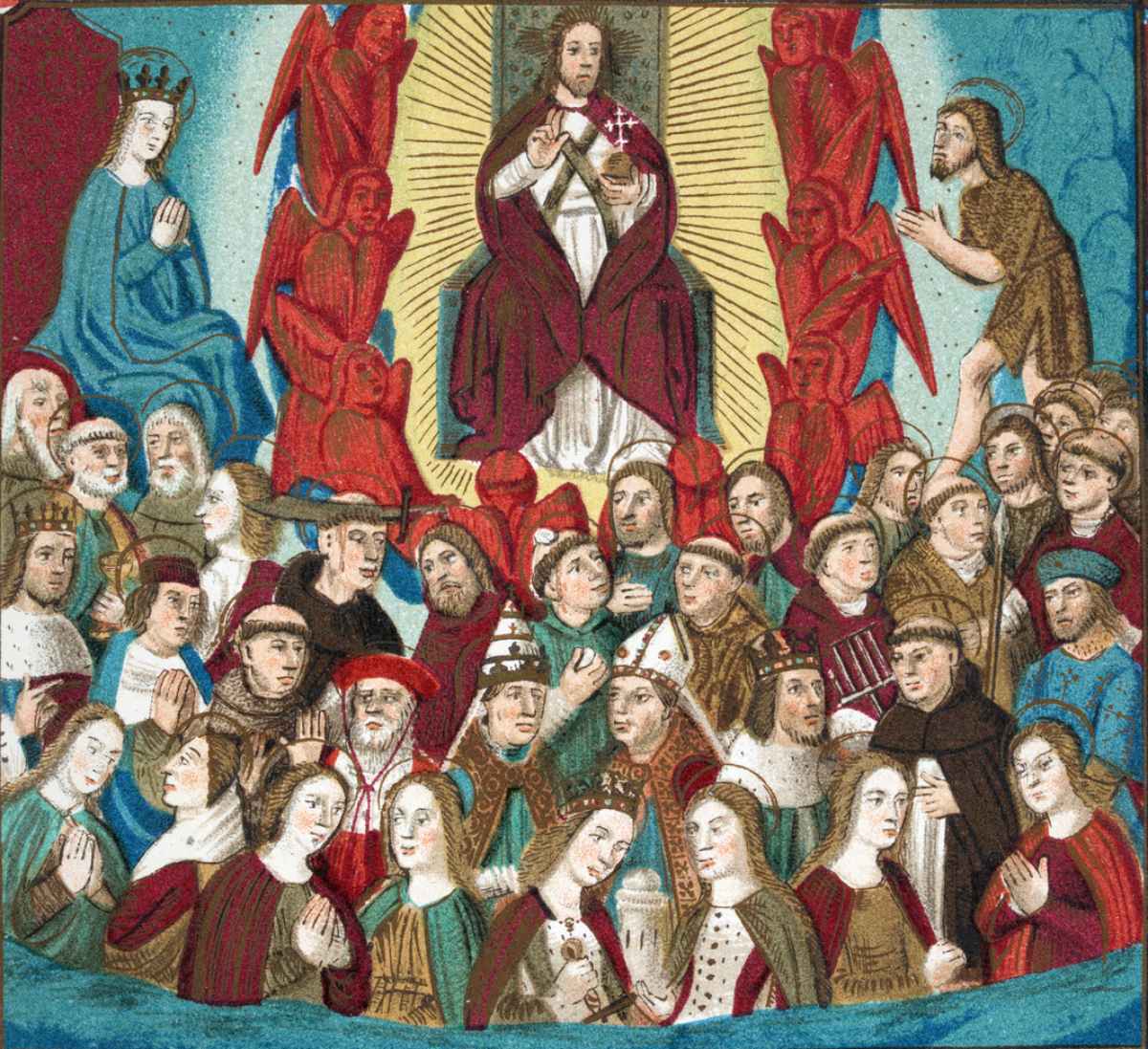
The Nicene Creed, the fundamental statement of belief of all Christians, defines all of the fundamental truths that we believe in as members of the Body of Christ. At the end of it, we say these words: “I believe in the Holy Spirit, the holy catholic church, the communion of saints, the forgiveness of sins, the resurrection of the body, and life everlasting.” For this end-of-October holiday, let us focus on the statement, I believe in the “communion of saints.”
This statement of our Christian faith acknowledges that we believe that our relationships within the Body of Christ both include and transcend all other human forms of connection. We believe that “the communion of saints” connects us to all Christian believers, not just to those with us here and now, or those closest to us, or those in our local faith communities, but that our connections in the communion of saints stretch across all time and space. We believe that we who are here remain connected to those who have died from across all time, who, guided by the Holy Spirit, lived their lives in the truth and the love of Jesus Christ. Why? Because we believe that we and they are members of the one and eternal Body of Christ.
Because we believe in the communion of saints, we believe that we can pray for our family members and friends who have died. We do this with true faith and hope that God’s love and mercy will purify them of all sin and that they be welcomed into the intimate and incomprehensible joy of the presence of God, forever. In this credal understanding of the communion of saints, we also believe that we can appeal in prayer to the saints, and to our loved ones, that they intercede on our behalf before the throne of God as we continue our own earthly struggles to stay on the narrow path to the heavenly kingdom, through this sin-pervaded world.
Our belief in the communion of saints can even enhance our worship in our faith communities, for when we gather to worship together we believe that we are not only in communion with God, “the judge of all,” but also with the cloud of witnesses in “the assembly of the firstborn who are enrolled in heaven,” and “the spirits of the righteous made perfect” (Heb. 12:23). Our worship really does transcend the time and the space of our homes, our individual parishes, or faith communities. In reality, when we gather together for worship in our faith communities, we do so in the presence of God, and with all those men and women who died in the faith before who are now surrounded by innumerable angels in heaven.
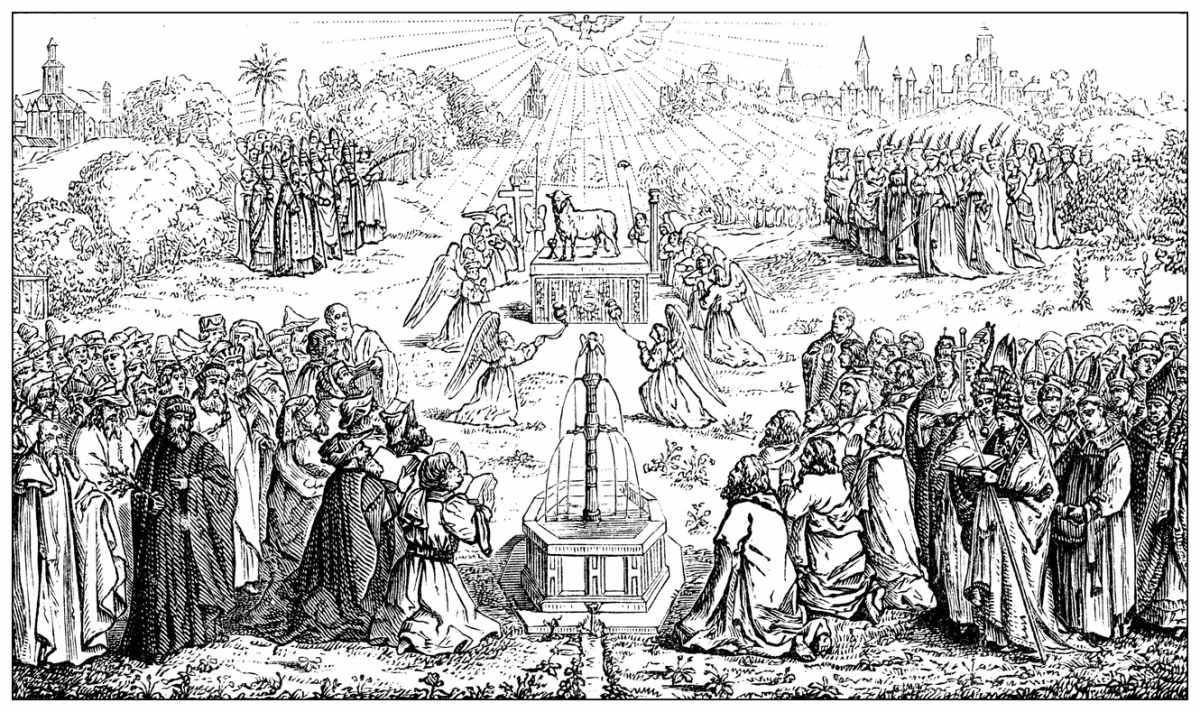
This is a comforting truth. All of us will one day die, but our communion with one another in the believing Body of Christ will never end. Our loved ones who have died still worship with us, even though we are now separated by the veil of tears. We pray in faith that we will one day be with them to dance with them again in that eternal wedding feast of heaven. “For I am persuaded that neither death, nor life, nor angels, nor principalities, nor powers, nor things present, nor things to come, nor height, nor depth, nor any other creature, shall be able to separate us from the love of God, which is Christ Jesus our Lord” (Rom 8:38-39). We who believe and live in the faith of Christ are one in the Body of Christ here and in heaven, now and forever.
More to Explore
SKM: below-content placeholderWhizzco for FHB