

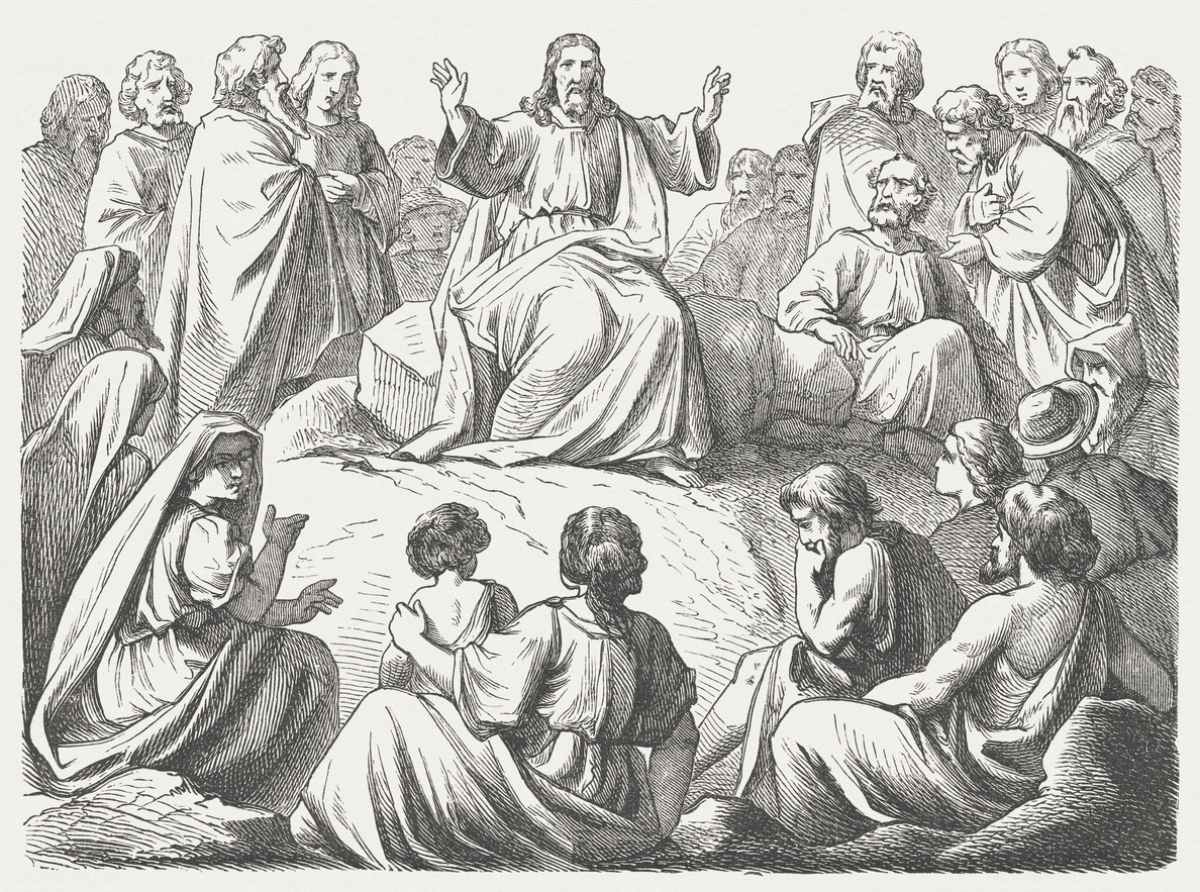
At the end of his Sermon on the Mount, Jesus concludes his teaching on unconditional love and radical mercy with this declarative sentence: “Therefore you must be perfect as your heavenly Father is perfect” (Mt. 5:48). Throughout this profound sermon and teaching of Jesus, he contrasts the world and its ways of thinking with God’s way of thinking. Where the world says, “Love those who love you”, God says we must love even our enemies unconditionally, to do good to those who persecute us and even to pray for them. How can we, in our inherent imperfection, understand, much less practice such radical love and mercy, such perfect love?
That is a legitimate question, for we know we are not perfect and will never be ‘perfect as the Father is perfect’ in this life. It is beyond our power as fallen, flawed human beings. It seems an impossible standard God has presented. Yet Jesus calls us to this perfection. Maybe he has done so to shake us out of our own tendencies toward self-righteousness. We cannot, in fact, live this perfection on our own merits or skills. In truth, this noble and holy struggle to live in total accord with God’s perfect will is a lifelong process of growing in spiritual maturity. It is a daily choice, a daily commitment to let go of our common presumptuousness and humbly trust in God’s will and his faithful presence. If we humbly, willingly choose this path, the Holy Spirit will guide us.
The long and difficult journey toward this ‘perfection’ consists in three things or attitudes: Praying heroically, working heroically, and suffering heroically. This surrender to God’s will is not a single moment’s decision; it is the heroic work of a lifetime. To pray heroically means sometimes bringing the same request back to God over and over again, until our hearts catch up with God’s answer. Sometimes there are periods when our prayer seems arid, empty, unfulfilling. This is when the practice of heroic prayer becomes important. It is not that God is not listening, but that our hearts are often too full of noise to hear his word, to feel his presence in our lives. Even the greatest of the saints felt these periods of darkness and emptiness, but continued to pray and bring themselves again and again into the presence of God in solitude and humble silence.

To be a Christian in this world often requires us to work heroically in the face of misunderstanding, rejection, ridicule, and even hate. On the personal level, do we not often fail to live up to the standards of our own Christian faith? Paul knew this struggle, telling the Romans: “For I do not understand my own actions. For I do not do what I want, but I do the very thing I hate” (Rm. 7:15-20). We must remember that no matter how often we fall short, the heroic work before us is to get back up again, to carry on, trusting in both God’s mercy and his grace. We are asked by Jesus to love in all things, no matter the risks. Such a journey, such a quest, requires the heart, the courage, and the faithful commitment of a knight, a spiritual warrior, a soldier for Christ.
As for suffering heroically: we know by experience that suffering is real. None of us escape it. Jesus himself, having taken on our humanity, knew the depths of human suffering personally. He knew the pain of the loss of loved ones. For example, he must have grieved over the loss of his father, Joseph, sometime between being found in the Temple and his public ministry. At the death of Lazarus, we are told, “Jesus wept” (Jn. 11:35). He did not stand outside of Martha and Mary’s sorrow and grief; he stepped right into it with them. He knew the mental anguish of facing his own death, which he humbly accepted on our behalf. He calls us to face our own suffering heroically, too.
Jesus continually challenges us to love through the Gospels, no matter the cost. We are to love those who hurt us, who humble us, and who contradict us. Why? Because they may be more useful to our own journey toward the perfection of love that Jesus calls us to, more so than all those who flatter us. If we have faith, we can suffer heroically in the name of Jesus Christ on behalf of those who suffer injustices of any kind, and, in a radical sense, for the conversion of those who cause suffering. Trusting in God’s generous grace, we have the power to heal the wounds of personal injury, as well as, collectively, to heal a culture gone mad.

Lord, help us to choose to embark daily on the great and heroic journey of faith, praying heroically, working heroically, and suffering heroically for the sake of the perfection that God has called us to in Jesus Christ. In your name, Jesus, we pray. Amen.
More to Explore
SKM: below-content placeholderWhizzco for FHB