

John has often been referred to as “the apostle of love,” and with good reason. Love is a central theme in his Gospel and in his First Letter. He consistently expresses that love with simple, yet powerful clarity. He knew God’s love because he had intimately, powerfully, and personally experienced it in his friendship with Jesus. He came to understand who Jesus really was. He, himself, was completely transformed through his experiences of Jesus’ love, growing from a young hot-headed “Son of Thunder,” to a deeply compassionate and grace-filled man who truly understood and practiced Jesus’ commandment to love one another as he loved us.
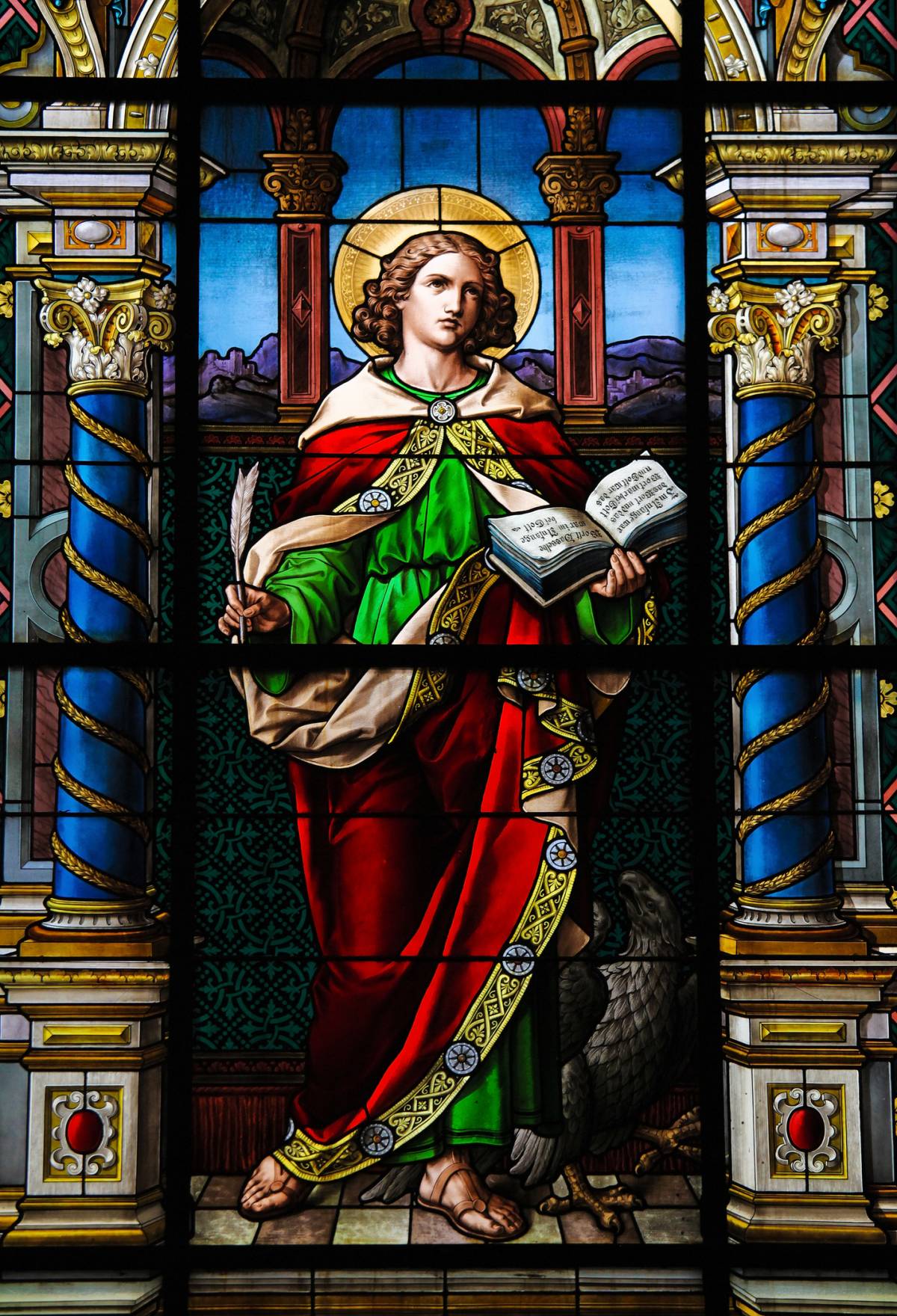
John came to know that Jesus was, indeed, the Word of God, the Word that was with God from the beginning, the Word that was God, through whom all things came to be. (Jn 1:1-2) It is not hard for us to imagine why this was so. After all, he had followed Jesus throughout his public ministry and had heard his words both in private and in public. We can rightly imagine that in their long walks from village to village, they had had many deep and intimate conversations full of his own questions and Jesus’ responses, and he had listened to and been moved by Jesus’ parables, his actions, and the wisdom of his teachings.
We can imagine, too, that John had watched Jesus very closely. He had witnessed how intimately Jesus looked into the eyes of each person he encountered, accepting them for who they were, hearing their fears and their needs. He had seen how Jesus listened to them, challenged them, touched them, and healed them. How could these things not be understood as anything but love, indeed, a divine love? In Jesus, John came to know that the very nature of God is love itself, and he was inspired to reveal that intimate love of God to all who would aspire to know Jesus and believe in him.

We hear this very openly expressed in John’s First Letter, where he waxes eloquently about the nature of God. He tells us very specifically, “Because love is of God; everyone who loves is begotten by God and knows God. Whoever is without love does not know God, for God is love” (vs. 7-8). It is only a few lines later that he tells us: “Beloved, if God so loved us, we also must love one another. No one has ever seen God. Yet, if we love one another, God remains in us, and his love is brought to perfection in us” (1 Jn. 4: 11). It is from this knowledge of God that John understood the meaning of Jesus’ words: “A new commandment I give you: Love one another. As I have loved you, so you must love one another. By this everyone will know that you are my disciples, if you love one another” (Jn. 13:34-35)
And there is the message that we are to listen to, to come to understand, and to practice with all of our being. If we learn to practice this commandment of love more and more in our daily lives, it will transform us, just as it transformed John. Indeed, it has the power to change the world, that is, the intimate ‘worlds’ of our own families, our circles of friends, and our co-workers, as well as the larger world, which clearly is in such desperate need of it.
Whenever we serve another out of sincere empathy and compassion, whenever we willingly sacrifice our own needs to help another in greater need, whenever we free another from their guilt by forgiving them, that is love, and, therefore, there is God. Love like this makes God present in the world, our small worlds, and in the world writ large. It is all too clear that the world needs those who call themselves Christians really live this commandment of love more openly, more fully, purposefully, and honestly. It is no secret that our present world is charged with mistrust, division, fear, and open hatred at all levels. As followers of Jesus Christ, we are always challenged by the role and the meaning of the theological virtue of hope: It is not too late to begin. Now is always the proper time to begin to be God’s true disciples in the world.
I think John’s focus on the love of God is so clear and present in his Gospel and in his First Letter precisely because he came to know in the depths of his own being that this “new commandment” is the very core, the center of all of Scripture, and that everything else is commentary. This is the God we desire to know more intimately, to love more dearly, the God we want to serve more clearly in our daily lives.
Finally, John tells us: “God is love, and whoever remains in love remains in God and God in him…We love because he first loved us” (vs. 16,19). It is in humbly and willingly choosing to live out of this commandment of love, even if we sometimes do it a bit awkwardly and haltingly, that we enter the narrow path to the sainthood that we are all called upon to walk. If we truly desire and try to practice this new commandment “to love one another as he loves us” in our daily lives, we can be assured that we will never walk this path alone. Thank you, Jesus. Amen.
More to Explore
SKM: below-content placeholderWhizzco for FHB