

This Second Letter of John is the second shortest “book” in the Bible. John opens the letter humbly, calling himself “the elder,” and directs his message to “the elect lady and her children”, most likely meaning a local church addressed as ‘mother’ and her members, “walking in the truth of Christ.” He seems to write out of concern for false teachings that had begun to spread and cause anxiety in the Church. This Second Letter of John is constructed around two words: truth and love, both of which are central to the Church’s message and mission, then and now. He argues that truth and love must never be separated.
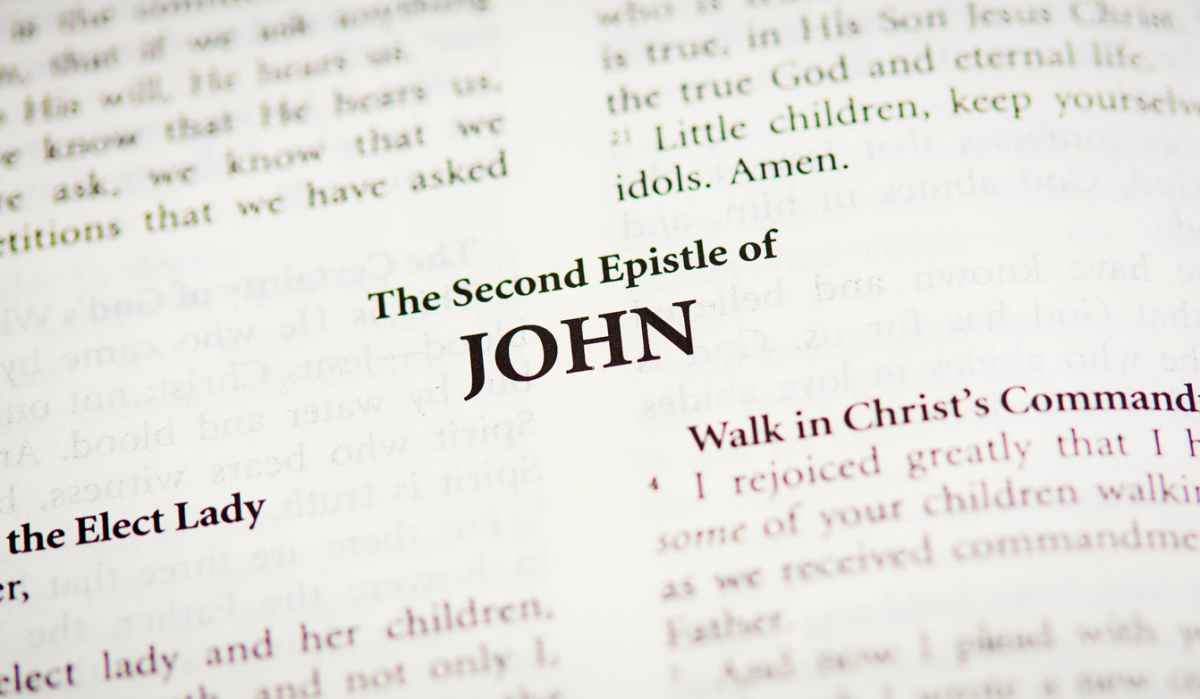
John addresses the Church, saying: “I was overjoyed to find some of your children walking in the truth, just as we have been commanded by the Father” (v. 4). He uses the phrase, ‘some of your children’, which seems to reveal some of his concern for what he has heard is happening in the Church. The word ‘some’ implies that many more might no longer be ‘walking in the truth.’ There is more he wants to say, and there is a certain anxiety in his tone: “But now, dear lady, I ask you, not as though I were writing you a new commandment, but one we have had from the beginning, let us love one another. And this is love, that we walk according to his commandments: and this is the commandment just as you have heard it from the beginning–you must walk in it” (v. 5-6).
John is telling the Church that this “walking in love” is the living expression of the truth of God’s commandments. Christians living in accord with the truth of God’s commandment of love are the means through which God’s truth is revealed to the world. Sadly, both then and now, many had and continue to have a problem with this truth, either denying it, walking away from it for something else, or becoming indifferent to it altogether. The early Church Father, Tertullian, said of this verse: “It is mainly the deeds of love so noble that lead many to put a brand upon us [as Christians]. “See,” they say, ‘how they love one another,’ for they themselves are animated by mutual hatred.” All the more reason to put our trust in the true love of God, for our sake and for the sake of the world. It is what the world needs more than anything else.
This Second Letter of John is constructed, then, around these two words: truth and love, both of which are central to the Church’s message and mission. The Apostle John makes the case that this truth and love must never be separated. In line with this, John addresses the problem of a heresy that had risen concerning the humanity of Christ. It implied that Jesus did not really take on human flesh but only ‘appeared’ to do so. John does not mince words here; he calls those who were teaching/preaching that heretical idea “deceivers”. He then takes it a notch higher, ultimately calling them the “antichrist” (v. 7).
John is warning the Church (then and now) to be on guard against heresy, any teaching that goes beyond the Gospel, by clinging to the truth, abiding by the teaching of Jesus Christ alone. He is very clear here, saying that those who do not stay true to the teaching of Christ show themselves to have no love for Christ’s teachings, only their own. In preaching such things, they “go beyond [Christ’s teaching] and do not have God.” On the other hand, those who love and abide by the true teachings of Jesus Christ have “both the Father and the Son” (v. 9). He counsels the Church to be aware of teachings that ‘go beyond’ and to be careful saying, “Do not receive into the house or welcome anyone who comes to you and does not bring this teaching: for to welcome is to participate in the evil deeds of such a person” (vs. 10-11).
It is in the truth of the Gospels that we come to know the love that the Father has for us in the Person of Jesus Christ. He is the very Word of God, the One who reveals the Father to us. Jesus Christ is true God and true Man. He alone is the source and the goal of all that is true, good, and beautiful. In him alone can we find the truth and the love that our hearts desire. John revealed the truth about God when he wrote these three words: “God is love” (1 Jn. 4:8). This is why truth and love must never be separated.

Let us end, then, with John’s own words here: “Grace, mercy and peace be with us from God the Father and from Jesus Christ, the Father’s Son, in truth and love” (v.3). Amen.
More to Explore
SKM: below-content placeholderWhizzco for FHB