

Theologians have contemplated the words Jesus spoke on the cross at the end of his unimaginable agony. His physical suffering and loss of blood fulfill the Old Testament prophecy found in Ps. 22:15 and Ps. 69:21 as the revelation of his full humanity. The spiritual nature of the phrase is also quite profound, and to this end, we will explore the spiritual aspect of Jesus’ agonizing cry: “I thirst.”
We believe that Jesus willingly took on this ultimate sacrifice, this terrible and terrifying level of suffering on our behalf out of love for every one of us. What, then, might be the spiritual part of these two words? For what does Jesus thirst? Could it be that his thirst in that moment, even in the midst of his suffering, was rooted in his desire that each one of us would choose to enter into a unique, intimate relationship with him in that sacred, silent, and solitary place within each one of us, that is, our hearts? Might his deepest thirst be for us to open our minds, our hearts, and our wills to him, to come to know his love, his compassion, and his forgiveness, intimately, personally, not in any abstract sense, but in the fullness of our own being? Are we thirsty? The woman at the well in John’s Gospel can provide a great example for us. The whole encounter can be taken as a metaphor for the encounter we can have with Jesus in prayer.
The Samaritan woman comes to the well because of her own thirst. She encounters Jesus, a Jewish man, alone at the well. To her surprise, he speaks to her, breaking two humanly established taboos. He asks her, “Will you give me a drink?” (Jn 4:7). She responds with chagrin, asking how he could have the audacity to ask her for a drink. Jesus says to her, “If you knew the gift of God and who it is that asks you for a drink, you would have asked him, and he would have given you living water” (v. 10). Later he tells her, “Everyone who drinks the water [from this well, Jacob’s well] will be thirsty again, but whoever drinks the water I give them will never thirst. Indeed, the water I give them will become in them a spring of water welling up to eternal life” (vs. 13-15).
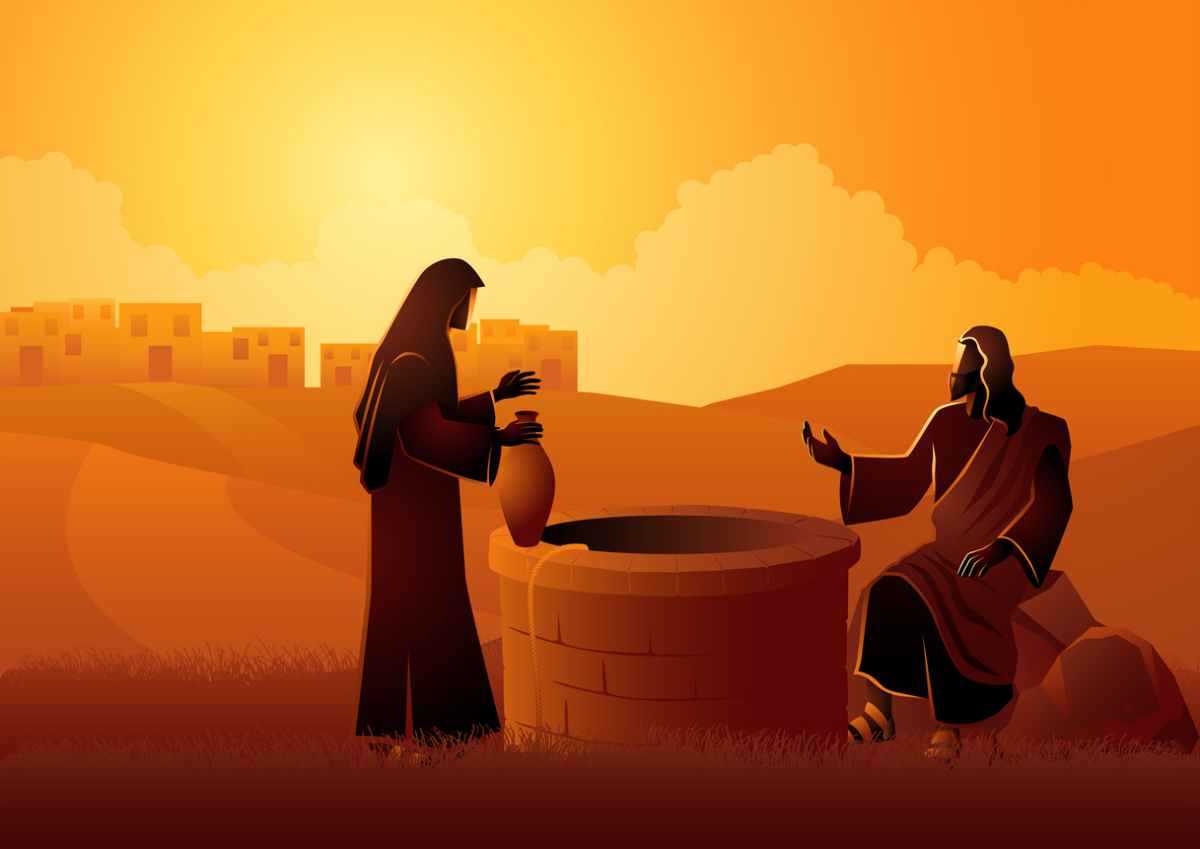
The Samaritan woman then asks him to give her this water. Like us, she does not realize that her ‘thirst’ is much deeper and will not be slaked by just water. In the intimate solitude and conversation of those moments, Jesus reveals that he knows her, her most intimate self. He reveals her to herself, not with judgment but with love. In their conversation, Jesus reveals himself to her, too. She tells him, “I know that the Messiah is coming. When he comes, he will explain everything to us.” And Jesus openly reveals the truth to her, saying, “I, the one speaking to you—I am he” (vs. 25 and 2).
Filled with joy, she runs back to the village and excitedly tells them, “He told me everything I had done” (John 4:39). As a result of her witness, many of her fellow villagers became followers of Jesus. In those few moments of that encounter, in the mystery of that unlikely but very intimate conversation, she was led back to her true self and was healed. Her false self, the sinful self, fell away and she saw the light of hope in Jesus. We, too, can go into the silence of the well that is our heart to meet Jesus, to listen to his words, and have our own true selves revealed to us in love. In prayer, we can experience the presence of Jesus’ infinite compassion and forgiveness. When we humbly come to him in prayer, we can have our thirsts quenched in the intimate way that the Samaritan woman experienced that day.
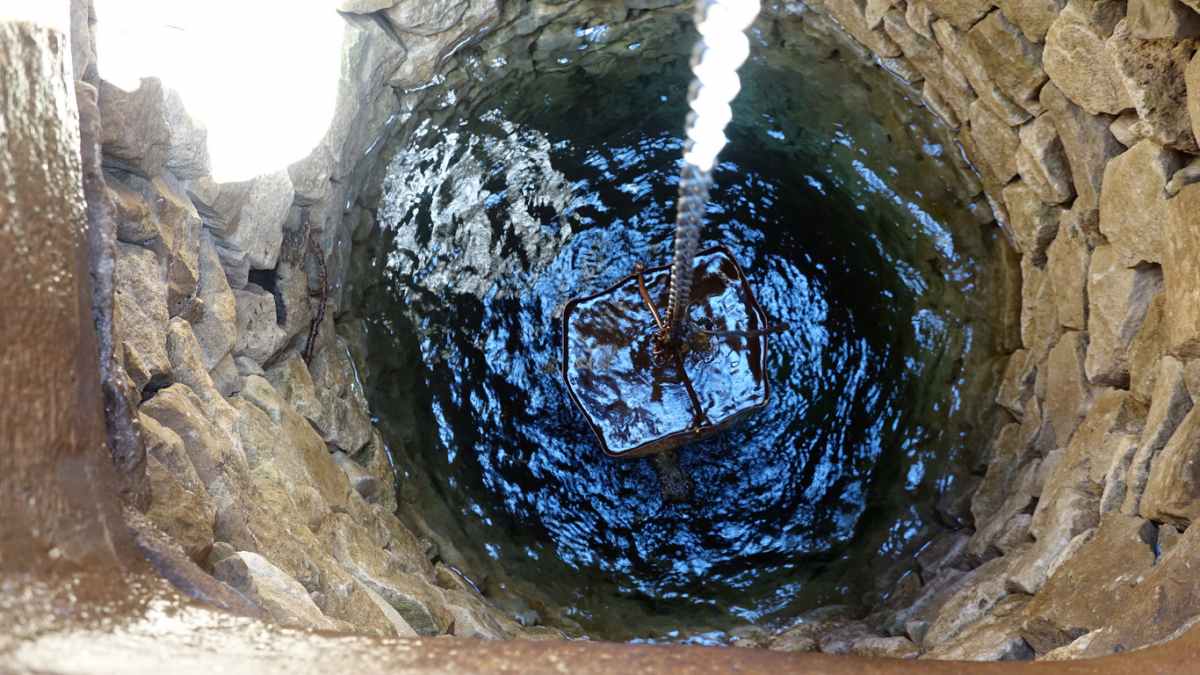
The great Augustine once said, “You have made us for yourself, Lord, and our hearts are restless (unquiet) until they rest in you.” This practice of prayer in silence and solitude can help us recognize, like the woman at the well, the restlessness, the unquietness, or the thirst of our own hearts. We can experience our thirst for God and be healed. In prayerful self-reflection and contemplation of the scriptures, we may discover whose voices we are listening to most often. If our hearts are restless or unquiet, if we experience spiritual thirst, it may be because we are listening to voices that are not God’s. This may be the cause of our unquietness and ‘thirst’. Only God’s voice can give us the quiet we are seeking. Let us go to the well of prayer with God with humility and courage, trusting that he is, indeed, the water of eternal life that will quench all of our thirsts. Amen.
More to Explore
SKM: below-content placeholderWhizzco for FHB