

This is an issue that most of us are only too familiar with in our own lives. We are generally quick to see this flaw in others, but not so often in ourselves. The rest of the verse in this passage from Isaiah follows: “This people draws near with words only and honors me with their lips alone, though their hearts are far from me.” This problem is a common theme throughout the Bible, and, I suspect, from my own experience, it remains common today. Some people, of course, use all the right Christian words for all of the wrong reasons. We don’t want to be counted among them.

No matter how sincere we are in our efforts to live the Christian life more openly, more purposefully, and more consistently, we often fall short of our desired intentions. We don’t do this on purpose, but we are often burdened by various obligations and responsibilities in the different areas of our lives, and, of course, there is the ever-present reality of countless distractions all around us. Because of these realities, we often go off track, we forget, or we get distracted, and the next thing we know, we are made painfully aware of our failure to live up to our own desire to follow Jesus “perfectly”. But that is not necessarily a bad thing. In fact, we could call it a grace if, by becoming aware of our faults and failures, by feeling true sorrow for them, and by humbly turning back to God for his mercy and his help, we could find the peace that our hearts so deeply desire.
When we falter or fail, we have the gift of the Scriptures to go to, to refocus our minds and hearts, to show us how to turn back on the path to God. In the Scriptures, we can see how others, throughout biblical history, experienced the same things we do now. We can see that when they turned back to God, they were reconciled and strengthened by God’s grace and wisdom to keep going even in their weakness. The great insight of the Scriptures is that God is always with and for us. He never abandons us. No matter how often we fail, when we turn back to him with humility and true sorrow, his ready response is always infinite love, mercy, forgiveness, and strengthening grace. When I find myself in this situation, having fallen short of my intentions, I return to Psalm 51 and find in it great solace and hope.
“Have mercy on me, O God, in your goodness; in the greatness of your compassion wipe out my offense. Thoroughly wash me from my guilt and cleanse me of my sin. For I acknowledge my offense, and my sin is before me always: ‘Against you only have I sinned, and done what is evil in your sight” (vs. 3-5). In these words, we hear and can empathize with the psalmist’s deep sorrow, his recognition of the consequences of his sin, but we also sense in his prayer the profound faith and hope he expresses in recognizing God’s infinite goodness and compassion. We also see that God, unlike us, does not desire that we be punished, but rather that with renewed faith in Him, we can continue to grow in faith and in virtue.
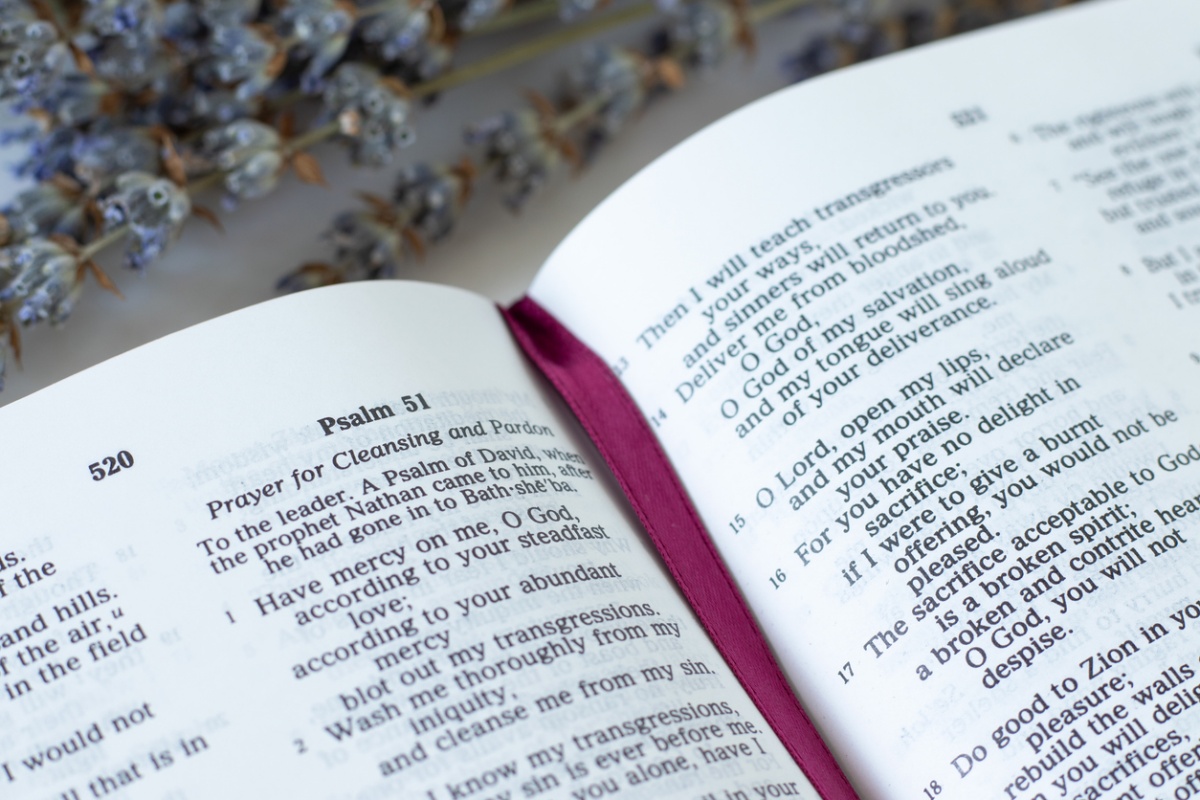
The psalmist is led by the Spirit to a profound insight into our fallen nature and into the nature of God when he writes: “Create in me a clean heart, O God, renew me with a steadfast spirit” (v. 12). There is the assurance that we seek from God for ourselves. When we are made aware of our own failings, either through the prickings of our own conscience or through the just criticism of another, we find ourselves at a tipping point. Do we despair, or do we turn back to God in the depths of our sorrow, contrite, recognizing our ever-present need for God’s help? Do we believe that God desires to “create in us a new, clean heart”, that he desires to strengthen our spirit with a growing resolve to do better?
This, then, is the kind of “sacrifice” that God wants us to learn to practice. That we learn more and more to sacrifice the pretenses of pride that lead us to sin. To recognize that we can not do this by some Nietzschean force of will on our part, but that we need God’s grace to make such a difficult sacrifice. Like the psalmist, then, we pray for God’s grace to strengthen our spirit. Only God’s grace, and our humble cooperation with it, can conquer such a foe as our sinful pride. “My sacrifice, O God, is a contrite spirit, a heart contrite and humbled, O God, you will not spurn” (v. 19).
Be aware, though, that if we go honestly with ‘contrite and humble of heart’ to God and ask him to create within us a “clean heart and a steadfast spirit”, it has the potential to change us…forever. We will no longer see ourselves as the center of all reality. We will no longer be “people of words, honoring God with our lips alone.” Our hearts will be changed. They will be made to be more like God’s heart in all that we do. Our prayers and our fasting will be changed. We will begin to see with the eyes of God and act accordingly more and more often. With our hearts humbled, cleansed, and made more steadfast in God’s ways, our concepts of sacrifice and fasting will be changed, too, and become more like this:

“This is the fasting that I wish: release those bound unjustly, untie the thongs of the yoke; set free the oppressed, break every yoke, share your bread with the hungry, shelter the oppressed and the homeless; clothe the naked when you see them, and don’t turn your back on your own” (Is. 58:6-7). This is the life that a contrite and humbled heart made steadfast in spirit by God is called to live. And we know only too well how much we need God’s grace to make our spirits steadfast enough to live with such wisdom and courage.
Because we are weak and prone to distraction and getting off track, a good Lenten practice might be to pray and meditate on this psalm (Psalm 51) daily.
SKM: below-content placeholderWhizzco for FHB