
Jesus addresses this parable directly to the chief priests and the elders, those who were supposed to be the keepers of the faith and the teachings of Moses and the prophets. These very important people in the Jewish community felt threatened by Jesus. They confronted him on many occasions, trying to trip him up, get him to say things they could use against him, for they saw him as a challenge to their authority. The parable reveals themselves to themselves (and maybe us to ourselves). And they do not like it.

Jesus knows the structure and style of a good short story. He knows the power of parables to reveal the truth to us. He tells a parable here that is perfectly shaped to reveal a very specific and troubling truth to his listeners, the chief priests, the elders, and the crowd who followed him. It can be just as challenging for us today.
Parables are allegories. They use various characters to represent real-world or historical figures. Jesus begins his story saying: “A man planted a vineyard, put a hedge around it, dug a wine press, and built a tower. Then he leased it to tenant farmers and left on a journey. At the proper time, he sent a servant to the tenants to obtain from them some of the produce of the vineyard” (Mk. 12:1-2). These details give us the setting in which the events take place and set the story in motion. The characters introduced so far are the vineyard owner (God) and the tenant farmers (the chief priest, elders [and us]). Then he develops the tightly bound plot for us.
The servant he has sent to the tenant farmers to obtain a portion (the rent payment) of the harvest is seized and beaten by the tenant farmers, and is sent away empty-handed. A second servant is sent, and he is beaten and treated shamefully. A third one is sent, and he is killed by the farmers. Several others are sent, but they, too, are either abused or killed. Finally, the vineyard owner sends his “beloved son,” thinking they would respect him, but they kill him, saying to themselves, “This is the heir. Come, let us kill him, and the inheritance will be ours” (v. 7). Each of these ‘servants’ and the ‘beloved son’ represents the prophets and Jesus. The tension in the story has now been built to a high pitch, to a breaking point, or, in literary terms, the climactic moment.
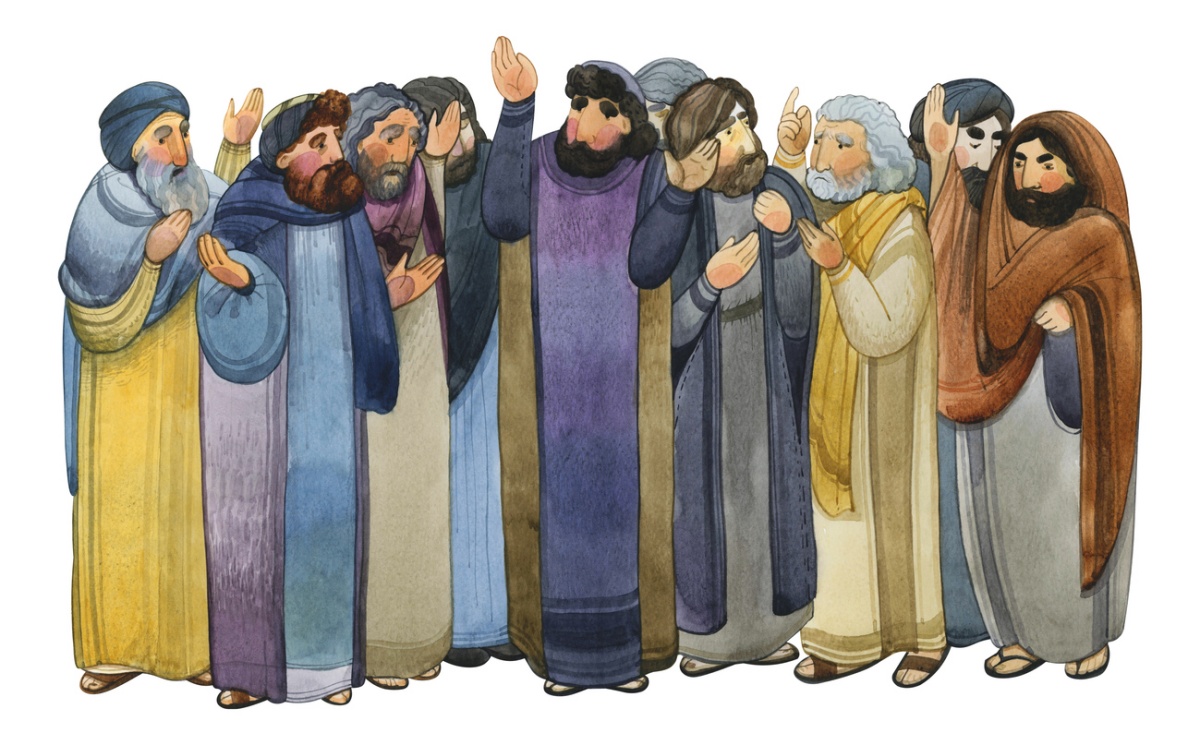
At this point, Jesus stops and asks his listeners, the chief priests and the elders, what they think the vineyard owner will do? Their answer is both ironic and true. They say, “He will come, put the tenants to death and give the vineyard to others” (v. 9). It is ironic because the principal listeners to this parable still do not seem to get the point of it. It is true, because what the chief priest and elders would eventually do to Jesus, the “beloved son,” would, in fact, open the doors to the kingdom and the faith to the Gentiles as well.
Then Jesus reveals the central theme of the parable: “Have you not read this Scripture passage: The Stone that the builders rejected has become the corner stone; by the Lord has this been done, and it is wonderful in our eyes” (vs. 10-11). It is at this moment that the chief priests and elders have the uncomfortable feeling that the story is about them. They wanted to arrest him, but they feared the crowd listening to Jesus, and, at some deep level, having had their own sins revealed to them, they were ashamed. We are told simply that, “they went away” (v. 12).
How does this parable speak to us today? God created each of us and placed us in this beautiful world, his vineyard, and he gave us His Law as a ‘hedge around it’ to both protect us and to show us our limits as creatures. Yet, a great majority of people today are like those tenant farmers who pridefully take it upon themselves to claim powers and ownerships to themselves that do not belong to them, but only to God. This is revealed in the supermarket-like, selfish and self-aggrandizing claims made by many today: from the immature, bourgeois claims of ownership over one’s body and all manner of rationalized claims about sexual ‘rights’, abortion, and euthanasia on the one hand; to all manner of ethnocentric/racist claims of superiority over the poor, or those who are not “like us”, and the greedy economic claims of the ‘right’ to possess and to do whatever one wishes to the natural world for profit or power on the other hand. The Christian community can be just as guilty of putting the things of the world before those of God. It is not immune to this behavior any more than the chief priests and elders of Jesus’ day.

Let us pray that the Spirit will increase in us the virtues of Faith, Hope, and Charity. Let us pray also for the gifts of humility, self-control, and discernment so that we might know ourselves rightly, and for the courage and strength to surrender our wills to the greater wisdom of God’s will in all things. In these alone, will we find the joy that our hearts desire. In Jesus’ most holy name, we pray. Amen.
More to Explore
SKM: below-content placeholderWhizzco for FHB