
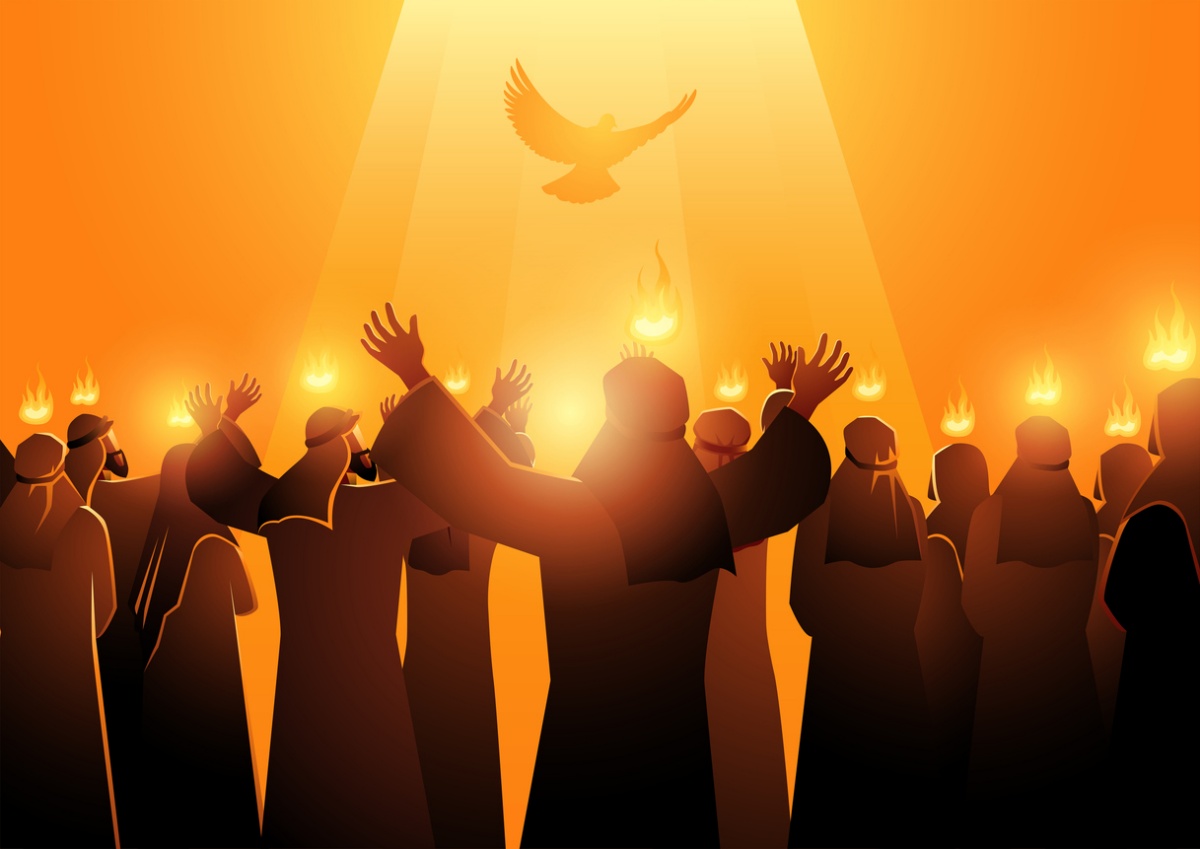
In the account of Pentecost in the Acts of the Apostles (Acts 2:1-11), we see the Spirit came upon the disciples with the force of a strong wind and in tongues of fire that settled over each of their heads. Then, filled with the Spirit, they began to preach in the languages of all those present in Jerusalem at the time. They were Parthians and Medes, and Elamites, inhabitants of Mesopotamia, Judea and Cappadocia, Pontus and Asia, Phrygia and Pamphylia, Egypt and the districts of Libya near Cyrene, as well as travelers from Rome, both Jews and converts to Judaism, Cretans and Arabs”, yet they all heard the Gospel spoken to them in the words of their own languages.
All of those visitors to Jerusalem were hearing the singular, eternal words of God. They were hearing the language of God. There are two things to contemplate here: God’s desire for us all to be one in our faith, and the idea of the language of God. On the matter of God’s desire that we all be one, we see in Paul’s 1st Letter to the Corinthians these words: “There are different kinds of gifts but the same Spirit; there are different forms of service, but the same Lord; there are different workings but the same God who produces all of them in everyone.” And the gifts given are: wisdom, knowledge, faith, healing, prophecy, mighty deeds, discernment, and the variety of tongues, “But one and the same Spirit produces all of these, distributing them individually to each person as he wishes” (1 Cor. 12:4-11).
Paul then uses the analogy of the body, which has many parts but is “one body”. As Christians, we are to understand and to see ourselves as being baptized into one body, that is, the Body of Christ. We are all unique, like the parts of the body, and because of this, we have all been given unique gifts and skills, but all of them come to us from the same Spirit. The idea of unity, of being one community united in the one Body of Christ, is central here. Whatever causes divisions, and wherever we experience division in the Body of Christ, we must recognize that it is not of God, but of the world. Such divisions are not the desire of God, but of the one who opposed God. What if the world witnessed all Christians actually acting and living as one body in Christ? Might the world be different? Might that unity have a divine, Spirit-filled effect on the world?
Now we can get into the idea of tongues and the language of God, which the disciples preached from the balcony of the upper room on that first Pentecost. What is the language of God? It is the language of the Gospel, the Word of God, that expresses the Truth of God to all peoples. All of the languages of the world can express the same ideas, the same truth. In this sense, all of the different languages of the world are like the parts of the body, different, but part of the whole, that can express the ultimate unity of the Gospel to the world. What, then, is the language of God?
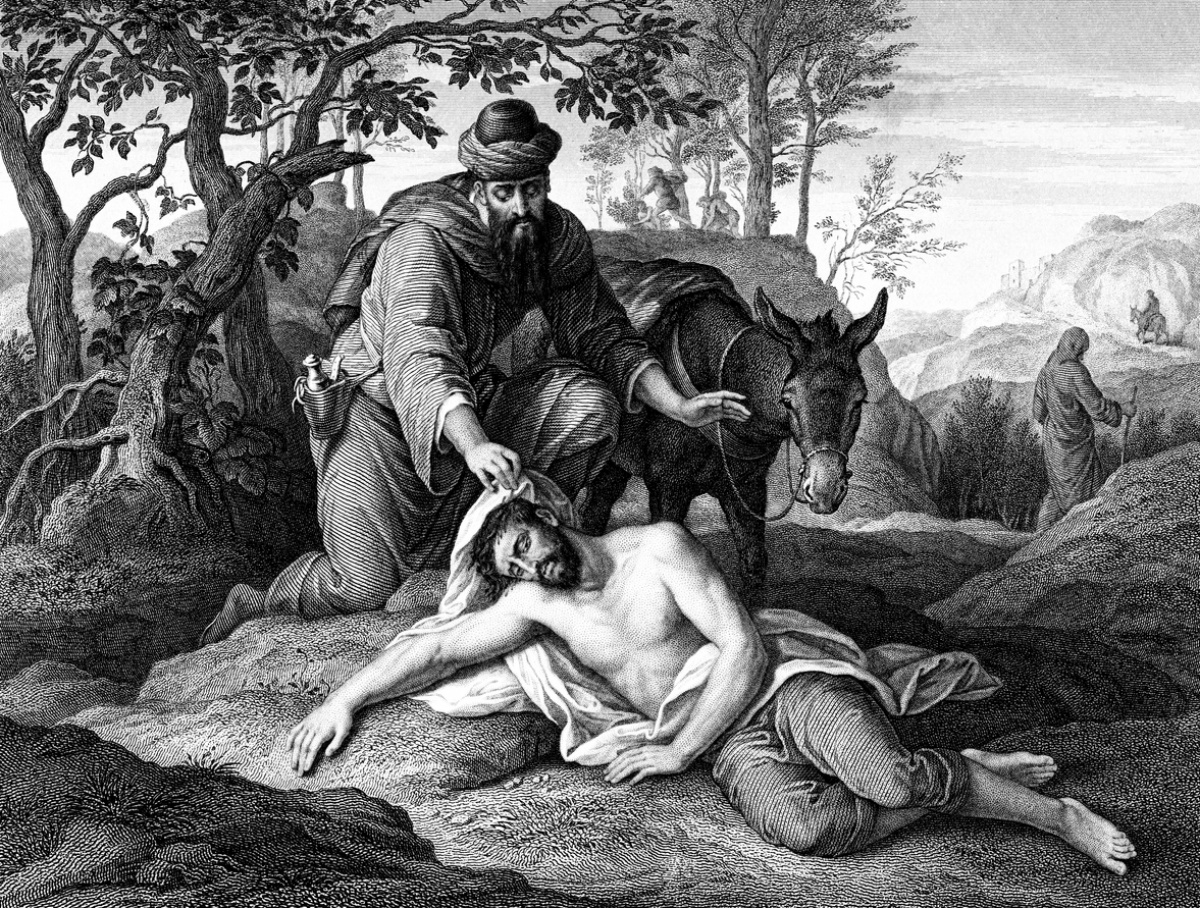
The language of God is what all of the various peoples from different cultures heard that day in their own ‘tongues’. It was the language of love; love of God, of neighbor, and yes, of one’s enemy. It was the language of peace. “Peace be with you,” that is a peace which is more than simply the absence of violence, but a peace so grand, so universal, that it belongs to the kingdom of God alone. It is the language of care, compassion, and hospitality modeled in the Parable of the Good Samaritan, a language that recognizes and promotes our communal responsibilities toward one another. It is the language of forgiveness, both given and received. It is the language of the Gospel that fosters unity, never division, that can lead us beyond the sins that divide us.

As Christians, this is supposed to be our language. No matter which of the world’s many languages we speak. This language of God can be expressed in every human language. God speaks his truth to us through the Spirit every day…if we are listening, if we truly believe that Jesus desires that we be one in him, just as he is one with the Father in the Holy Spirit. Our divisions are not of God, for all division is sin. Let us pray on Jesus’ call to be of one body, one faith, in him. Let us ask forgiveness for our participation in any kind of divisive acts or language. Let us pray for an increase in our faith, for the courage to speak the language of God to one another, our families, our friends, and all those we meet in the course of our days.
Look at 1 Cor. 13: 4-13 to see what the language of love looks like, acts like, and is. That is your catechism on the language of love, peace, care, forgiveness, and joy. Thanks be to God! Amen.
More to Explore
SKM: below-content placeholderWhizzco for FHB