

“The Lord does not delay his promise, as some regard delay…” What is it about us that we can’t stand waiting, even for the simplest of things? Yet waiting is part and parcel of our lives, generally because we do not live alone on this planet. Our needs and desires are often compelled to wait for their fulfillment because they inevitably bump up against the equally important, competing needs and desires of others. Throughout the Bible we see stories of people who are compelled to wait, always hoping for the relief of suffering, and for the fulfillment of the promise of a future salvation that God made to Adam immediately after The Fall, declaring that ‘the woman’s offspring would crush the serpent’s head’ (Gen. 3: 15). Biblical scholars identify this passage as the first proclamation of the Good News we call the Gospel. The Old Testament is the history of that very long wait for the fulfillment of God’s promise to Adam.
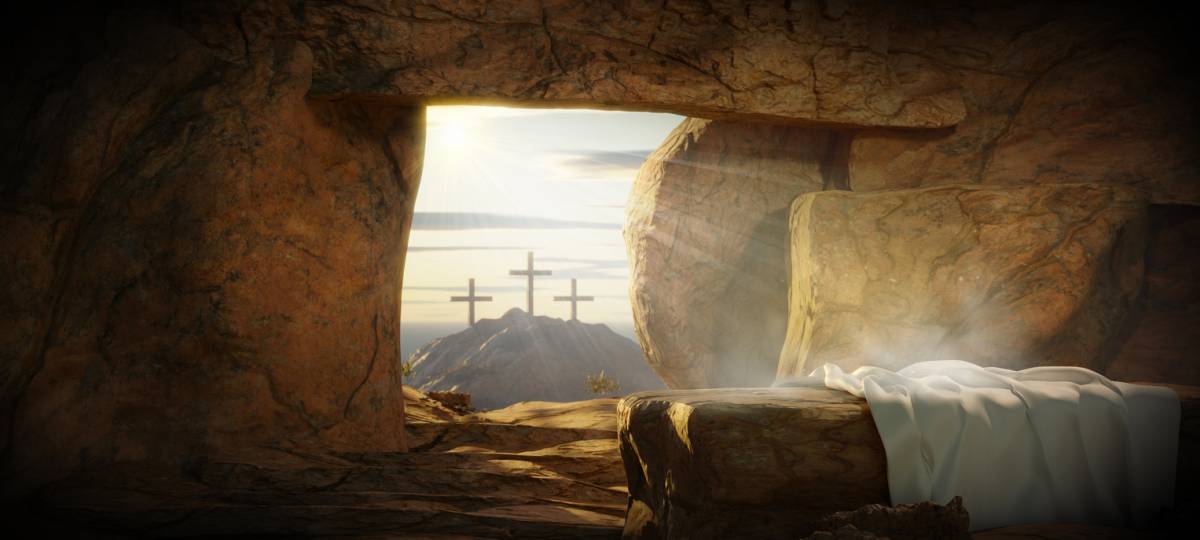
That promise and its fulfillment came with the coming of Jesus Christ, who won that promised salvation for all, ‘crushing the serpent’s head’, defeating sin and death once and for all. The second part of the passage from 2 Peter 3:9 reveals something else, too: “But he is patient with you, not wishing that any should perish but that all should come to repentance.” Jesus won the fight and bought our salvation through his death on the cross. He rose again in fulfillment of the scriptures, and he has promised that he will come again to judge the living and the dead at the end of time. Unlike us, who are so habitually impatient, God waits with infinite patience for us to finally and fully accept salvation, to believe that He truly keeps His promises. His patience is long-enduring, indeed.
Learning the spiritual art of waiting is a painful cross to bear for most of us modern human beings, no matter how little or how great the waiting is. We seem to always be in a hurry, and we want instant results. We suffer greatly when we do not get our desires fulfilled in the manner we desire. These ‘sufferings’, whether moral or physical, arise out of our relationship to the world and to those around us. We can be as hard as rock in our demands for immediate gratification. It is our pride, our ego, that gets in the way of our patience. We lose our minds having to wait for the things we want. The practice of patience cannot even begin without a healthy dose of humility. Humility is the basis of our whole mental, moral, and spiritual edifice.
Paul, too, recognized this when he wrote: “I asked the Lord three times to take it away from me. He answered me, ‘I am all you need. I give you my loving favor. My power works best in weak people.’ Paul continues, “I am happy to be weak and have troubles so I can have Christ’s power in me” (2 Cor. 12: 8-9). Many graces come to us in learning the art of humble waiting. Paul names one of those graces when he writes, “I receive joy when I am weak.” (v. 10). It is our natural desire to be happy. We want to know what God is up to so we can make sense out of our lives. Our problem is that, in our finite egos, we want to be the ones in charge of everything, to get what we want, according to our schedule. Peter also tells us with admirable directness: “With the Lord one day is like a thousand years, and a thousand years is like one day” (v. 8). Unlike us, God is not limited to space and time. He who orders the whole of creation, our hours, days, years, indeed, all of the eons, has a different perspective on time than we do. In his omniscience, God stands outside of space and time as we know it. He is not limited or governed by those things as we are.

Only with humility can we learn to wait for God’s answer to our prayers patiently. With our deepening faith in God’s loving favor toward us, our waiting can become a matter of joy, rather than the painful and useless frustration that accompanies our usual impatience. In humility, we can trust that the Infinite One knows the proper time and the present interior condition of our own spiritual readiness for the fulfillment of our hopes. In contrast to us, God waits patiently for us to spiritually mature, to recognize his love, and to accept that he truly desires our personal salvation. It is the depth of our desire that he responds to. God waits with infinite patience for us to come into that spiritual readiness. It is in humility, too, that we can come to recognize that we do not gain this spiritual readiness solely by our own powers. Humility and our deepening faith help us recognize that God will provide us with the graces we need to learn and to practice this spiritual art of waiting with joyful patient endurance, even as we suffer. To put it simply, ‘Let go, and let God.”
More to Explore
SKM: below-content placeholderWhizzco for FHB