

In my last article on the Law, I quoted the scripture passage from Matthew’s Gospel from the Sermon on the Mount where Jesus says that he has not come to abolish the law but to fulfill it. I also quoted the theologian, N.T. Wright’s comment about the Old Testament being essentially “an unfinished symphony, a drama without a climax. That it is the articulation of a hope, a dream, a longing, but without a realization of either.” Today, I want to look at how Jesus does not abolish the law or even the smallest part of it, but how he truly is the fulfillment of that hope and those dreams, in the most unexpected ways.
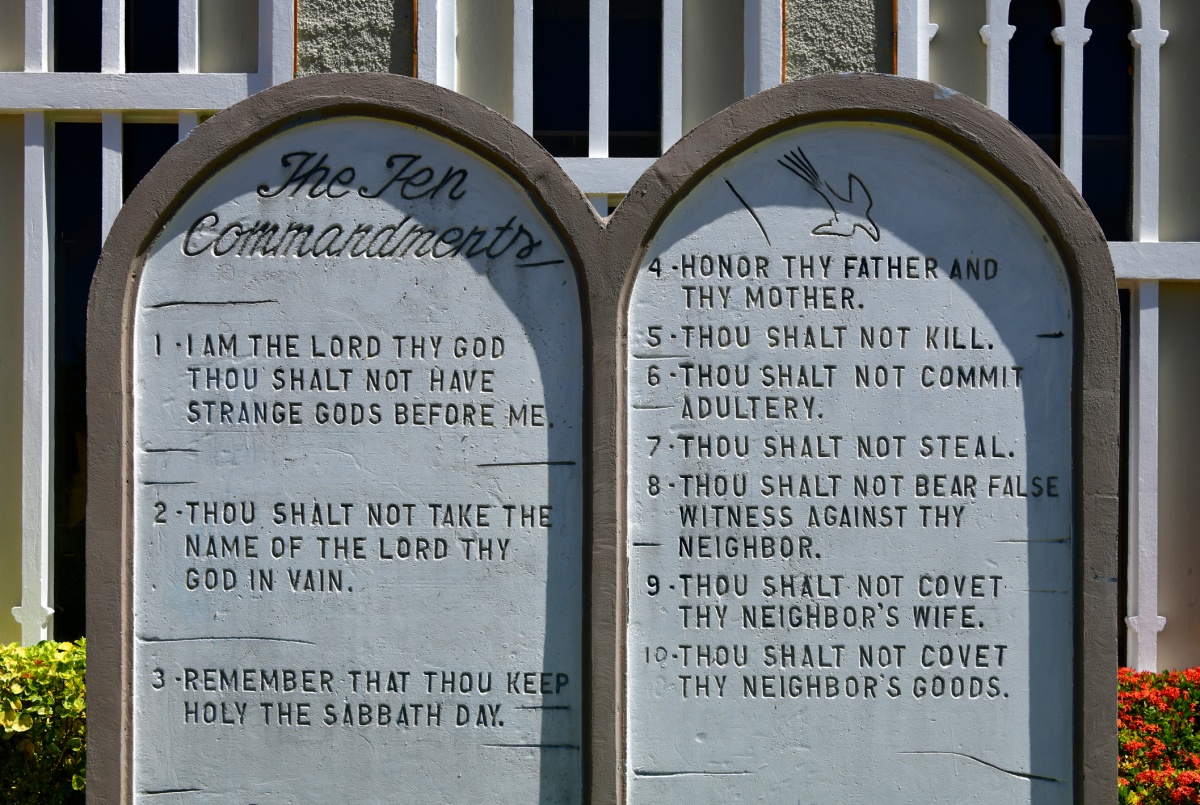
The Mosaic Law, that is, the Ten Commandments, is still the law of God. But Jesus gives us a new way of understanding the law, a more complete, mature, and fulfilling way both in his words and in all that he did. He was the embodiment of God’s Law in action. Later in Matthew’s Gospel, Jesus is asked, “Which of the commandments are the greatest?” Jesus responded with what we now call the Two Great Commandments (Mt. 22: 34-40) saying, “You shall love the Lord your God with all your heart, with all your soul, and with all your mind.” This gives us a new way to understand the Ten Commandments.
The first part of the Mosaic Ten Commandments is concerned with how we can honor this first Great Commandment. The latter part of the Mosaic Commandments relates to the second Great Commandment, “You shall love your neighbor as yourself.” Therefore, Jesus can truly say that, “The whole law and the prophets depend on these two commandments” (Mt. 22: 39-40). Jesus in his words and deeds models the whole law and the prophets with his words and deeds. Therefore, is he the fulfillment of the Law?
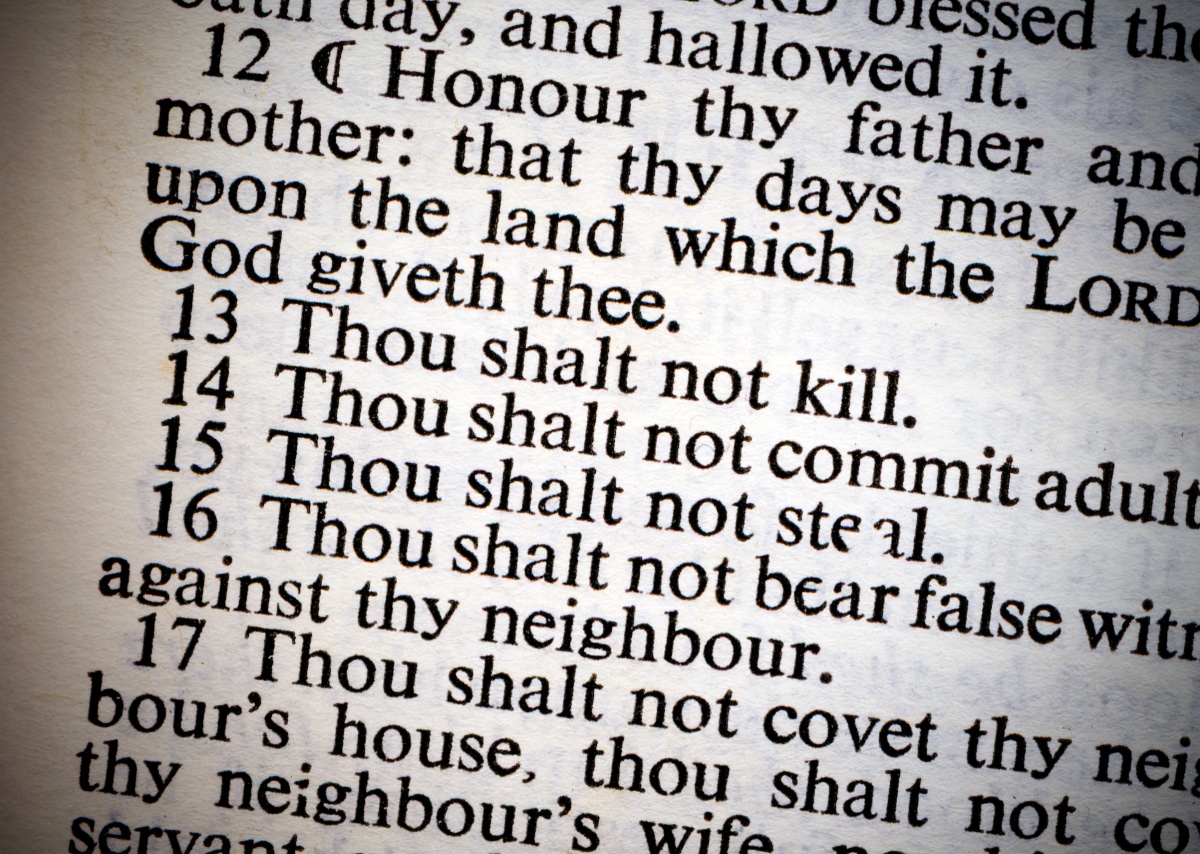
Among the last seven of the Commandments, we are commanded to “honor our father and mother”. This commandment comes with a promise that those who do so will experience the presence and the favor of God. The remaining commandments express in the negative form those actions that ought not be committed, saying, “thou shalt not”, and these include: murder, adultery, stealing, lying, and coveting your neighbor’s wife, or your neighbor’s goods. As the fulfillment of the Law, Jesus can unabashedly tell us, “You have heard it said in the past, ‘You shall not murder, whoever murders shall be liable to judgment.’ But I say to you that if you are angry with your brother or sister, you will be liable to judgment…” (Mt. 5: 21-22).
It does not take a great intellectual leap of insight to recognize how defying these commandments, choosing to participate in such behaviors, would naturally and necessarily lead to negative impacts on our ‘neighbor’, and therefore, ought not be done. After all, we would not want our neighbor to behave in these ways toward us. Our civil laws are clearly based on the wisdom of the Mosaic Law in these behaviors and matters as well. It is also no great leap of insight to see that we are still falling short of honoring the Commandments of the Decalogue. Hence, not the smallest letter or the smallest part of a letter will pass from the law until all things have taken place” (Mt. 5: 18).
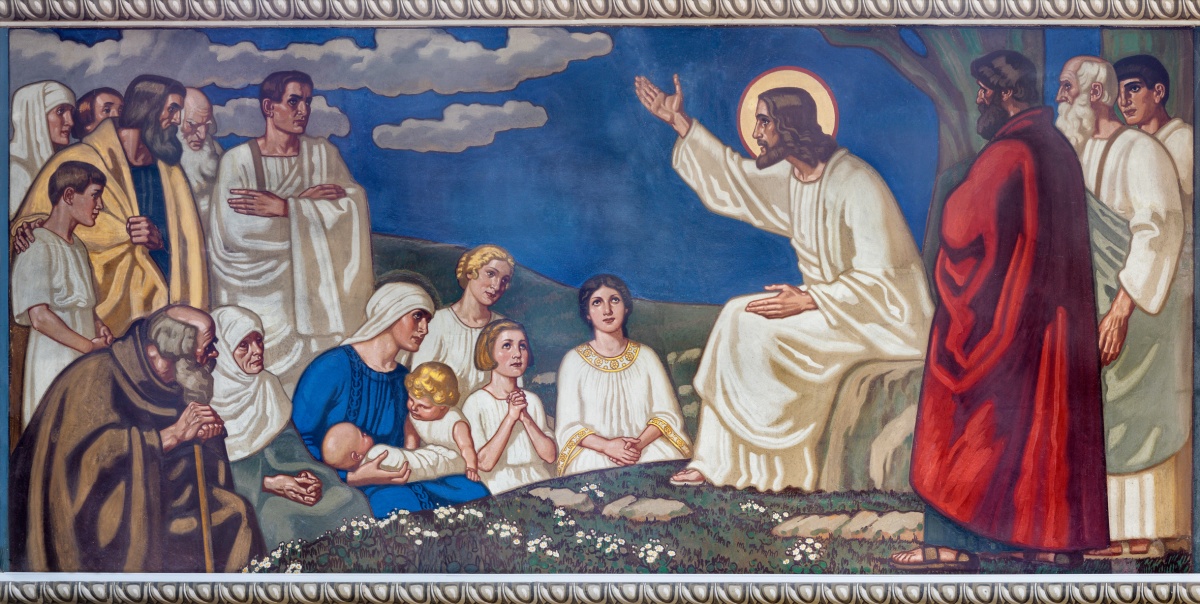
We might say that the Ten Commandments are rooted in the divine understanding of both our human nature and our infinite human dignity. They support the Christian understanding that we are all children of God, made in the divine image and likeness, and, therefore, this understanding ought to shape all of our thoughts, words, and actions toward God and one another. Jesus, in the fullness of his divinity and his humanity as Son of God and Son of Man, shows us the fullness of the law and how to live it. Even though we remain under the Mosaic Law, Jesus, who declares that he is the way, the truth, and the life, challenges us to love God and our neighbor in the same way he does. “What might the world be like if all Christians took him seriously and daily chose to love God and our neighbor as he does?
Jesus begins his primary teaching on the fulfillment of the law with the Beatitudes, (Mt. 5: 3-11). As the word suggests, these ways are the source of true happiness. They are presented to us as a set of paradoxes, surprises, and reversals. Each of them begins with the Greek word ‘makarios’, meaning happy. In Latin, the word is ‘beatitudo’. He says, “Happy are the poor in spirit”. Bishop Robert Barron says of this, “We might say, ‘How lucky you are that you are no longer addicted to material things, that your deepest desire is to love God, not the perishable, passing things of this world. These Beatitudes turn the wisdom of the world upside-down, challenging us to see the world and ourselves the way that God made it and us to be.
“Blessed are you who mourn.” We might say here, “How happy it is to no longer be addicted to merely good feelings. It is the recognition that sometimes doing God’s will involves suffering or emotional pain, but knowing this frees you to respond to the demands of life in more fulfilling ways. “Blessed are the meek”, that is, happy are those who are no longer seduced by or enslaved to temptations to worldly power, fame, and glory. “Blessed are you when people revile you and persecute you and utter all kinds of evil against you on my account.” How happy it would be to no longer be so unsure of oneself as to be driven by the approval or praise of others. How liberating would that be? In Jesus, the Word of God made flesh, God’s law is made visible in human form. Let us learn to love God’s Law and fulfill it by imitating Jesus in all things. Amen.
SKM: below-content placeholderWhizzco for FHB