

Jesus asks a powerful question here at the beginning of his Sermon on the Mount in Matthew’s account of it. “Do you think that I have come to abolish the law or the prophets?” And then answers his own question: “I have come not to abolish but to fulfill it” (Mt. 5:17). He reinforces this by telling the disciples: “Amen, I say to you until heaven and earth pass away, not the smallest letter or the smallest part of a letter will pass from the law, until all things have taken place” (v. 18). [This will be the first part of a two part series.]
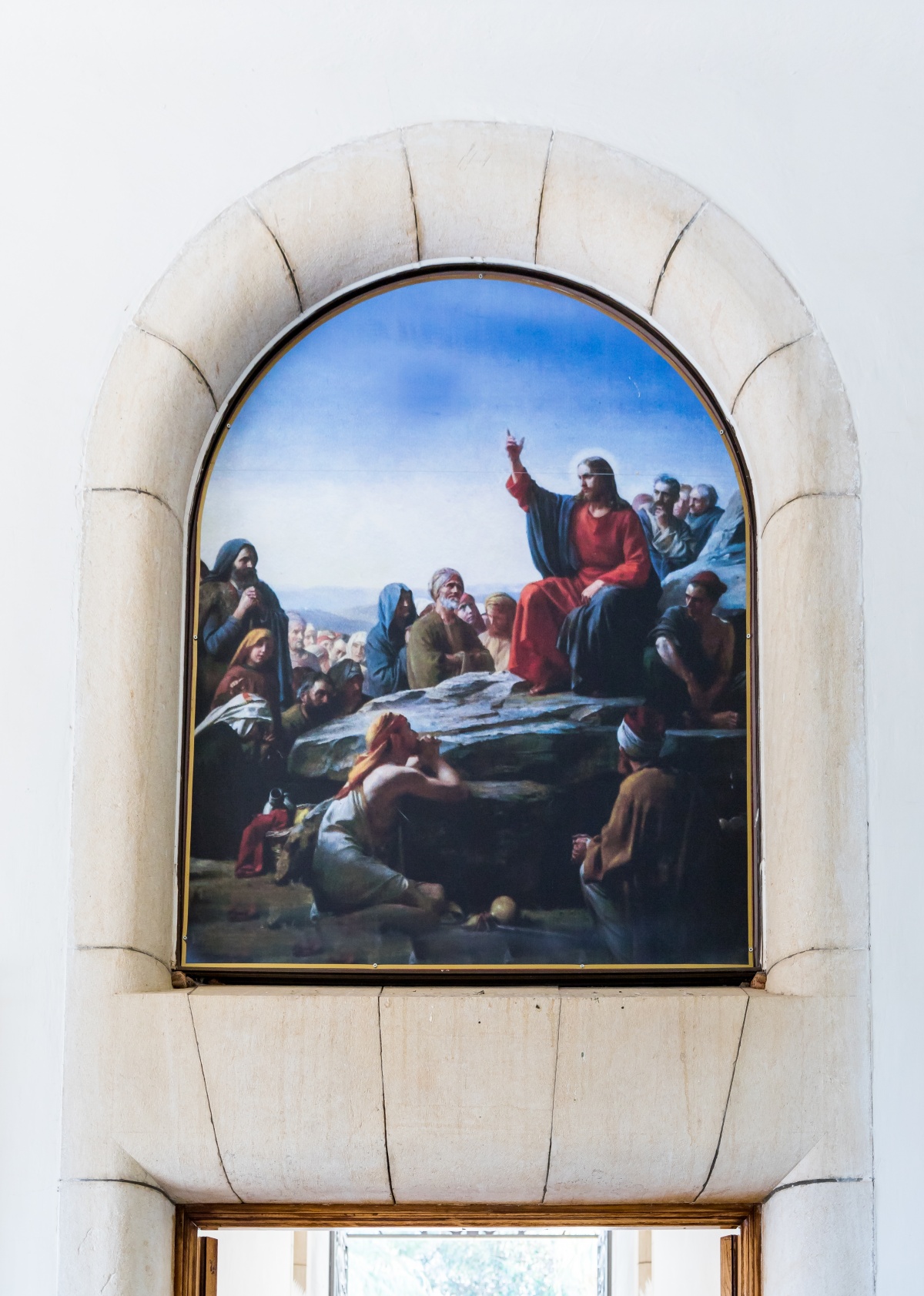
The whole of the Sermon on the Mount is about the law. That word, that concept, has always been a stumbling block for we human beings. Laws. We often understand them as arbitrary rules. We chafe under them, and often ignore or rebel against them, even the simple ones. For example, look at how many people obey the speed limits on the highway. This, of course, is not new. We see this kind of thinking and behavior all throughout the whole of the Bible. We see it in the behaviors of people all around us, and in ourselves. We have heard all of the arguments and rationalizations about the perceived arbitrariness of the law, even used them ourselves at times. This, quite simply, is the result of our continuing participation in the ongoing echo of the Original Sin of Adam and Eve. This is why we needed and continue to need our Savior, Jesus Christ.
The Christian argument about God’s law, both the Mosaic Ten Commandments and the fulfillment of the law that Jesus speaks of in his Sermon on the Mount, is that it is not a mere set of arbitrary rules but the means through which we can achieve a lasting, faithful, life-giving and loving relationship with God, our neighbors, and ourselves. God’s law gives us an anchor to hold on to, a light in the darkness to guide us home in this constantly shifting, often contradictory world where certainty is transient and love is declared today and spurned tomorrow.
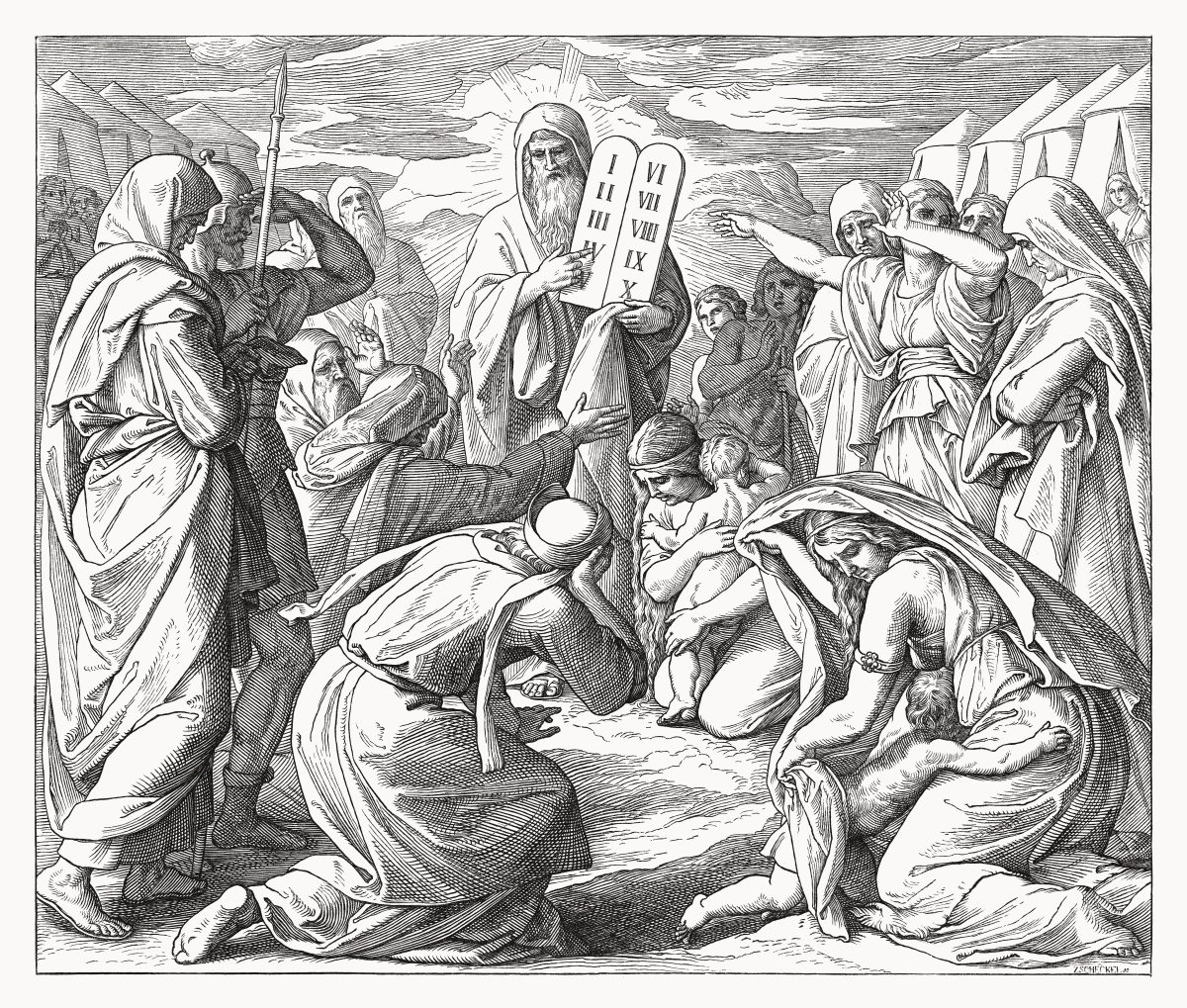
We hear Moses teaching the people the law in the Book of Deuteronomy: “Take these words of mine into your heart and soul. Bind them at your wrist as a sign, and let them be a pendant on your forehead. Teach them to your children, speaking of them at home and abroad, whether you are busy or at rest” (Deut. 11: 18-19). This is what we are to do ourselves. This is how we properly form our consciences, and those of our children. We are to know the law, to meditate on it, to come to see its wisdom. Then, we are to teach it, not just with our words but by living it, by being examples of the law with our lives. “In your observance of the commandments of the Lord, your God, which I enjoin on you, you shall not add to what I command you nor subtract from it” (Deut. 4:2). Jesus echoes this at the beginning of the Sermon on the Mount when he says, “…not the smallest letter or the smallest part of a letter will pass from the law, until all things have taken place…”
The law of God is not a set of arbitrary rules, given by an arbitrary god, intended to ‘keep us in line’; rather, it is a powerful moral map of sorts, a means to teach us how to love God, our neighbors, and ourselves better, more fully, more completely. The Mosaic Law begins with commands concerning our duty to love and honor God, who has given us life and all that is good, true, and beautiful. The first three commandments reveal the proper attitude and practices that give God his proper honor. He, who alone is God, we must have no other gods before him. His name is to be kept holy in all of our thoughts and speech. That we have a duty to keep the Sabbath day holy, by dedicating our thoughts, time, and effort to listen to his words and to practice them with our lives through his grace, these commandments direct us to love God with our whole minds, our whole hearts, and with our whole strength.
The last seven commandments of the Mosaic Law articulate how we are to love our neighbors as ourselves. These commandments are given in the negative form, “thou shalt not”. It is this that we, in our pride, often react against. How often have you heard others, or yourself, say, “Who are you to tell me what I should or should not do? I decided that!” But the theologian, N.T. Wright, points out that the commandments are given in this manner because, “The Old Testament is essentially an unfinished symphony, a drama without a climax. It is the articulation of a hope, a dream, a longing, but without a realization of either.” When we finally come to see Jesus as the law’s fulfillment, it is no longer seen as a limitation, but a liberation. Rather than “thou shalt not,” it becomes, “Love one another as I have loved you.” All else is commentary.

The Jews believed that they had a mission to become holy under the law and, by doing so, to bring the world to holiness. But they also knew that throughout their history, they had fallen into greater and greater sin and, as a result, the world continually enslaved them. We, too, share in that mission, and we, too, continue to fail in it. Yet, God’s stunning response to our infidelity to His law was to love us even more, beyond all human reason. Out of love, Jesus, God with us, came among us in the flesh, not to destroy the law but to fulfill it and to show us the way, the truth, and the life that is the fullness of the law.
SKM: below-content placeholderWhizzco for FHB