
This question, asked by a dying thief on a cross, is the ultimate challenge for all of us. “Have you no fear of God?” (Lk. 23:40). It is asked by a man experiencing what we can imagine is the most stressful moment of his life. We can imagine that he is tortured by his own suffering and pain and the imminent reality of his own death. But he is moved to ask this question by the cynical words of his fellow thief. It is both a rebuke to his fellow thief and a statement of his own faith. In asking this question, this thief becomes a testament to the fact that conversion, even the conversion of someone recognized by society and law as a criminal worthy of capital punishment, is possible. This insight could not have come to this man in the midst of his own terrible suffering but through the Holy Spirit. Tradition gives him a name, Dismas.
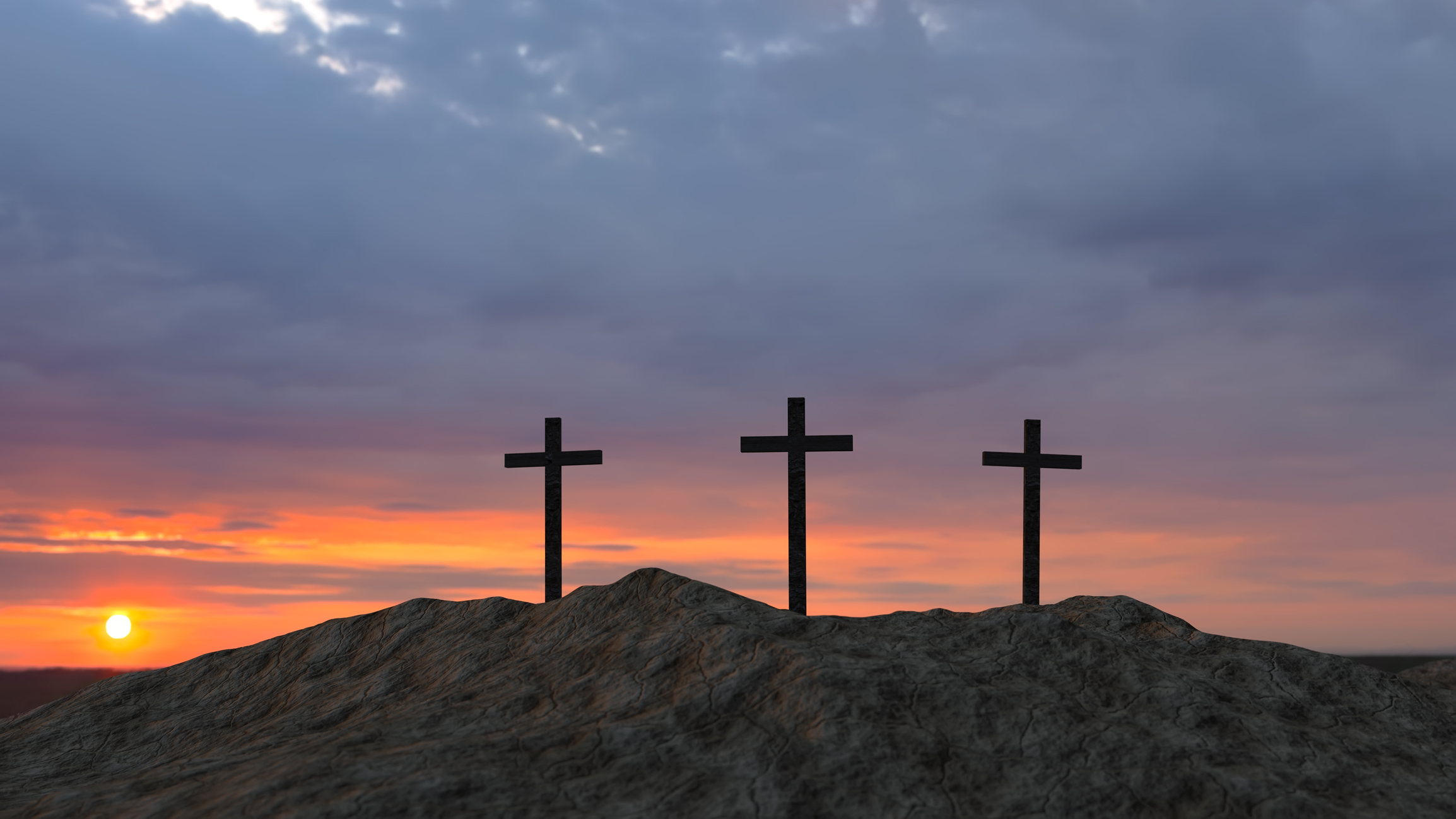
This was a demonstrable “leap of faith” for this thief to recognize Christ, the true King, in someone being crucified along with him and the other thief as a criminal. But that is exactly what Dismas recognizes in those final moments of his life. We do not know anything about his life before this moment, but we can imagine that he had been a hardened criminal who had finally been caught and found guilty, and deserving of capital punishment, as was his fellow thief hanging on the other side of Jesus. As he suffered his own reality, he witnessed the treatment of Jesus, heard the jeering of the crowd and the rulers, even of the Roman soldiers, toward this man. He also heard the words of Jesus from the cross, “Father, forgive them for they know not what they do” (Lk. 23:34). This must have stunned him, as it should us. How could anyone in the midst of such great and undeserved suffering and ridicule say such a thing? At that moment, something within the dark heart of Dismas cracked open, and he saw who this man really was, and he remonstrated his fellow thief’s cynicism with that question, “Have you no fear of God?”
A light broke in upon Dismas in those last moments of his life, a light so profound that he saw with a clarity that only faith can have. He saw that Jesus truly was, as the sign nailed above his head read, “Jesus of Nazareth, king of the Jews.” But also that he was more than an earthly king. And he professes his faith in Jesus in those last moments with the most poignant and beautiful prayer spoken directly to Jesus, “Jesus, remember me when you come into your kingdom” (Lk. 23:42). And, joy of joys, he hears Jesus say to him, “Amen, I say to you, today you will be with me in Paradise” (v. 43). Are these not the words we hope to hear him say to us?

In Proverbs 9:10, we read, “The fear of the Lord is the beginning of wisdom, and knowledge of the Holy One is understanding.” This word of God became real to Dismas there on that cross. In that moment, he knew and understood who Jesus was, the Holy One of God. He saw in the bruised and bloodied countenance of Jesus, the king of kings. In that most intimate of moments, in the presence of Jesus, battered and crowned with a crown of thorns, he came to know and understand the wisdom of that phrase from Proverbs. His fear had been transformed into the awe of wisdom. Though up to that moment, he might have been among the worst of sinners, in his last moments on earth, by the grace of the Holy Spirit, he got it. He understood and knew Jesus in the face. His pride was washed away, and with humble awe, he expressed what he had come to know. “Remember me, when you come into your kingdom.” And, glory be to God, he was forgiven and welcomed into the kingdom of heaven by the king himself.
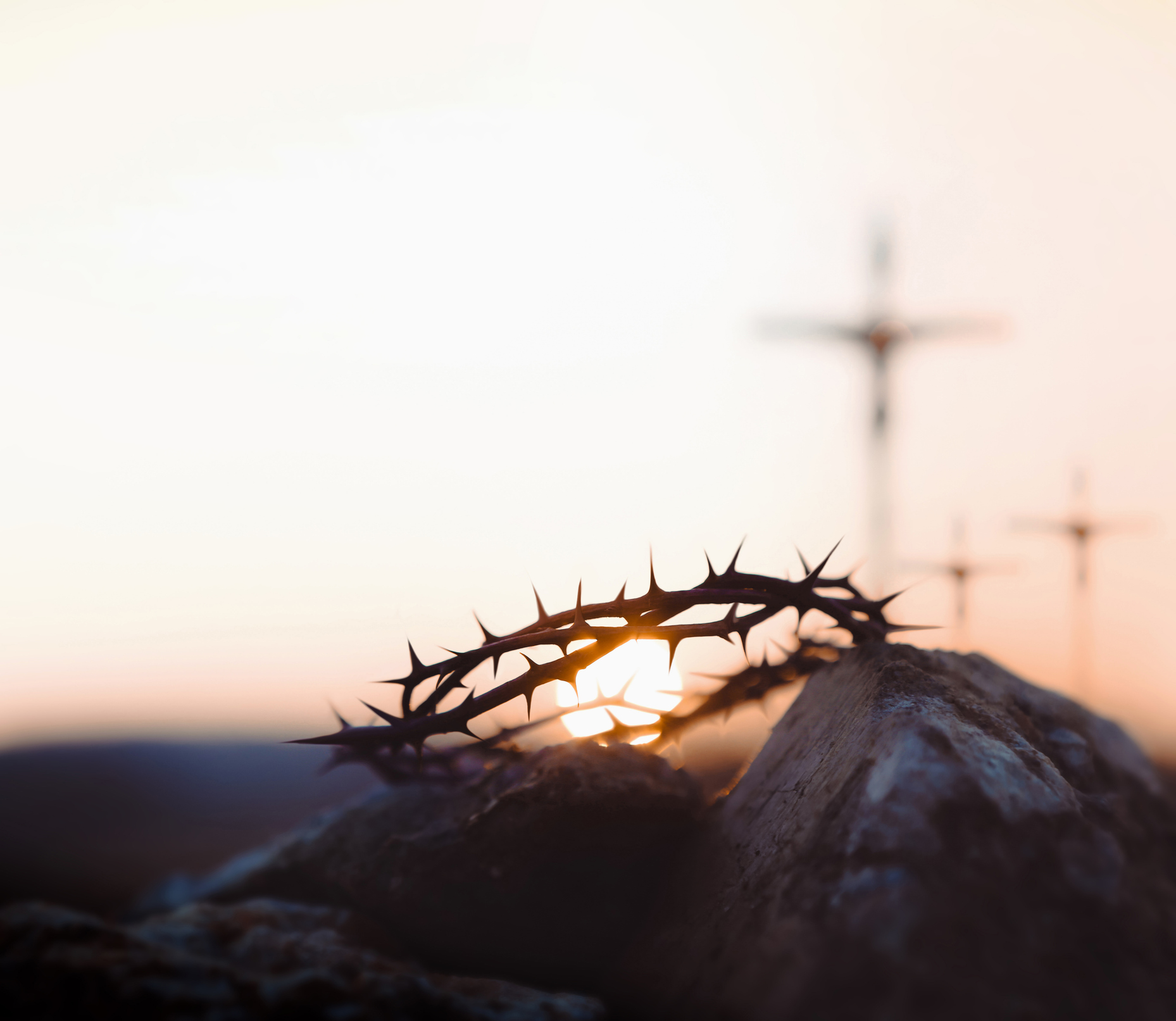
Jesus is Christ the King. His crown is a crown of thorns. His throne is the Cross. But unlike earthly kings and kingdoms that are here today and gone tomorrow, his kingdom will never end. May we all come to know and to understand that same depth of faith and hope that Dismas came to know in his dying moments. May we say with him, “Jesus, remember me when you come into your kingdom.” Amen.
SKM: below-content placeholderWhizzco for FHB