
Jesus, in one of his many exchanges with his interrogators, the chief priests and elders, addressed them on this occasion with this question: “What is your opinion?” He then tells a parable about a father and his two sons. The parable that he tells reveals a truth, not an opinion. So what is the difference between an opinion and the truth? An opinion is a statement that expresses a particular view or judgment about something. It is a statement that expresses a person’s or a group’s beliefs or feelings about a subject, which may not necessarily be based on facts or knowledge. Truth is a fact, a provable reality that, when seen or experienced, needs no explanation.

Jesus’s parable introduces a father and his two sons. The father tells the first son, ‘Son, go out and work in the vineyard today.’ The son said in reply, ‘I will not,’ but afterwards he changed his mind and went. The man came to the other son and gave the same order. He said in reply, ‘Yes, sir,’ but did not go. Which of these two did his father’s will?” (Mt. 21: 28-30) The parable sets up a simple and very clear distinction between the responses of the two brothers. That distinction highlights the difference between the repentance of one son and the willfulness of the other. It is about sin, free will choices, and their potential consequences.
The genius of Jesus’ parables is in their simplicity and their ability to reveal transcendent truths to us. In this case, each of the sons is given the same order but responds differently. Both sons sin against their father. One defies his father’s order to his face, the other lies to his father. We can potentially see ourselves in both of these sons. We are not told of their motivation for their responses, but we can imagine prideful insolence or laziness as possible sources for their responses.

The key point of this parable, though, is the first son’s repentance. He had willfully, even disdainfully, defied his father at first. But at the stirrings of his conscience, he came to his senses, finally, and repented of his sin. He responded concretely. Recognizing and feeling sorrow for the injury he had done to his father, he turns around. He returns to the vineyard, willingly obeying his father’s will. On the other hand, the second son lies to his father, willfully defying his father’s will, and never acknowledges or repents of his sin. And Jesus asks the chief priest and elders, “Which of the two did his father’s will?” Recognizing the truth, they respond saying, “The first.”
Jesus then tells the chief priests and the elders about how they had responded to the preaching of John the Baptist, not believing in his call to repentance. The difference could not be clearer. Like the second son, the chief priests and elders denied the will of the Father revealed to them in the Scriptures. Never recognizing their own sinfulness, never desiring to repent of their sins, they willfully treated those they called sinners with disdain. But those who knew that they were sinners responded humbly to John’s call to repentance. They recognized and knew their need to be healed.
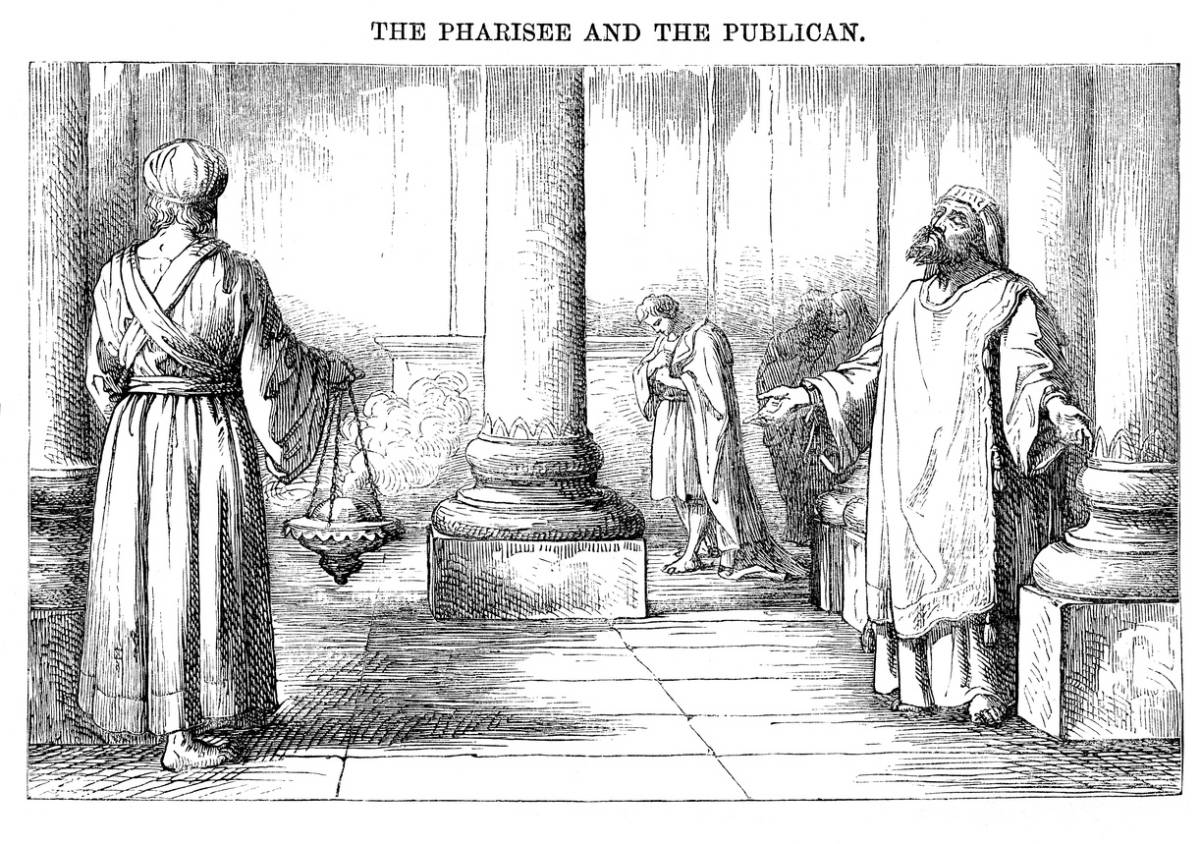
Then Jesus tells the chief priest and elders the truth of this parable, “Amen, I say to you, tax collectors and prostitutes are entering the Kingdom of God before you.” Why? Because, like the second son, for whatever reason, the chief priest and elders chose to defy their own consciences, they did not “later change their minds” and willingly ‘turn around’, and return to the vineyard to do the father’s will. Whereas, those who repented their great sins and their small sins, and ‘returned to the vineyard to do the Father’s will,’ are promised their rightful place in the Kingdom of God.
Do we not recognize ourselves in this parable? Have we not defied the moral law written on our hearts, just like the second son, or the chief priest and elders, on many occasions, based on our own ‘opinions’? On the other hand, have we not also known the disturbing sting of conscience at times? How did we, or how do we respond to this truth? The answer we give to ourselves will make all of the difference.
We are all called to live saintly lives where we are, in the environments of our interior lives, as well as in those of our families, and in our public lives. We will not and cannot save ourselves or the world. But God can bring about solutions to our problems if we listen and respond willingly to him, choosing every day to live our lives in accord with his will. Yes, he asks us to do hard things, but if we learn patience and practice our faith persistently, he will give us all that we need to live a good life in this world.
SKM: below-content placeholderWhizzco for FHB