

This passage follows hard upon Jesus’ baptism and his temptation in the desert. He’s returned to his hometown of Nazareth, filled with the Spirit, eager to begin his ministry. Why not begin where he had grown up with his parents, Mary and Joseph the carpenter? He entered the synagogue on the Sabbath, just as he had done every Sabbath his whole life there. The people knew him (or so they thought). But in this moment, they sensed that there was something about him that was different, something that made them uncomfortable.
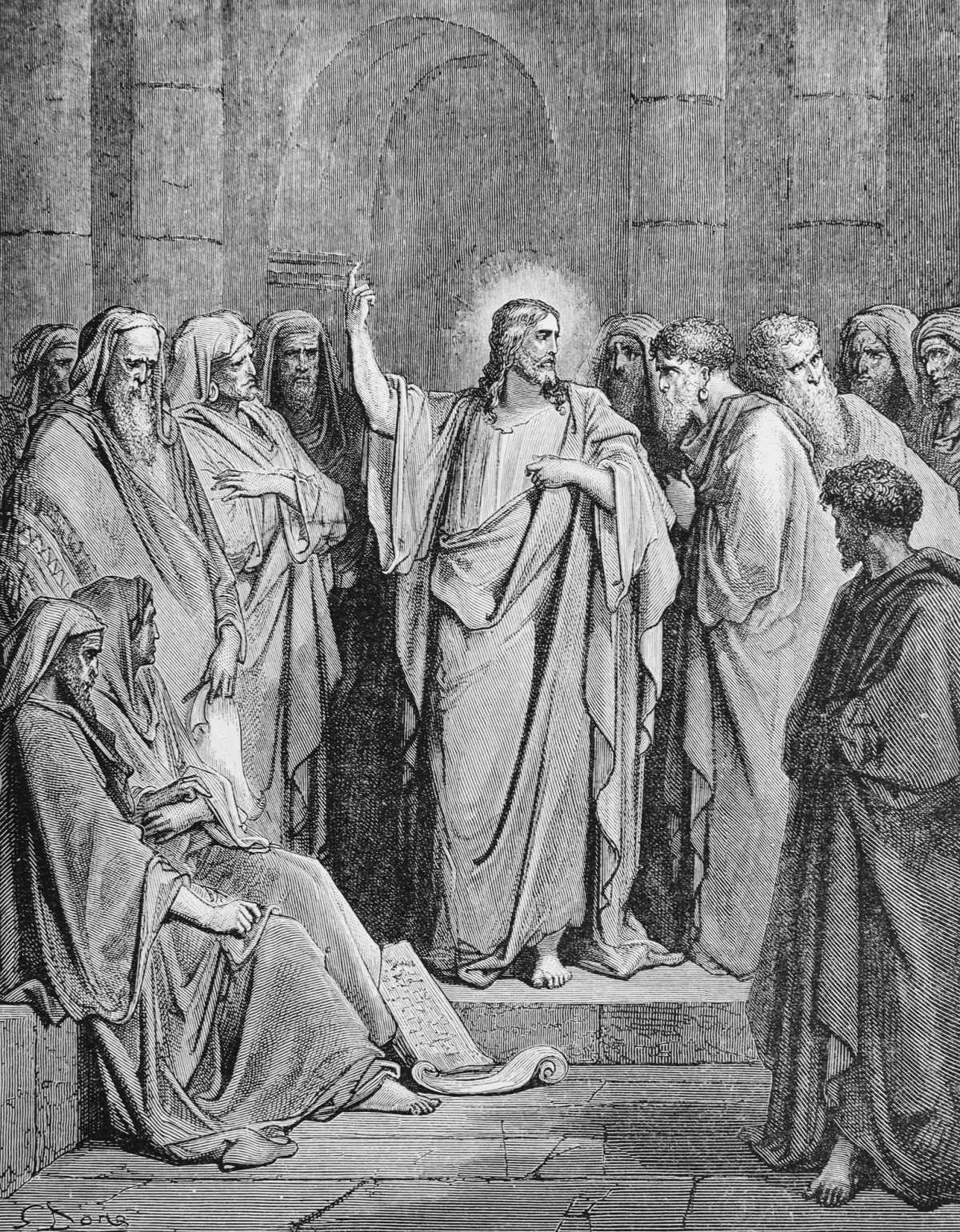
Jesus stood to read and was given the scroll of Isaiah. He opened it to the passage reading: “The Spirit of the Lord is upon me, because he has anointed me to bring glad tidings to the poor. He has sent me to proclaim liberty to captives and recovery of sight to the blind, to let the oppressed go free, and to proclaim a year acceptable to the Lord” (vs. 18-19). He rolled up the scroll, sat down, and then said something quite unusual to his hearers: “Today this Scripture passage is fulfilled in your hearing” (v. 21). The people are amazed. How could the son of a carpenter be so eloquent? They thought they knew him, and they spoke among themselves, saying: “Is this not Joseph’s son?” (Lk. 4:22)
They had already heard of the things Jesus had done in Capernaum and other villages, but they were skeptical that this carpenter’s son could do such things. Jesus responded to their skepticism saying, “Truly I tell you, no prophet is accepted in his own native place” (v. 24). He then gives them two powerful examples of prophets rejected by the Chosen People in the past: Elijah, who during a great famine, the result of the apostasy of the Jews, was sent not to the Jews, but to an ‘outsider,’ a widow in Zarephath in the land of Sidon, and in the time of Elisha, when there were many lepers in Israel, none of them were cleansed, only the Syrian, Naaman, an ‘outsider,’ was cleansed. The implications are clear here.
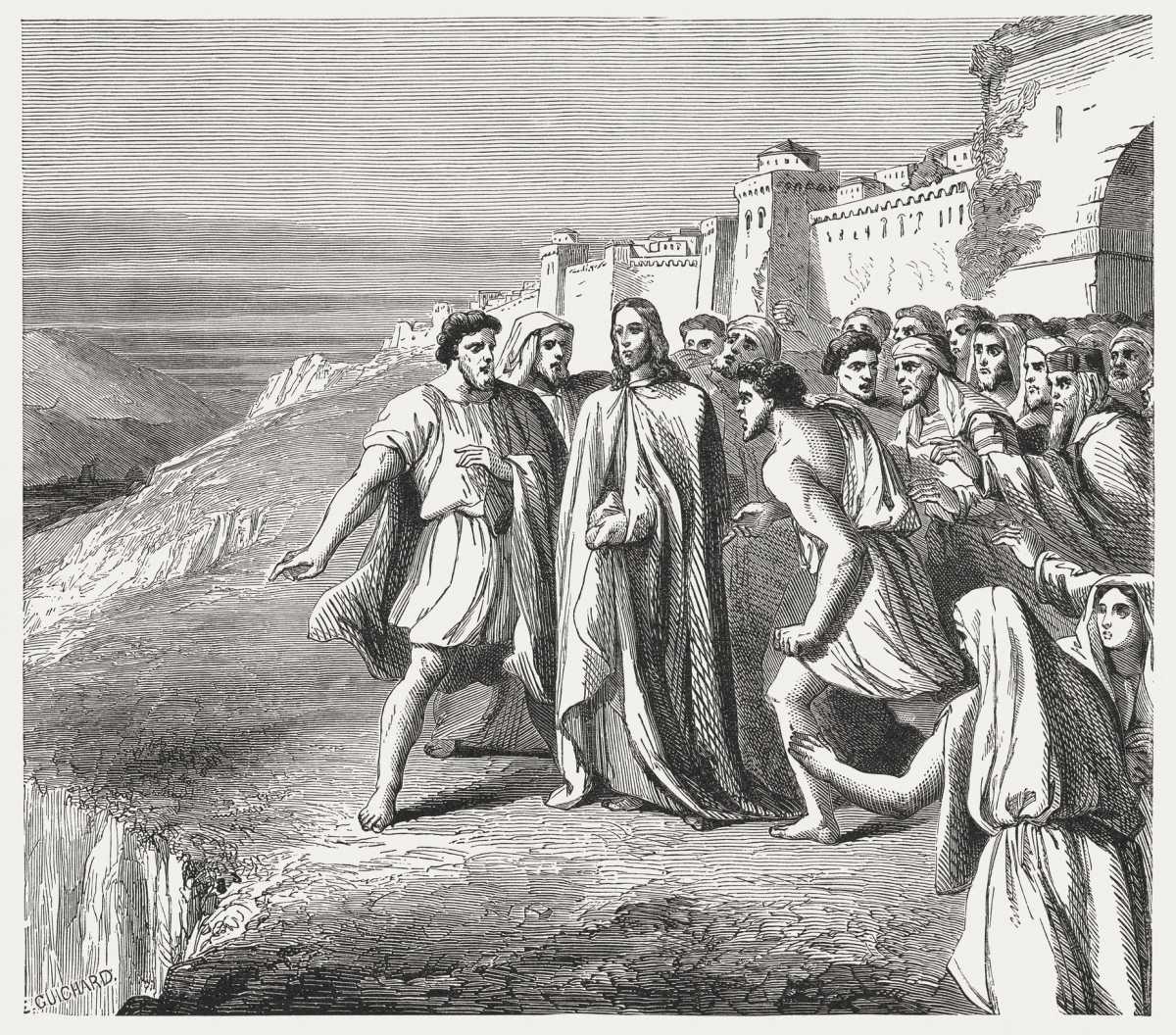
This enrages the people in the synagogue. Isn’t that recognizable? Do we not often react that way when the truth of our own behavior is shown to us? Who is this carpenter’s son to preach to us, who implies that he is a prophet, and not just any prophet, but the Anointed One that Isaiah wrote about in the passage? Jesus did not fit their narrow image of who the Messiah would be and do. In their minds, he certainly would not be the lowly son of a carpenter. In their rage, insulted by this supposed upstart’s temerity, they hustle Jesus out of the synagogue and to the cliff that their town was built upon to throw him off of it. In their blindness, they were repeating exactly what Jesus had just told them about their ancestors’ treatment of the prophets in the past. Blinded by their own narrow views of the faith, they could not tolerate what Jesus had said.
Jesus had taken Isaiah’s text, woven out of the Jewish experience of Exile, and made it his own in their midst. He gave new meaning to the words: “poor,” “captives,” and the “blind.” He identified himself as the Anointed One, the One who was the fulfillment of all their ancient hopes for redemption. He was proclaiming this Good News to people who had sunk into the poverty of a shallow, perfunctory, lifeless faith, who had fallen out of grace, no longer living in union with God. He was also proclaiming it to the ‘blind’ who had not yet seen the light of God’s truth. He had come to release all who were enslaved, held captive by their own unrecognized sinfulness, who had made idols out of their own ideas and desires. He was telling them that the Anointed One was not the political king that they desired, who would deliver them from the oppression of a foreign dictator, but one who would emancipate all of humanity from the unseen, unrecognized oppression and slavery of their own sinful behaviors.
That was what really got under the skin of his Jewish listeners in the Nazareth synagogue that day. They thought and believed only they would be redeemed. But Jesus was saying here that he had come to bring the Good News to all people who were impoverished by lack of faith, to release all who were held captive to their own sinfulness, to give sight to all those who had not yet seen the light of truth, as well as to restore that light to those of the Chosen People whose pride or skepticism had blinded them to it. In other words, Jesus was proclaiming the ultimate Jubilee year to them, when all of humanity’s sinful debts would be paid, and all would be restored to Original Grace.
Jesus is reading this passage to us today. He is the Anointed One. What he said then is still true today. How many of us today might be blinded by false beliefs, thinking that our own narrow worldviews of the faith are the whole truth of the Gospel, just as the people of Nazareth were then? According to the Center for Study of Global Christianity, there are an estimated 47,300 Christian denominations worldwide today. If God’s Word is the Truth- universal, unvarnished, unreformed- and it is, then this statistic, in the “Light” of this passage, should give every Christian pause. If we are unreconcilably divided by our own private ‘interpretations’ of God’s Truth, how can we effectively carry out our mission to bring the world into the ‘Light’ of the one, undivided, absolute truth of the Gospel? How can we even begin to evangelize the Good News, if we do not believe that all human beings are fellow children of God and potential heirs to the kingdom of God?

Lord, we pray that you renew us and restore us in the faith, and bring us together in union with the undivided truth of Your Gospel. Heal all in us that blinds us to our prejudices, or that continues to hold us captive to unseen sinful behaviors. We pray that you give all Christians the wisdom, the courage, and the desire to be one in the faith, no longer following the unscriptural path of division. We pray this in Jesus’ name. Amen.
More to Explore
SKM: below-content placeholderWhizzco for FHB