
The passage that Jesus reads from in the synagogue in Nazareth in Luke’s Gospel is from the Book of the prophet Isaiah 61:1-2: “The Spirit of the Lord is upon me, because he has anointed me to bring good news to the poor. He has sent me to proclaim release to the captives and recovery of sight to the blind, to let the oppressed go free, to proclaim the year of the Lord’s favor.” This passage was familiar to the Jews of Jesus’ time. They knew it as a prophecy about the Jews’ release from captivity and exile in Babylon.
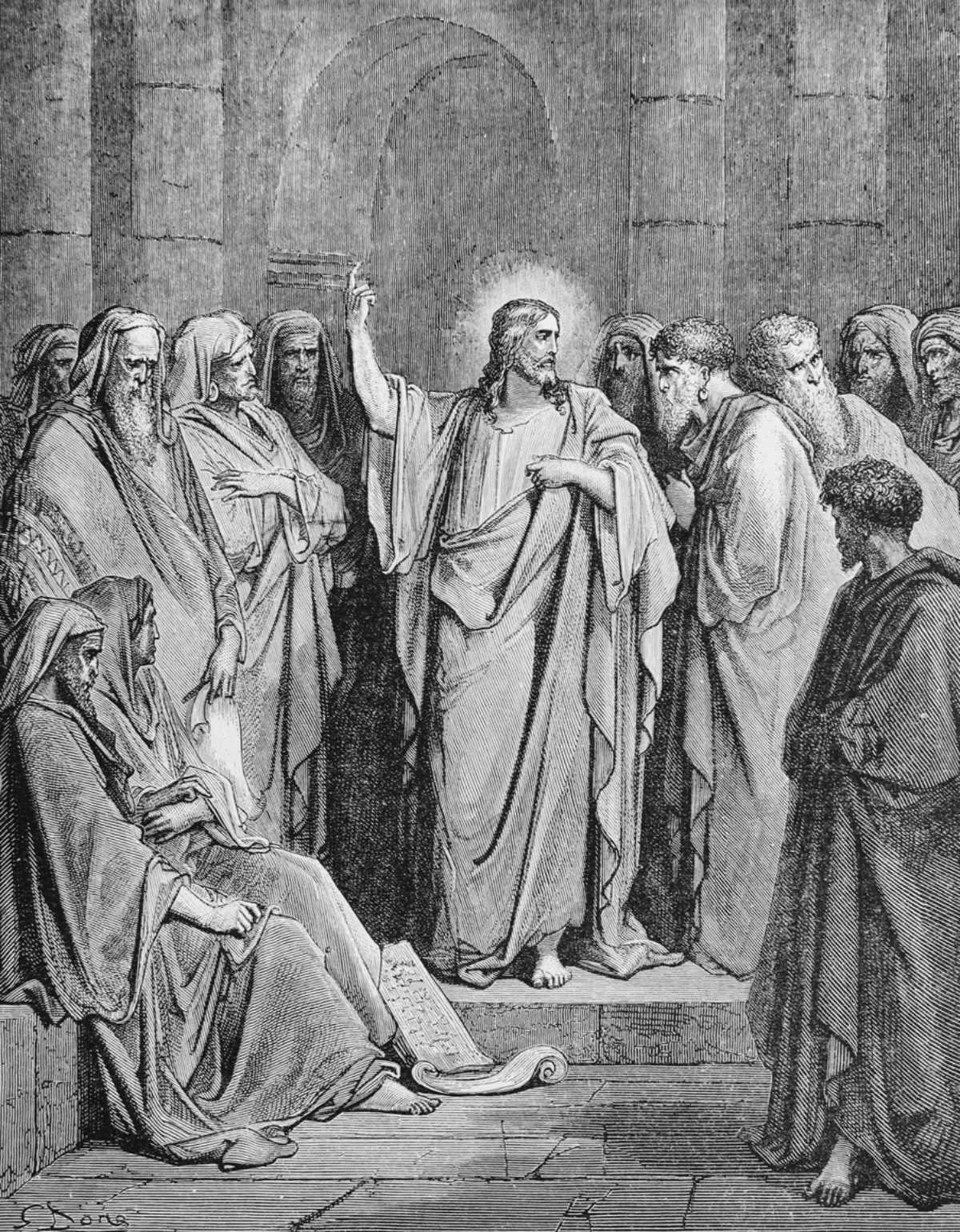
Jesus, though, took that text and associated it with himself, changing the meaning of the words “the poor,” “the captives,” and “the blind.” How? The poor are understood as those without God’s grace and, therefore, lacking union with God. The blind are those who have not yet “seen the light of truth,” the Word of God. The captives are those who remain chained in mind and heart to the habits of sin that prevent them from the true freedom that God desires for all of us. Jesus challenges us in this passage with an uncomfortable truth: we are the ‘captives’ he speaks of. What is it that holds us captive? What is the nature of our captivity? Our unrecognized, or unacknowledged, habits of sin are the ‘chains’ that bind us to our need for the true freedom that only God can give.
We live in a time one might call a post-Christian age. It is marked by skepticism, by variations of atheism, and by a variety of nihilistic philosophies that reject meaning itself. It is a time marked by a kind of divinization of science and technology that creates an artificial divide between faith and reason, science and religion. It gives rise to a false notion of freedom that is really a rebellion from God, or moral limits of any kind. It is rationalized as a modernist ‘liberation’ from the traditions and moral constraints of the past, but it really represents various forms of self-righteous rebellion. Spoiler alert: there is nothing new here. In reality, notions like these have been a popular form of delusion since Eden.
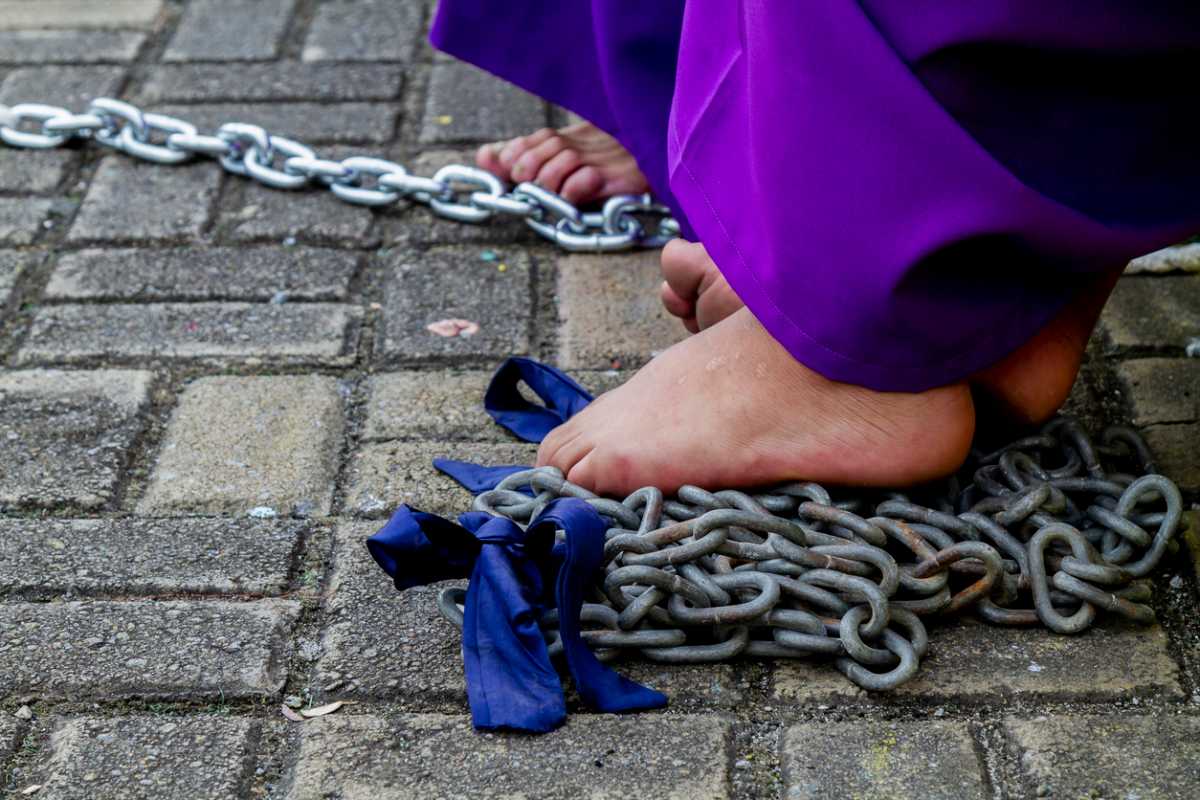
The Good News of the Gospels is, as always, paradoxical, in that it reveals that we are set free from this ‘captivity’ of our own making by choosing, rather, to take Jesus’ “yoke” upon ourselves to willingly and humbly learn from him who is gentle and humble of heart. In this, not our self-righteous rebellion, we will find the rest, the peace, the real freedom we so earnestly seek. (Mt.11:29) It is our recognition of our own sins and our humble acceptance of Jesus’ infinitely generous, loving, and sacrificial forgiveness that breaks the chains of our self-imposed captivity.
The Psalmist speaks so beautifully about this in Psalm 107. “Some lay in darkness and in gloom, prisoners in misery and chains, having defied the words of God and spurned the counsels of the Most High. He crushed their spirit with toil; they stumbled; there was no one to help. Then they cried to the Lord in their need, and he rescued them from their distress. He led them forth from darkness and gloom and broke their chains to pieces” (vs. 10-14). When we come, by the grace of God, to recognize our captivity to our own sinful habits, even in the midst of our sincerest efforts to follow The Way, Jesus himself gently and welcomingly tells us: “Come to me, you who labor and are burdened, and I will give you rest…For my yoke is easy, and my burden light” (Mt. 11: 28-29). Paul tells us: “Where the Spirit of the Lord is, there is freedom” (2 Cor. 3:17).

Lord, teach us the way to true freedom. Give us the grace we need to regularly and actively contemplate and learn from your liberating Word in the Scriptures. Help us, too, to love all others as you have loved us, so that, in true brotherly love, we can help free one another from the chains of our unseen and unrecognized sinful habits through our forgiveness and mutual support. We pray in Jesus’ name. Amen.
More to Explore
SKM: below-content placeholderWhizzco for FHB