
Psalm 103 is one of my favorite psalms. It has been so since I first read it over 50 years ago. I guess it’s because I can relate to it. It is a psalm of David. Its tone is joyful and exuberant with awe. It comes right from David’s heart. It is jubilant with a sense of immediacy. It is the prayer of one who has clearly had an intimate, personal experience of the goodness of God. When I read it, I am filled with that same sense of immediacy and awe.
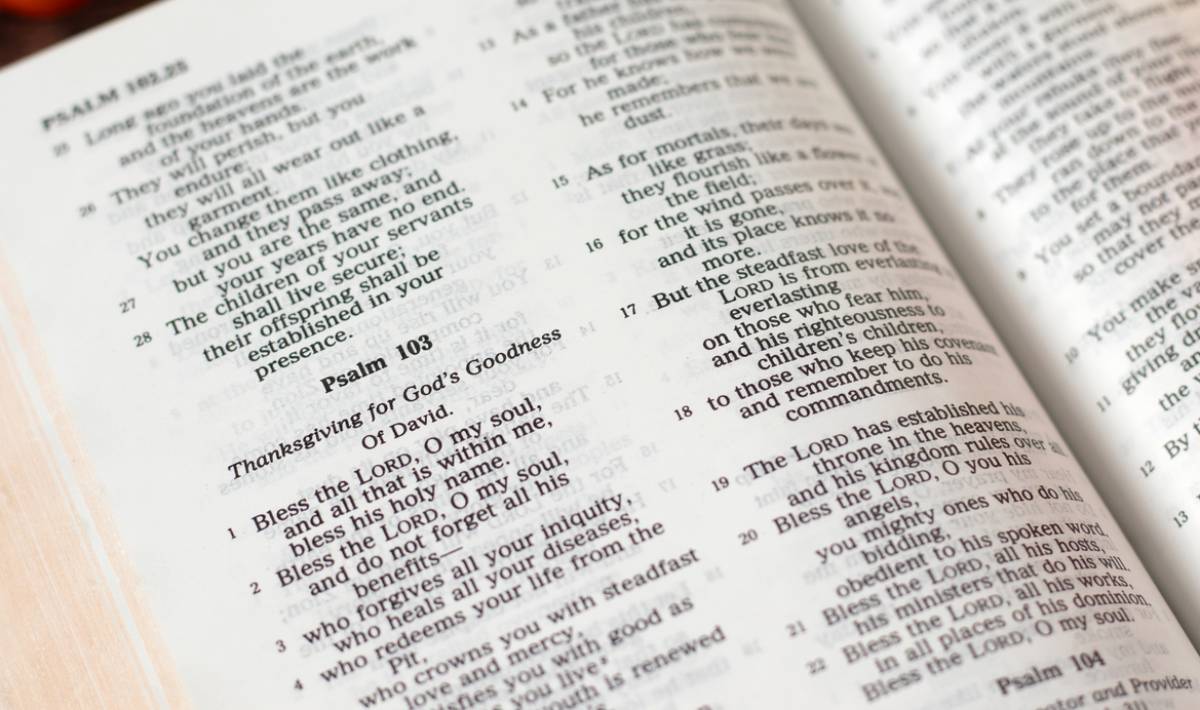
David begins with thanksgiving. “Bless the Lord, my soul; all my being, bless his holy name!” and then follows it with the proper instruction, “Bless the Lord, my soul; and do not forget all his gifts” (vs. 1-2). It has been said that the highest form of prayer is that of thanksgiving. It is always a good practice in prayer to begin with an attitude of thanksgiving.
Understanding this concept of being thankful for all of God’s gifts may be difficult if you are in the midst of suffering of any kind. But it can be a very liberating thing to practice in such circumstances. In his book, Man’s Search for Meaning, Viktor Frankl, a Holocaust survivor, explores this idea from the perspective of one who has been there. He writes: “Everything can be taken from a man but one thing; the last of the human freedoms—to choose one’s attitude in any given set of circumstances, to choose one’s own way.” Yes, even in the midst of suffering, we have the power to choose our attitude. We can choose to look for even the smallest of gifts and to give thanks for, even in our suffering, and that act alone will lighten the load.
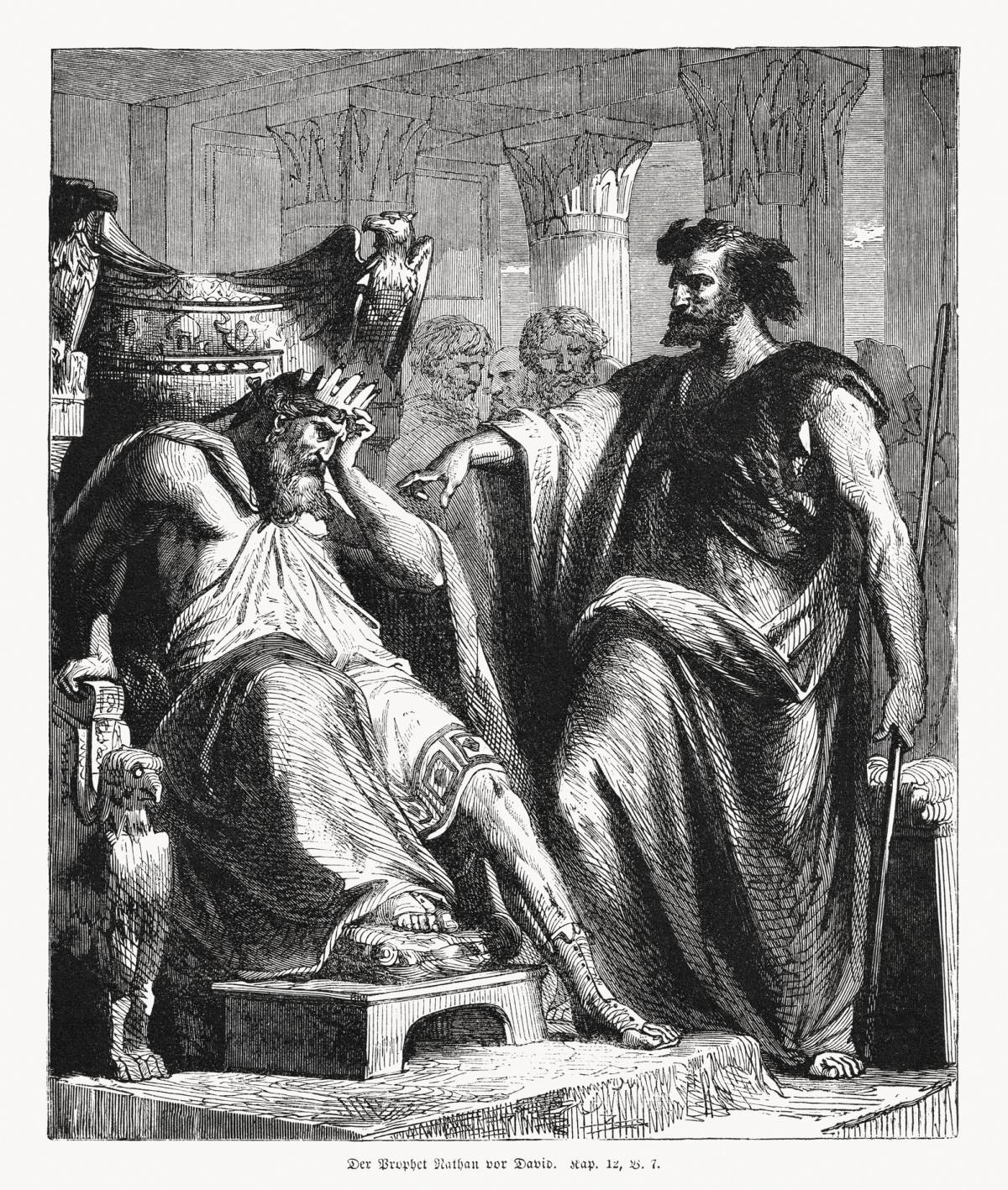
David, as we know, was a sinner, not just a “misdemeanor” kind of sinner, but a “felon,” a great sinner. Nathan the prophet forced David to look into the dark depths of his own soul to see his sins, his lust for Bathsheba, and his order to have her husband, Uriah, killed in battle. David then felt the great guilt and the terrible consequences of his sins. Yet, when he humbled himself and experienced deep, intense remorse, he turned to God in true sorrow and repentance. He received the greatest of God’s gifts, his generous compassion and his infinite mercy. He came to know, intimately, the love and forgiveness of the One, “Who pardons all your sins, and heals all your ills. Who redeems your life from the pit, and crowns you with mercy and compassion, Who fills your days with good things so your youth is renewed like the eagle’s” (vs. 3-5).
Though his sins were great, David had come to know the true nature of God. He is filled with joyful awe when he writes: “Merciful and gracious is the Lord, slow to anger, abounding in mercy. He will not always accuse, and nurses no lasting anger; He has not dealt with us as our sins merit, nor requited us as our wrongs deserve” (8-10). This is the intimate prayer of a man who had come to recognize his own sins for what they really were, what they had done to his own happiness, and how they had endangered his eternal soul. And despite all of this, he had been healed through the generous, merciful love of God.
In this beautiful psalm of praise and thanksgiving, David, still reeling with the joy of having been forgiven, tells us of God’s great love and mercy with expansive poetic power. He writes: “For as the heavens tower over the earth, so his mercy towers over those who fear him. As far as the east is from the west, so far has he removed our sins from us” (vs. 11-12). He compares God’s compassion and love to a father’s love toward his children. Our heavenly Father, “knows how we are formed, remembers that we are dust”, here today and gone tomorrow. Yet despite our frailty and our infidelity toward God at times, we too can come to realize that, “The Lord’s mercy is from age to age, toward all those who fear him” (vs. 14-17).
God is by nature a Gift Giver. He has given us life and has surrounded us with nature’s beauty. He has given us our intellect, our free will, and the capacity to develop all of our skills and talents. He makes the gift of his presence and his grace available to us in the good times and the bad. Most importantly, he has given us his Only Begotten Son, who sacrificed everything for us on the Cross to restore us to eternal life. We have come to know the Father’s Self-Giving Love for us through Jesus. He gives us the gifts of faith, hope, and love. How do we respond to God for such great gifts?

We give God our thanks by sharing our gifts openly and freely with others. We give thanks to him by keeping his commandments, by serving him and our neighbors with the same kind of compassion, mercy, and forgiveness that he has shown and given to us. There are, after all, two forms of prayer: that which we do on our knees, and that which we do on our feet. In both forms, the attitude of thanksgiving makes our prayers precious to God. “Give thanks to God for he is good” (Psalm 107:1).
SKM: below-content placeholderWhizzco for FHB