

We know the story. Ten virgins, members of a wedding party, are to be prepared to meet the bridegroom when he arrives. They take their lamps and go out to the place where they are to meet him. They wait so long that they fall asleep. Then the word comes that he is arriving, and the central theme of the story, the parable, is revealed. We are told that five of these virgins are foolish and five are wise. The simple explanation is that the foolish ones did not bring extra oil for their lamps, while the wise ones did. The details seem almost too simple. We are reminded here that a parable, like any good story, can have many layers of meaning. It functions much like a well-crafted poem, using language and symbols in surprising ways to reveal things that lie much deeper than on the surface.
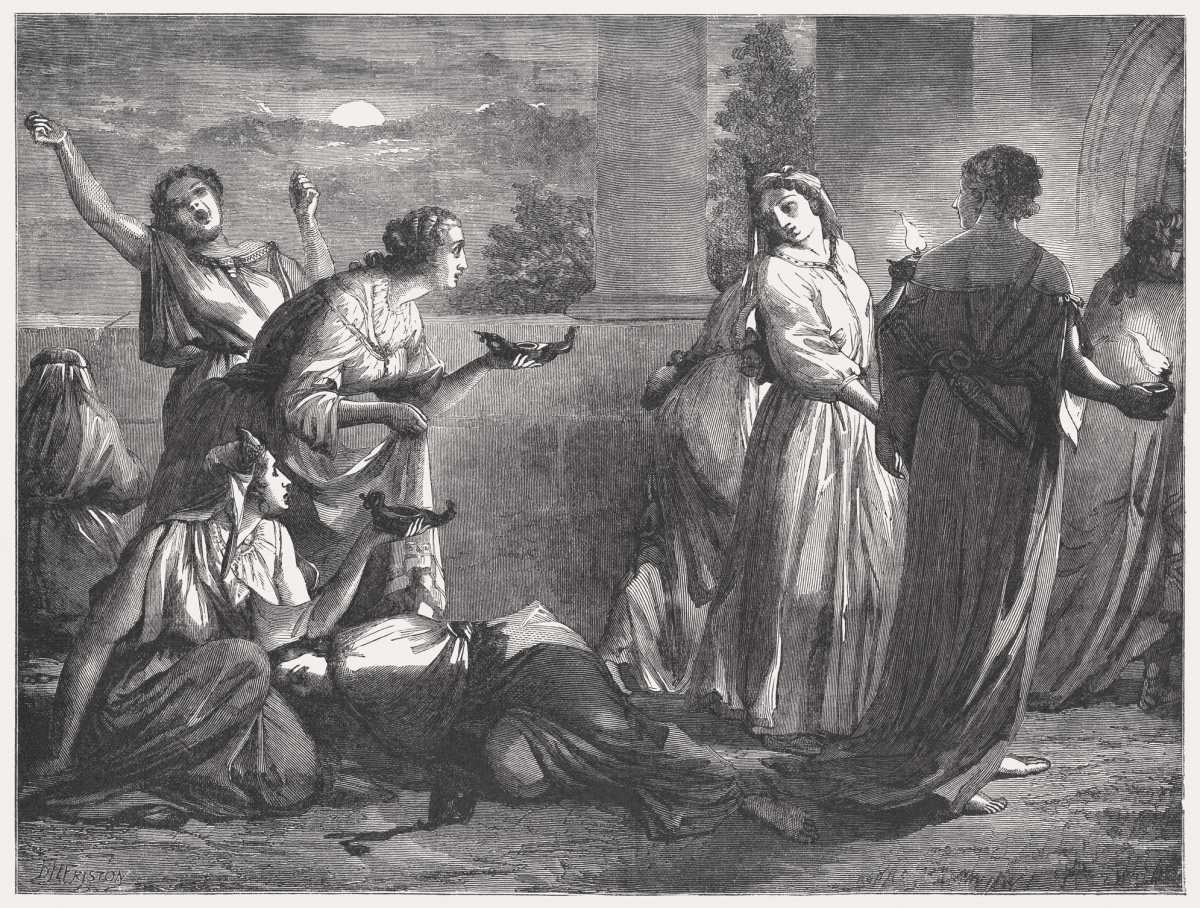
The details of this parable- the bridegroom, the virgins, the lamps, the oil, and ‘time ’-are only the surface elements of a much deeper intent and meaning. Jesus’ parables are meant to teach us something about ourselves, our relationship with God, or about the kingdom of God, as is the case with the parable of the ten virgins. So, we can ask questions like: “Who is the bridegroom?” “What do the virgins represent?” “What do the lamps, the oil, signify?” And then, we need to look at the meaning of details like the long delay of the bridegroom’s coming and the virgins falling asleep as they wait for him.
Of course, the bridegroom in this parable represents Jesus. The delay points to that unknown time in the future when Jesus will come again, which we know as the Second Coming. It can also imply the time when each of us will encounter Jesus, individually, at the moment of our death. The Ten Virgins represent the Church, the community of believers, those of us who call ourselves Christians. And the number ten is important here as it represents or signifies a totality or community. Think here of the Jewish idea of the quorum. The lamps signify the profession of our faith, that is, our outward identity as Christians which we initially carry as a result of our baptism. The extra oil (or the lack of it) represents interior grace, charity, and good works fueled by the Holy Spirit.
Let us focus, then, on the ten virgins in this parable. The wise virgins are those who brought their lamps and flasks of extra oil. This implies their abundant, deep, resilient, patient faith, supported by their virtuous lives and grace. They are the ones who live the faith openly and enduringly, no matter what is happening in their lives. They represent those who live their faith joyfully with integrity and purpose; charged with hope and genuine love, and who believe wholeheartedly that Christ will come again at the end of the world, even if it does not happen in their lifetime. Their faith never grows weary or fatigued.
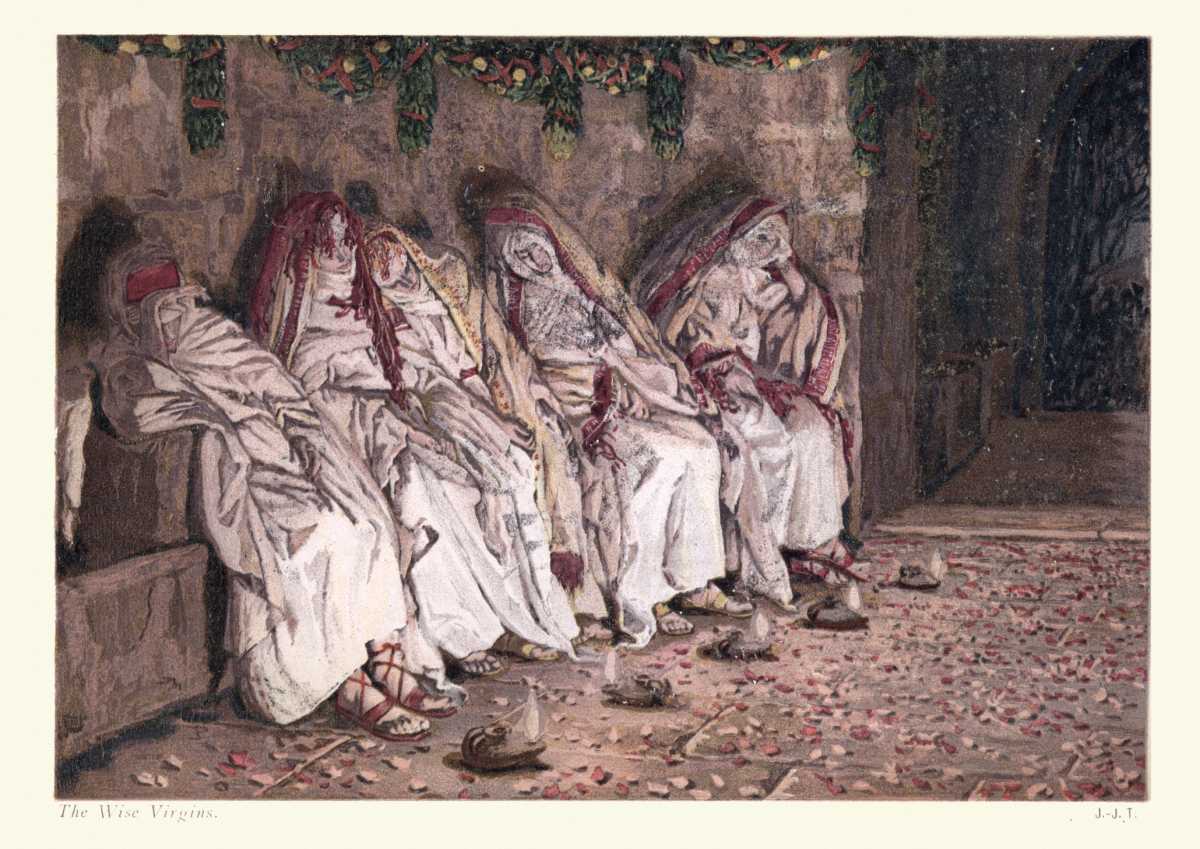
The foolish virgins who brought no reserve of oil represent those whose faith is superficial and lackadaisical. They are those whose faith is lukewarm, a faith that, when challenged, takes second place to self-described ‘matters of greater importance’. They are those who have not fortified their faith through constant attention to prayer and worship, who do not take the time to do the hard work of reading and contemplating the scriptures, whose foolish sense of self-importance has prevented them from developing the patient, enduring virtue of charity. They are those who let others who ‘have the time and the inclination’ do the ‘dirty work,’ that is, the challenging works of charity and service for those in need. These are those who can be said to be “Christian in name only”
When the bridegroom finally comes in the parable, the foolish virgins ask the wise ones to share a bit of their oil with them, but the wise virgins respond saying, “No, for there may not be enough for us and you. Go instead to the merchants and buy some for yourselves” (Mt. 25:9). This may sound selfish, or even cruel on the part of the wise virgins, but what it reveals is the truth that grace and merit cannot be borrowed from someone else at the last minute. The parable tells us that each of us will ultimately be accountable, individually, alone, before God. It is a warning to us all to remain “awake” in our faith, that is, remaining spiritually alive with an active prayer life, through our faithful commitment to our sabbath obligations, and through living our faith openly in our daily lives through our generous and loving service toward our neighbors, both those who are friends and those who are in need. In this way, we remain awake and active as we await the coming of Our Lord at the end of time, or at the moment of our death.

The ultimate message of the parable leaps out at us at the very end of the parable: “Stay awake, for you know neither the day nor the hour” (v.13). This is not easy for anyone, not even the saints, without developing a life of prayer, a personal relationship with Jesus. God knows our hearts, and the very desire to remain faithful to him will bring us the graces we need for the effort. We do not want to meet Jesus at the Second Coming, or at the end of our own individual lives, and hear him say to us, “Amen, I say to you, I do not know you” (v. 12).
More to Explore
SKM: below-content placeholderWhizzco for FHB